
 Español
 中文简体
中文简体PED-type bladder accumulators refer to bladder accumulators that comply with the EU PED Directive (2014/68/EU). These accumulators typically consist of a steel outer shell and an internal elastic blad...
See Details
Home / News / Industry News / CE Certified Accumulator Buyer's Guide: PED Compliance, Types, and Sourcing
CE Certified Accumulator Buyer's Guide: PED Compliance, Types, and Sourcing
Admin 2026-08-28Content
- 1 CE Certified Accumulator: A Real Compliance Benchmark, Not a Sticker
- 2 What CE Certification Means under the Pressure Equipment Directive
- 3 Common Types of CE Certified Accumulators
- 4 Manufacturing Qualification and Production Capacity Behind the Certificate
- 5 How to Verify a CE Certified Accumulator Before Purchase
- 6 Frequently Asked Questions about CE Certified Accumulators
- 7 Sourcing a CE Certified Accumulator with Confidence
CE Certified Accumulator: A Real Compliance Benchmark, Not a Sticker
During a machine-build project, the accumulator specified for your hydraulic circuit carries a CE mark that looks simple but carries legal weight. Sourcing teams often treat it as a detail, yet under the EU Pressure Equipment Directive the CE mark is the only acceptable route for placing an accumulator of that size on the European market. The practical question for engineers and purchasers is straightforward: what does the mark prove, and how do you verify it without slowing down delivery?
The short answer: a CE-certified accumulator is a pressure vessel that has been designed, assessed, and documented according to the Pressure Equipment Directive, and the manufacturer's production system has been checked to keep that compliance consistent across batches. It is a baseline legal requirement for European supply, not an optional quality upgrade.
The relevance extends beyond Europe. Global OEMs increasingly use the CE mark as a quick filter when evaluating hydraulic components, because it signals that the factory applies a disciplined pressure-safety system. If the role of the component is new to the discussion, it is worth reviewing what an accumulator does in a hydraulic circuit before selecting a model.
What CE Certification Means under the Pressure Equipment Directive
CE marking for hydraulic accumulators is governed by the Pressure Equipment Directive 2014/68/EU. The directive applies to pressure equipment with a maximum allowable pressure higher than 0.5 bar, and hydraulic accumulators, which are gas-charged pressure vessels, fall squarely within its scope. Industry references consistently note that all accumulators with a volume larger than one liter must be CE marked to be legally placed on the European market.
The manufacturer's obligations go much deeper than printing a symbol on the nameplate. For a compliant accumulator, the manufacturer must classify the vessel according to its stored energy, apply the correct conformity assessment module, involve a notified body when the category requires it, and issue a Declaration of Conformity backed by a technical file.
| Parameter | Requirement | Why It Matters |
|---|---|---|
| PED scope | Pressure equipment with PS greater than 0.5 bar | Most gas-charged accumulators fall inside the directive scope |
| Volume threshold | Accumulators larger than one liter must be CE marked | Filters which vessel sizes require the CE route by default |
| Category classification | Determined by the product of PS x V and fluid state | Categories I through IV decide the depth of third-party assessment |
| Conformity assessment | Modules range from internal production control to notified body approval | Higher categories require an independent body to assess design and quality |
| Documentation set | Declaration of Conformity, technical file, nameplate, instructions | Documentation is the audit trail for legal placement and commissioning |
Treat the CE mark as a design-and-production system statement. A certified accumulator from a compliant manufacturer carries a traceable serial number, a nameplate with pressure and temperature limits, and instructions in the language of the destination market.
Common Types of CE Certified Accumulators
Three structural designs cover almost every accumulator duty in mobile and industrial hydraulics. Each type can be CE certified, provided the manufacturer builds it under the relevant PED assessment modules. The choice depends on the operating pressure, the available mounting space, and the flow characteristics of the machine cycle.
Bladder accumulators use a flexible bladder to separate gas and fluid. This design handles rapid cycling well, makes efficient use of internal volume at moderate pressure, and is the most common choice for general-purpose circuits. For projects that specify PED compliance at the model level, PED-type bladder accumulators offer a certified vessel without custom engineering.
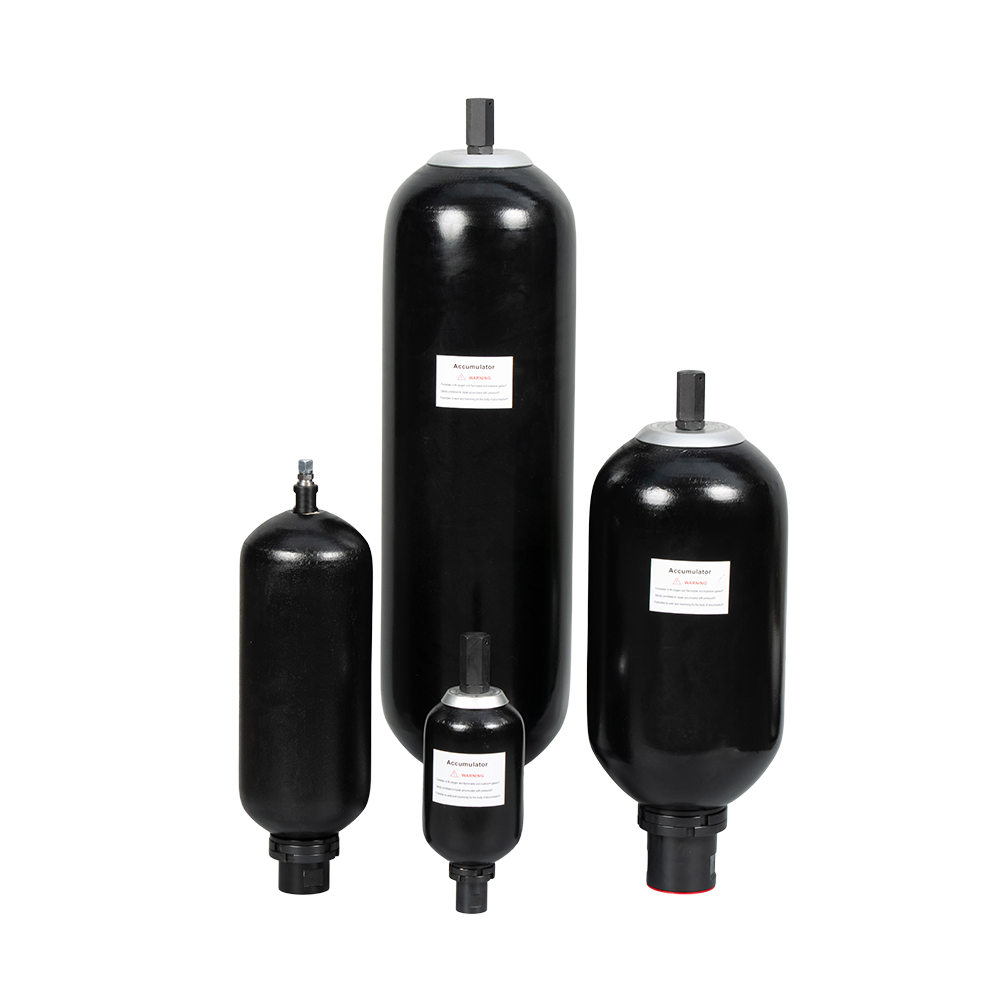 China PED Type Bladder Accumulator Manufacturer, OEM & ODM Factory - Ningbo FengNingbo Fenghua Jiangkou Jingyi Hydraulic is top China PED Type Bladder Accumulator manufacturer and PED Type Bladder Accumulator factory,...View Product →
Diaphragm accumulators seal the gas and fluid with a flat or shaped diaphragm, giving a compact envelope and low weight. They respond quickly as pulsation dampers and suit small precision circuits where installation space is tight. Machine builders working on compact units typically compare diaphragm accumulators for compact hydraulic systems during the concept phase.
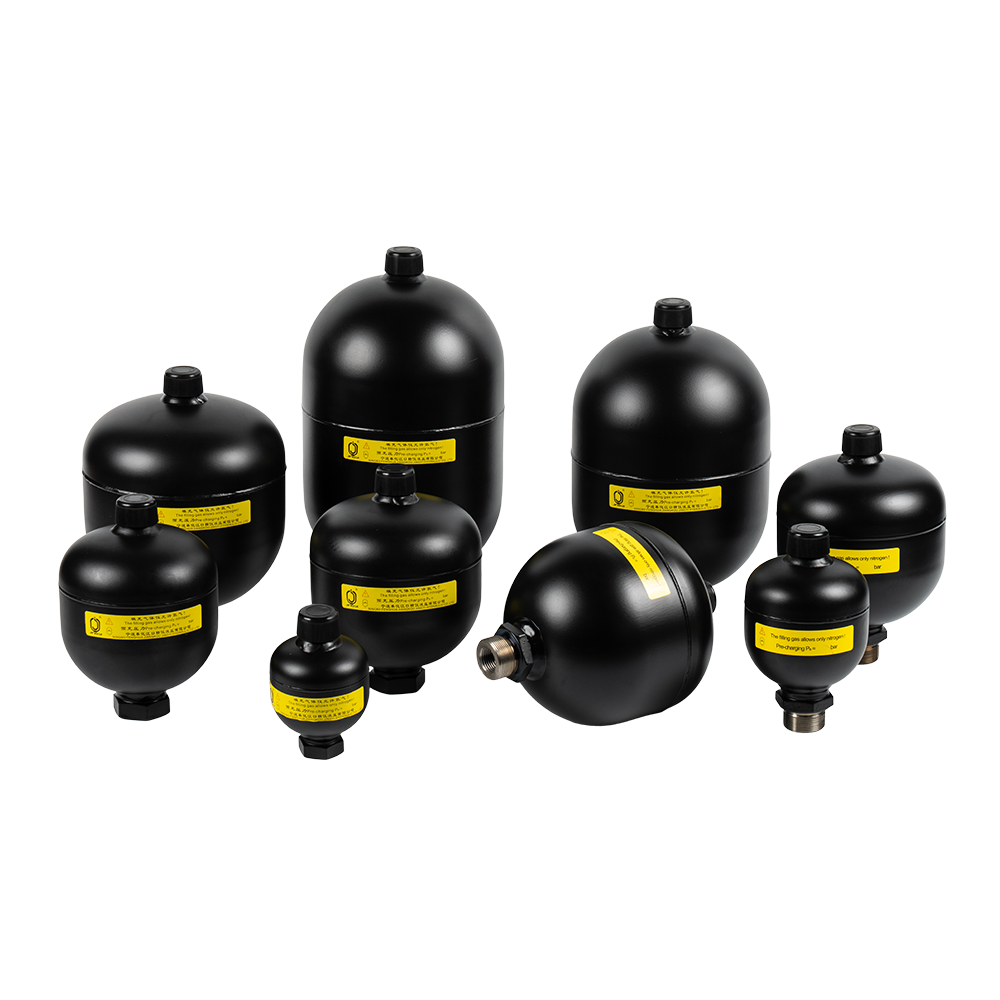 Small Diaphragm Accumulator Manufacturer, Pressure Vessel Accumulator FactoryNingbo Fenghua Jiangkou Jingyi Hydraulic is a China small diaphragm accumulator manufacturer & pressure vessel accumulator factory, we of...View Product →
Piston accumulators use a free-moving piston to separate the two media. The positive separation makes them suitable for high-pressure and large-flow energy storage, where the gas side must remain stable at high discharge rates. Heavy equipment manufacturers and test rig designers usually review piston accumulators for high-pressure and large-flow applications when the duty involves sustained flow demand.
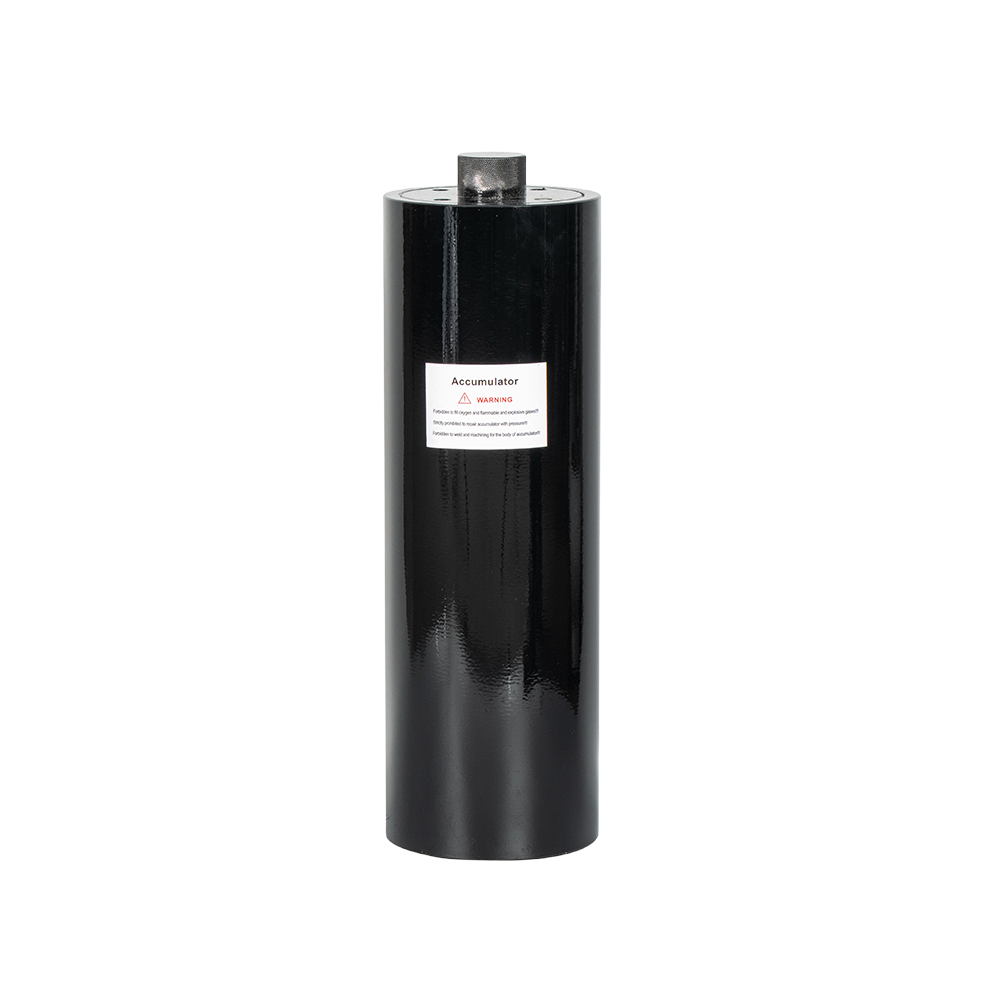 OEM & ODM High Pressure Piston Accumulator Manufacturer, FactoryNingbo Fenghua Jiangkou Jingyi Hydraulic is a China high pressure piston accumulator manufacturer and factory, we offer OEM & ODM piston ...View Product →
Manufacturing Qualification and Production Capacity Behind the Certificate
CE certification and the license to build high-pressure vessels should always be evaluated together. A manufacturer that produces pressure vessels in China must also hold the national special equipment manufacturing license. Ningbo Fenghua Jiangkou Jingyi Hydraulic Co., Ltd. holds both the Grade A2 pressure vessel manufacturing license issued by the Zhejiang Provincial Market Supervision Administration and the CE certification required for European market access. This combination covers the two levels that matter to a buyer: legal authorization to manufacture high-pressure vessels, plus conformity with EU pressure-safety rules.
Capacity is part of the qualification picture. A certified factory that maintains production quality across large volumes is more likely to keep material sourcing, welding, and testing consistent. The manufacturer's published annual capacity is shown below.
Annual production capacity by accumulator type, in units per year, based on manufacturer data.
How to Verify a CE Certified Accumulator Before Purchase
Verification does not require an audit trip to the factory. It requires asking the right questions and reading the documents with the same discipline you would apply to any pressure-vessel purchase.
- Confirm that the CE mark covers the exact model and size you plan to buy. A certificate listing only a product family is not enough; the marking must match the specific series and capacity range on the data sheet.
- Request the Declaration of Conformity. The document should reference the applied directive 2014/68/EU, the harmonized standards, and the notified body when the risk category required one.
- Check the nameplate. Maximum allowable pressure, maximum allowable temperature, nominal volume, serial number, and the CE symbol must be legible and consistent with the technical file.
- Ask about spare parts and commissioning consumables. A complete accumulator installation needs a matching bladder, mounting bracket or hoop, and a charging kit for the specified gas precharge.
- Review the operating manual language. EU users expect instructions in the official language of the destination country.
The chart below illustrates how one manufacturer structures the complete ecosystem around the certified vessel. Sourcing the vessel and its service parts from the same certified factory simplifies documentation, spare-part compatibility, and accountability.
- Accumulators (4)
- Accessories (3)
- Charging kits (3)
- Hydraulic valves (1)
Product line structure covering the certified vessel, its service parts, and commissioning tools.
Frequently Asked Questions about CE Certified Accumulators
Is CE certification valid for an accumulator used outside the EU?
No. CE marking is the EU market-access statement. If the machine is destined for North America, the customer generally requires ASME or CRN certification instead. Some manufacturers maintain parallel certifications, but the buyer must confirm the destination-market requirement before placing the order.
Are accumulators smaller than one liter automatically exempt from CE marking?
Not automatically. The directive applies to equipment with a maximum allowable pressure above 0.5 bar. Very small vessels can be exempt from CE marking, but the exemption depends on the calculated product of pressure and volume, not on the capacity alone. The manufacturer must document whether the vessel falls under an exemption such as Sound Engineering Practice.
What documents should a supplier provide with a CE-certified accumulator?
A Declaration of Conformity, the data sheet with pressure, temperature, and volume values, the instruction manual, and traceability records. For higher PED categories, the Declaration will also identify the notified body that assessed the design and production.
Does CE certification expire?
CE marking has no fixed expiry date. It remains valid as long as the design, the manufacturing process, and the applicable harmonized standards stay unchanged. The manufacturer's quality system must remain under the required surveillance, and any design change triggers reassessment.
Sourcing a CE Certified Accumulator with Confidence
Whether you build agricultural machinery, industrial equipment, or an offshore power unit, the stable path starts with the documents, not the price list. Define the operating pressure, nominal volume, gas precharge, and the standards of the target market. Then compare the Declaration of Conformity from each candidate supplier alongside the technical data sheet.
A certified manufacturer with factory-direct operations can respond quickly, supply the compliance documentation, and recommend the right vessel type for the duty. Do not hesitate to contact the manufacturer directly with your pressure, volume, and target-market requirements. A competent supplier will send model options with the supporting CE documentation.
A CE-certified accumulator proves that the vessel was designed to a recognized pressure standard, produced in a controlled environment, and supported by traceable records. When those conditions hold, CE certification becomes a clear specification that keeps your project moving.
PREV: 316 Stainless Steel Diaphragm Accumulator | Corrosion-Resistant Energy StorageNEXT: Hydraulic Energy Storage Explained: How Accumulators Store and Release Fluid Power
Related Products
-
-

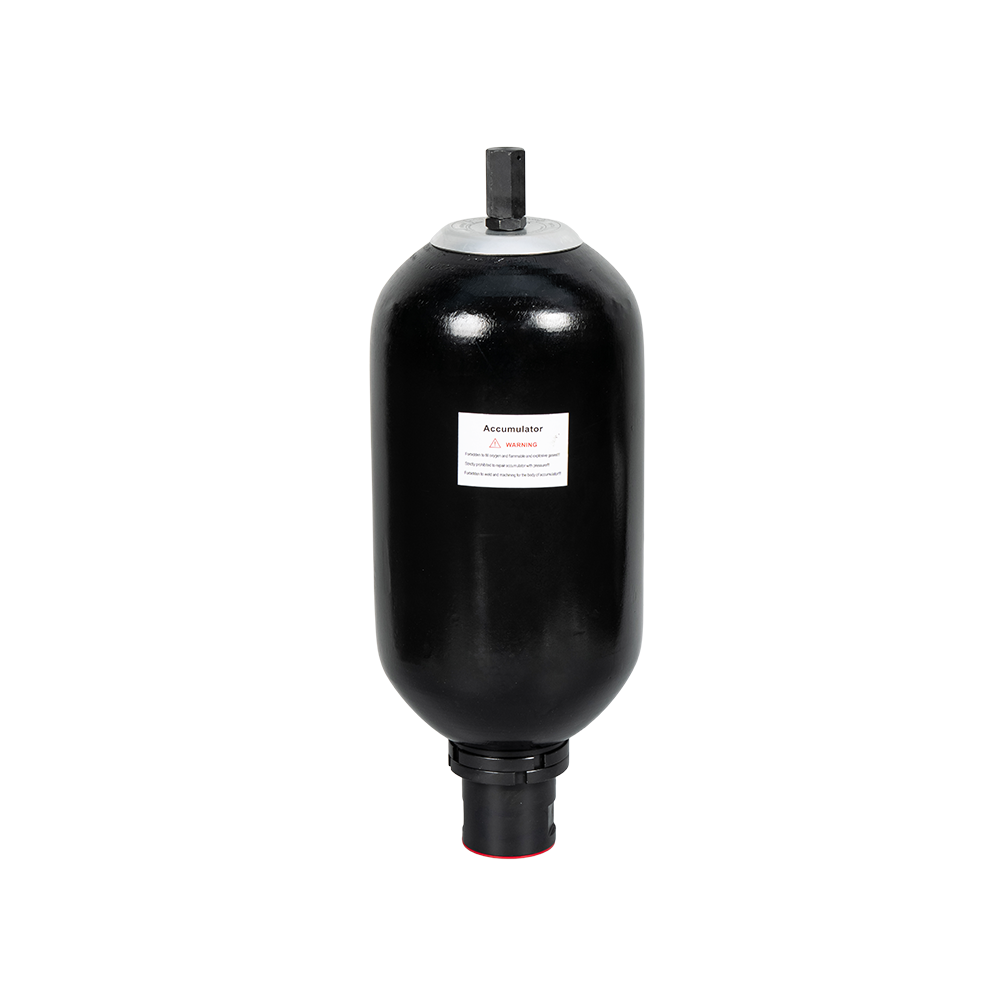
PED-type accumulator bladders refer to the internal rubber bladders (sacs) of hydraulic accumulators that comply with the European Pressure Equipment Directive (PED). These bladder-type accumulators a...
See Details -
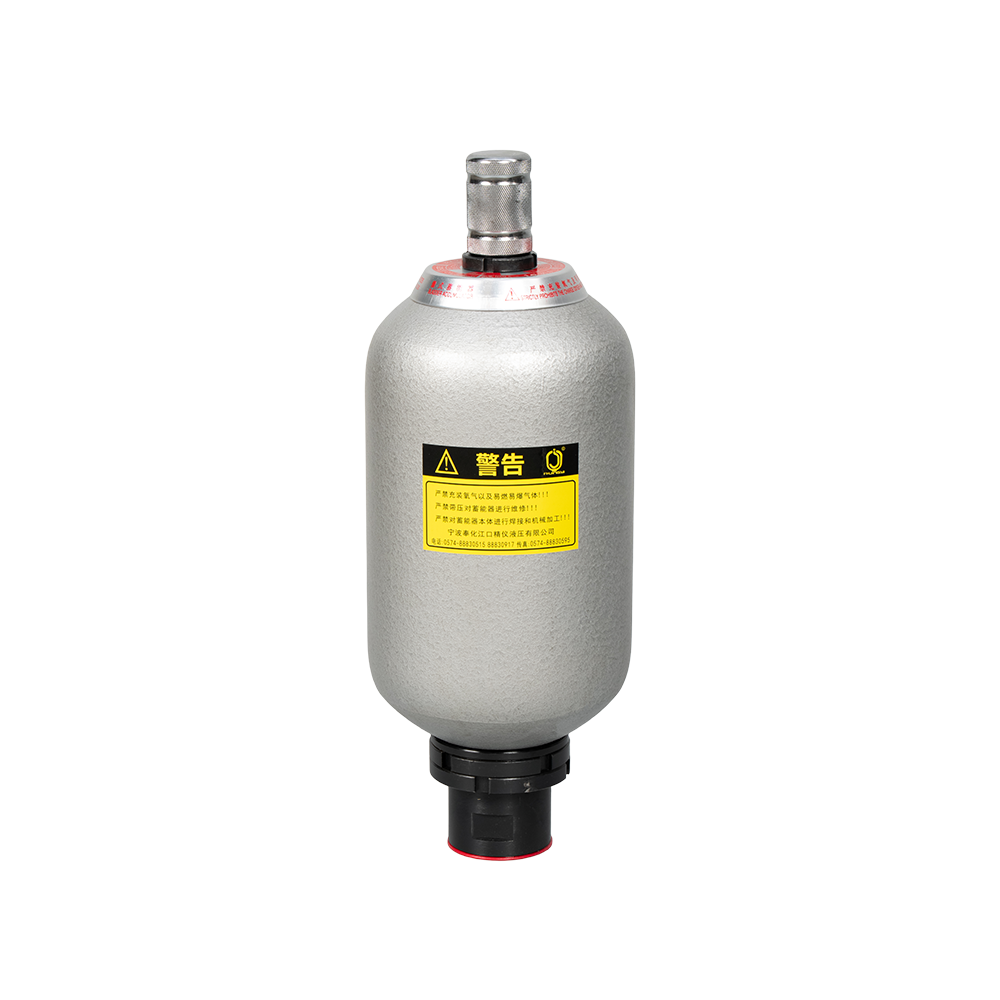
The NXQ Series Bladder Accumulator is a bladder-type accumulator conforming to national standards (JB/T 7036-93) or HG2331. Its core component is the "bladder" or "capsule," hence the name. This serie...
See Details -
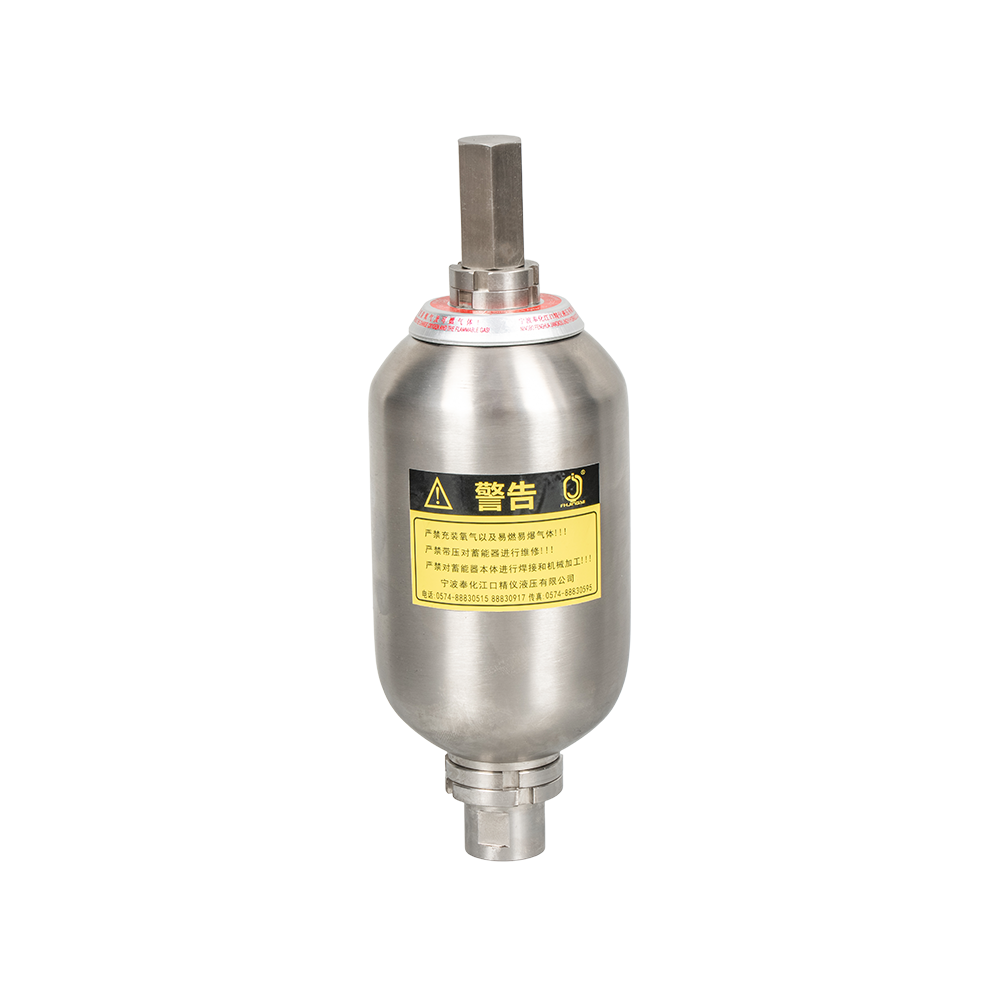
A stainless steel bladder accumulator is an energy storage device used in hydraulic systems. It utilizes the compressibility of a gas (usually nitrogen) to store and release energy, primarily for stab...
See Details -

A Piston Accumulator is a mechanical device that uses the compressibility of a gas (usually nitrogen) to store hydraulic energy. It is widely used in hydraulic systems as an energy regulator. It isola...
See Details -
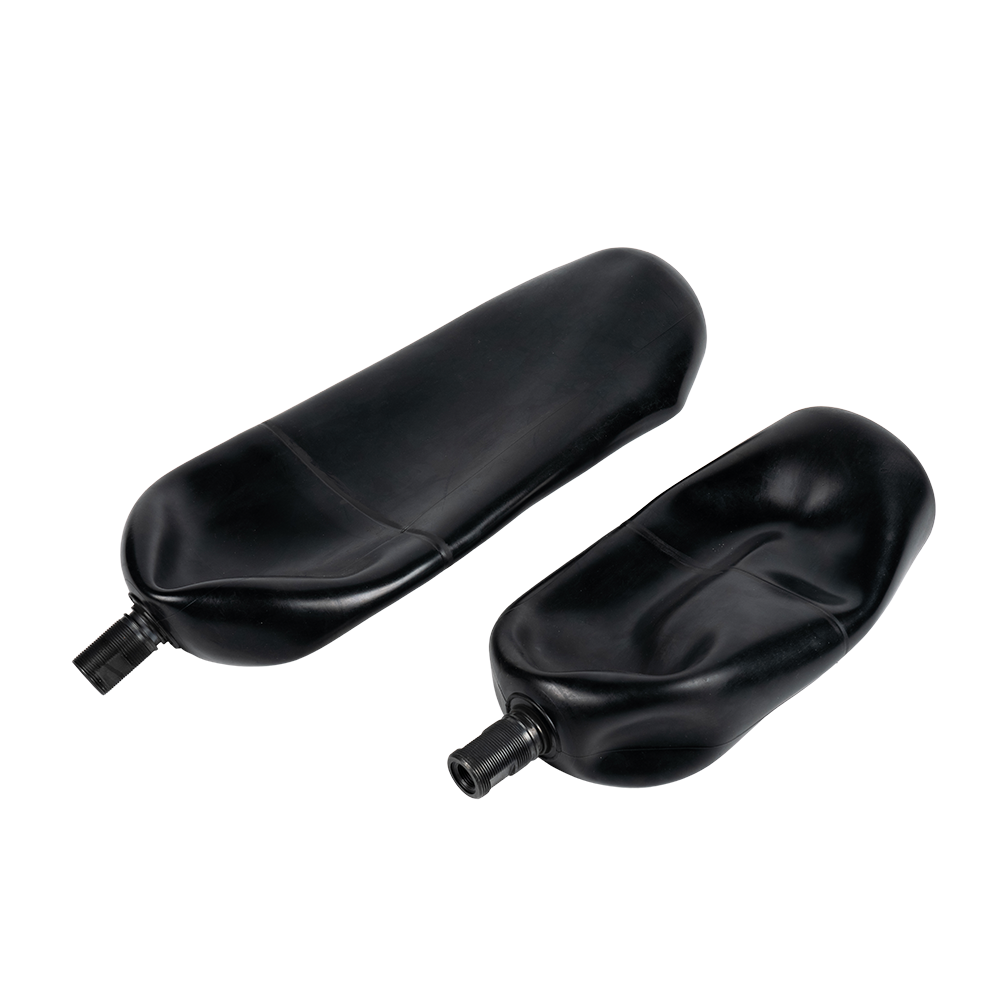
The NXQ Series Accumulator Bladder is a critical energy storage element in hydraulic systems, primarily responsible for absorbing energy fluctuations and releasing energy to smooth system operation.
See Details
News
-
A harvester header that sags a few centimetres every time pump load spikes, or a reel that surges as the engine drops to idle, points to the same root cause: pressure fluctuation that nothing in the circuit is...
READ MORE -
What Is an Accumulator Charging Kit and What Does It Do? An accumulator charging kit is a specialized set of tools used to safely charge, check, and adjust the nitrogen gas pre-charge pressure inside hydraulic...
READ MORE -
Piston accumulators separate gas and fluid with metal pistons. They feature strong pressure resistance and a wide range of volume options, enabling high-pressure energy storage and long-term pressure maintenanc...
READ MORE -
Every hydraulic system has a moment when demand exceeds supply. A molding press calls for a sudden surge of fluid; a wind turbine pitch drive needs a short burst of power; a hydraulic rig requires emergency pr...
READ MORE -
Imagine a machine that needs a short burst of high flow for only five seconds out of every forty-second cycle. If the pump is sized for that peak, the rest of the time it runs oversized, generates unnecessary ...
READ MORE -
Bladder accumulators use rubber bladders to separate gas and fluid. They feature fast response and good sealing performance, effectively absorbing pressure pulsations and compensating flow. Suitable for medium ...
READ MORE
contact us

-

-

Mobile: +86-574-88830515
-

Telephone: +86-15968431761
-

No. 12 Xujiabu, Xikou Town, Fenghua District, Ningbo City, Zhejiang Province, P.R.China