
 Español
 中文简体
中文简体Imagine a machine that needs a short burst of high flow for only five seconds out of every forty-second cycle. If the pump is sized for that peak, the rest of the time it runs oversized, generates unnecessary ...
READ MORE
Home / News / Industry News / Hydraulic Energy Storage Explained: How Accumulators Store and Release Fluid Power
Hydraulic Energy Storage Explained: How Accumulators Store and Release Fluid Power
Admin 2026-08-21Content
- 1 What Is Hydraulic Energy Storage?
- 2 Hydraulic Energy Storage vs. Large-Scale Pumped Hydro
- 3 How an Accumulator Stores and Releases Hydraulic Energy
- 4 Bladder, Diaphragm, or Piston: Which Accumulator Design Is Right?
- 5 Industrial Applications and Operational Benefits
- 6 Manufacturing Capability and Supply Assurance
- 7 Frequently Asked Questions About Hydraulic Energy Storage
Every hydraulic system has a moment when demand exceeds supply. A molding press calls for a sudden surge of fluid; a wind turbine pitch drive needs a short burst of power; a hydraulic rig requires emergency pressure after a pump failure. Hydraulic energy storage exists to fill that gap. In industrial practice, it is almost always implemented with accumulators, pressure vessels that store hydraulic energy in a compressed gas and release it on demand. This article explains how hydraulic energy storage works, compares the main accumulator designs, and gives buyers a practical framework for selecting a reliable storage component.
What Is Hydraulic Energy Storage?
Hydraulic energy storage is the practice of storing potential energy in a pressurized fluid and releasing it to perform mechanical work. In industrial circuits, this is achieved with a device called an accumulator. An accumulator captures surplus hydraulic energy during low-load phases and returns it when load peaks. It can smooth pressure pulsations, compensate for leakage, absorb thermal expansion, and provide emergency power.
The principle is simple: a gas is compressible, a liquid is not. By placing a compressible gas in contact with hydraulic fluid through a barrier, an accumulator creates a cushion that stores energy. The stored energy is not electric or kinetic; it is the potential energy of compressed gas acting on a fluid column. When the system needs extra flow, the gas expands and pushes fluid into the circuit, giving a dense, short-duration boost.
Hydraulic Energy Storage vs. Large-Scale Pumped Hydro
Many searches for hydraulic energy storage point to pumped storage hydropower, a grid-scale electricity storage technology. In that system, water is pumped to an upper reservoir during low energy demand and released through turbines to generate electricity when demand rises. It is a proven way to stabilize national grids, but it is not the same technology used in industrial machinery.
Industrial hydraulic energy storage differs not only in scale but in operating mode. Instead of lifting mass, it compresses gas in a sealed pressure vessel. This delivers energy in milliseconds, with a response time far shorter than any hydroelectric plant. The two technologies serve separate domains: pumped hydro smooths the grid, while accumulators smooth machine operation. Knowing this distinction helps buyers avoid confusion when searching for industrial hydraulic storage solutions.
How an Accumulator Stores and Releases Hydraulic Energy
Inside an accumulator, a gas such as nitrogen is separated from hydraulic fluid by a bladder, a diaphragm, or a piston. As hydraulic pressure increases, fluid enters the vessel and compresses the gas. When pressure drops, the gas expands and pushes fluid back into the circuit. The classic relation is Boyle's law, P1V1 = P2V2, which means the usable energy depends on the precharge pressure and the working pressure range.
Precharge is the gas pressure when the accumulator contains no fluid. A common rule is to set precharge between 70 and 80 percent of the minimum system pressure. If precharge is too low, the accumulator cannot deliver sufficient fluid. If precharge is too high, it never fills completely. Correct sizing and precharge are the two most important factors in hydraulic energy storage performance.
For a more precise estimate, the required effective fluid volume can be related to the gas volume and pressure levels. A simplified formula for an isothermal process is V_acc = V0 multiplied by the difference between (P0/P1) and (P0/P2), where P0 is precharge, P1 is the minimum working pressure, and P2 is the maximum working pressure. In real applications, an engineering safety factor is added because of fast cycling and temperature variations.
Accumulators also stabilize pressure. Charged units absorb shock and ripple from pumps and valves, protecting sensors and seals. During a pump failure, the stored fluid can drive a cylinder or valve to a safe position, which is why accumulators are core components in emergency shutdown systems.
Bladder, Diaphragm, or Piston: Which Accumulator Design Is Right?
Three designs dominate industrial hydraulic energy storage: bladder, diaphragm, and piston accumulators. Each offers a different balance of volume, response speed, and cost. The table below summarizes the main differences.
| Design | Working Principle | Typical Volume | Best For |
|---|---|---|---|
| Bladder | A flexible bladder separates gas and fluid | 0.5-200 L | General industrial use, high flow |
| Diaphragm | A rubber diaphragm separates gas and fluid | 0.02-2 L | Compact circuits and precision systems |
| Piston | A sliding piston separates gas and fluid | 1-1,000 L | Large flow, very high pressure |
Each design is offered in standard configurations. If you need a bladder accumulator, the NXQ and PED series cover most industrial volumes. For compact circuits, a diaphragm accumulator provides precise response. For high flow and large capacity, a piston accumulator is the recommended choice.
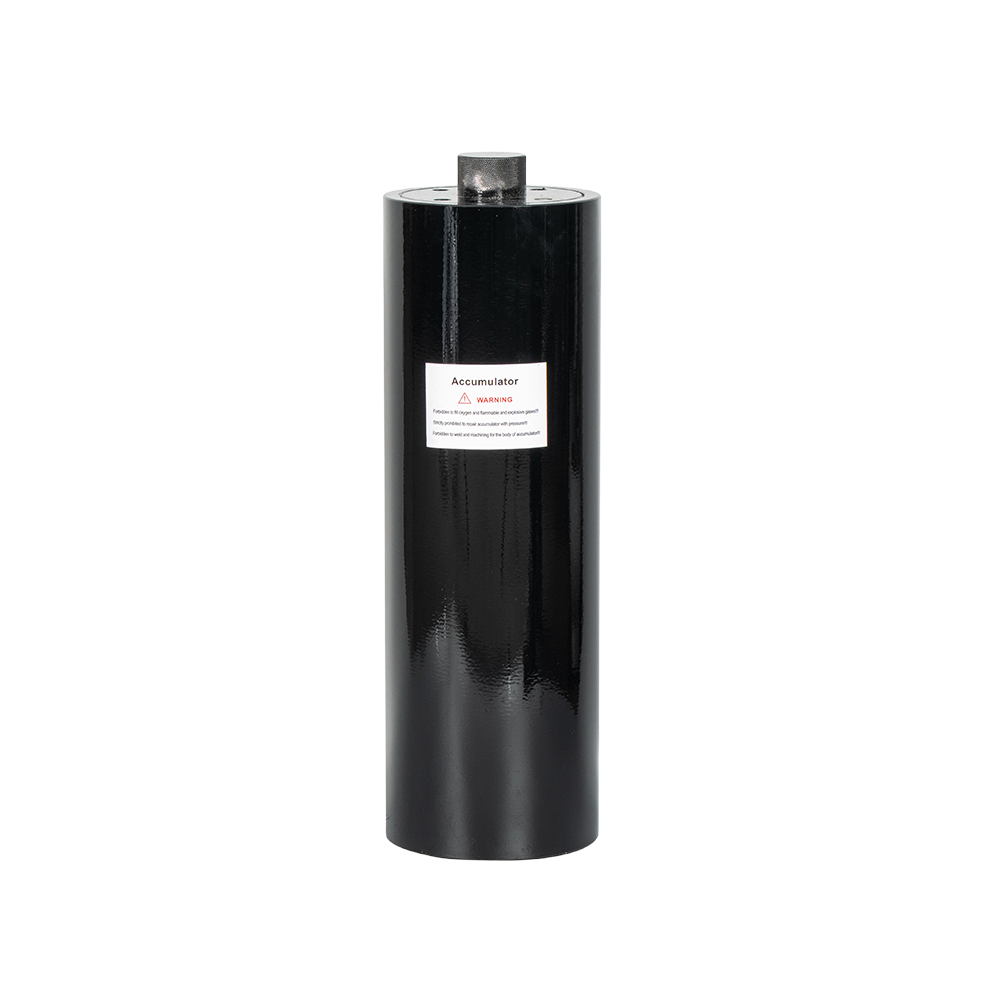 OEM & ODM High Pressure Piston Accumulator Manufacturer, FactoryNingbo Fenghua Jiangkou Jingyi Hydraulic is a China high pressure piston accumulator manufacturer and factory, we offer OEM & ODM piston ...View Product →
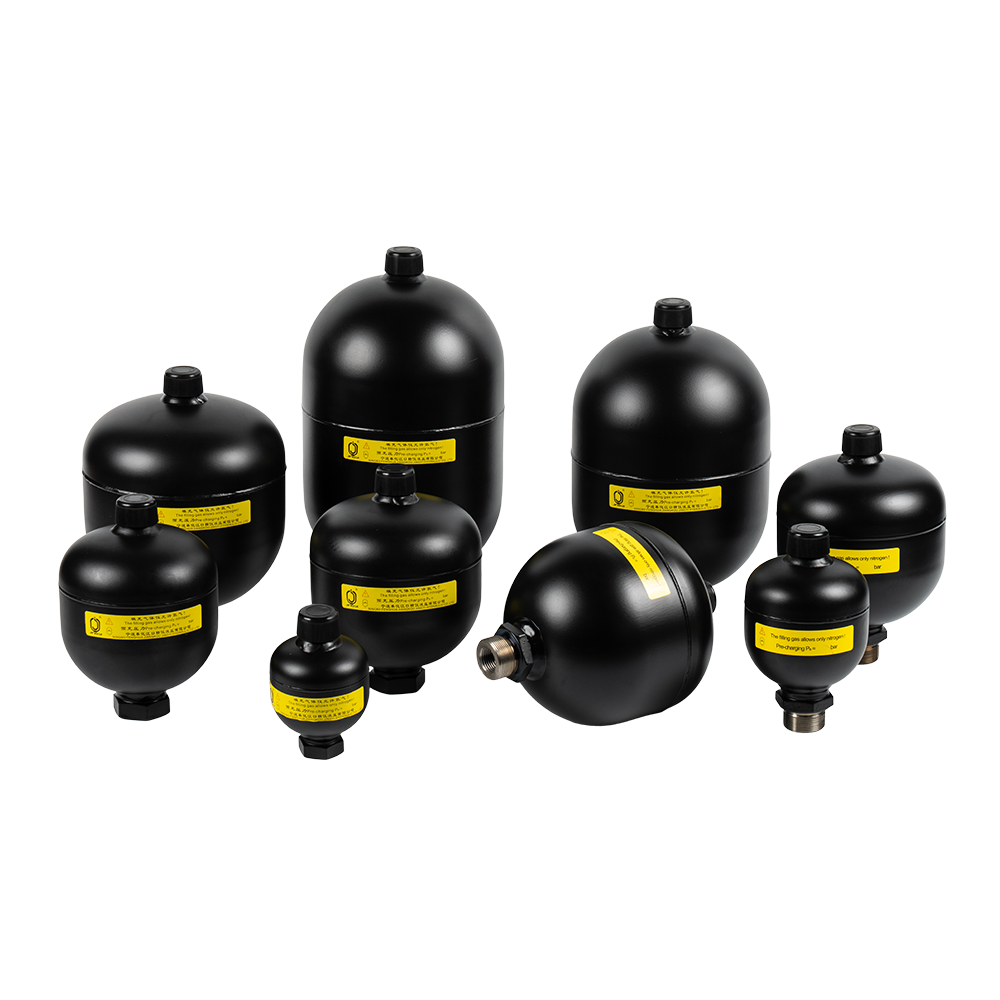 Small Diaphragm Accumulator Manufacturer, Pressure Vessel Accumulator FactoryNingbo Fenghua Jiangkou Jingyi Hydraulic is a China small diaphragm accumulator manufacturer & pressure vessel accumulator factory, we of...View Product →
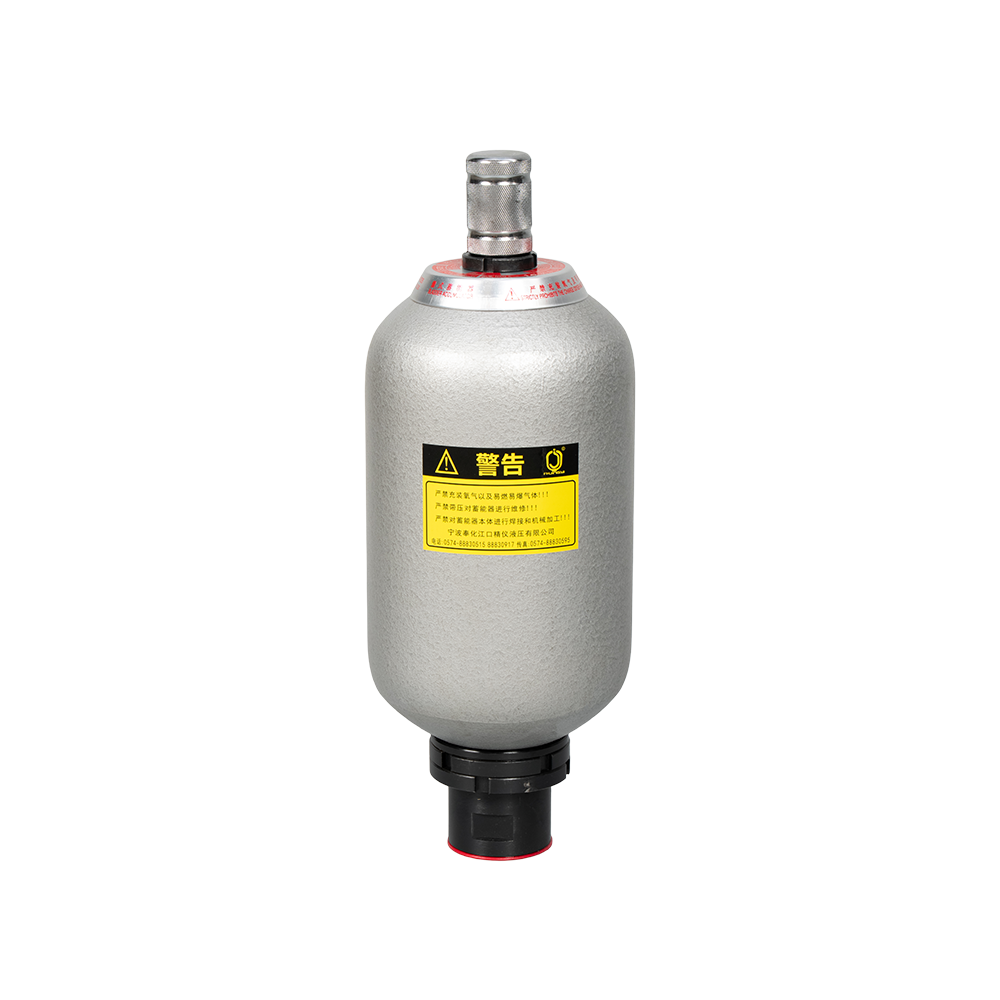 Hydraulic Bladder Accumulator Manufacturer, Standard Bladder Accumulator CompanyAs a China hydraulic bladder accumulator manufacturer and standard bladder accumulator company, Ningbo Fenghua Jiangkou Jingyi Hydraulic ...View Product →
Industrial Applications and Operational Benefits
Industrial applications range from precision machine tools to mobile marine equipment. In industrial equipment, accumulators keep presses cycling faster and hold clamping pressure without the pump running. Wind turbines use storage for pitch control; petrochemical plants rely on it for emergency shutdown. If you need a clear explanation of the function, read our guide explaining what an accumulator does.
Two operational benefits matter most: energy savings and safety. A properly sized accumulator lets a smaller pump meet peak demand, reducing power consumption and heat generation. It also provides fail-safe motion if the pump stops. For mobile machines, it allows a smaller auxiliary power unit. For stationary systems, it can ride through short power interruptions. These advantages explain why accumulator-based hydraulic energy storage is built into both new designs and retrofit projects.
Manufacturing Capability and Supply Assurance
Selecting an accumulator is also a supplier selection decision. Hydraulic energy storage components are pressure vessels; their performance depends on welding quality, seal materials, and manufacturing traceability. Buyers should verify that the supplier has a pressure-vessel manufacturing license and relevant export certifications. A2-level pressure vessel certification and CE marking are two examples of recognized credentials.
Production capacity is another practical factor because hydraulic energy storage components are often integrated into assemblies with short lead times. The chart below shows the annual production capacity for the main accumulator types in our manufacturing facility. It is a simple indication of supply reliability.
Figure 1: Annual production capacity by accumulator type.
The capacity distribution also shows which accumulator type is manufactured at scale. To provide a broader picture, the donut chart below represents the same production data as a share of total annual output.
- Bladder: 24.5%
- Diaphragm: 69.9%
- Piston: 5.6%
Figure 2: Production share by accumulator type.
Frequently Asked Questions About Hydraulic Energy Storage
What is the difference between a bladder and a diaphragm accumulator?
The barrier geometry differs. A bladder accumulator uses a flexible bladder that expands inside the vessel, which is ideal for high-flow systems. A diaphragm accumulator uses a molded rubber diaphragm, which suits smaller capacities and very fast cycling.
How do I determine the correct precharge pressure?
Precharge is typically set to 70 to 80 percent of the minimum system pressure. The exact value depends on the required fluid volume and the working pressure range, so it should be calculated from the system's operating interval. A charging kit with a pressure gauge is needed to set the precharge accurately.
Can hydraulic energy storage replace a larger pump?
In many cases, yes. An accumulator supplies peak flow, allowing the pump to be sized for average demand rather than peak demand. This reduces motor power, heat generation, and energy cost, but the accumulator must be properly sized and recharged between cycles.
PREV: CE Certified Accumulator Buyer's Guide: PED Compliance, Types, and SourcingNEXT: Hydraulic Energy Storage: How Accumulators Store and Release Power in Hydraulic Systems
News
-
-
Piston accumulators separate gas and fluid with metal pistons. They feature strong pressure resistance and a wide range of volume options, enabling high-pressure energy storage and long-term pressure maintenanc...
READ MORE -
How to Choose the Right Hydraulic Valve: The Direct Answer Choosing the right hydraulic valve for an application comes down to five core parameters: valve function (directional, pressure, or flow control), sys...
READ MORE -
Diaphragm accumulators adopt a diaphragm separation structure. They are compact in size, leak-proof, and highly responsive, making them suitable for pressure stabilization and small flow compensation in micro h...
READ MORE -
Your hydraulic system is pitting. Salt water, chemical washdown, or process fluid is attacking the accumulator shell. Standard carbon steel or even 304 stainless steel cannot withstand the chloride levels in m...
READ MORE -
Bladder accumulators use rubber bladders to separate gas and fluid. They feature fast response and good sealing performance, effectively absorbing pressure pulsations and compensating flow. Suitable for medium ...
READ MORE
contact us

-

-

Mobile: +86-574-88830515
-

Telephone: +86-15968431761
-

No. 12 Xujiabu, Xikou Town, Fenghua District, Ningbo City, Zhejiang Province, P.R.China