
 Español
 中文简体
A diaphragm accumulator is a mechanical device that stores and releases energy using Boyle's Law (the compressibility of gases). Its core structure is a diaphragm made of a flexible material (usually ...
See Details
Home / News / Industry News / Diaphragm Accumulator Nitrogen Charged: Precharge Pressure, Purity & Charging Steps
Diaphragm Accumulator Nitrogen Charged: Precharge Pressure, Purity & Charging Steps
Admin 2026-10-30Content
- 1 What "Nitrogen Charged" Actually Means Inside a Diaphragm Accumulator
- 2 Why Nitrogen, and Why 99.99% Purity Matters
- 3 Precharge Pressure: The Arithmetic and the Tolerance
- 4 The Charging Sequence, Step by Step
- 5 Common Mistakes, Tolerances and Procurement Risk
- 6 What to Check Before You Buy a Nitrogen-Charged Diaphragm Accumulator
- 7 Frequently Asked Questions
A 0.32 L diaphragm accumulator leaves the factory charged to 60 bar. Six months later, on a machine whose oil runs at 45 °C, that same unit may read close to 68 bar, and the engineer who never re-checked the precharge will blame the diaphragm for the pressure spikes, the noise and the sluggish actuator response that follow. In most field complaints we investigate, the diaphragm is the victim, not the cause.
So here is the conclusion first: a nitrogen-charged diaphragm accumulator is only as reliable as its precharge. Three numbers decide the outcome — gas purity, the precharge value measured against the circuit's minimum working pressure, and the temperature at which that value was set. Brand, price and delivery lead time matter far less than these three.
What follows comes from more than a decade of accumulator manufacturing: the gas specification, the arithmetic behind precharge, the charging sequence, and the checks that separate a trouble-free installation from a warranty claim.
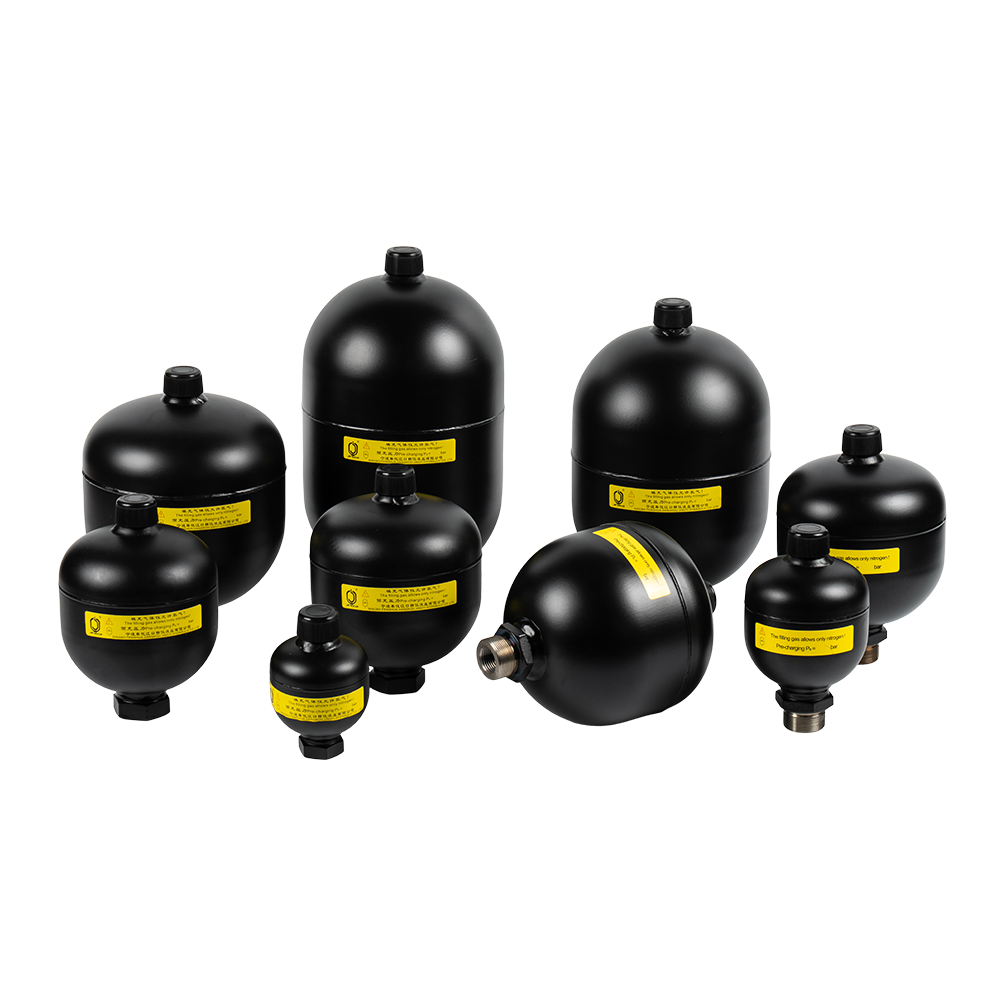 Welded Diaphragm Accumulator for Hydraulic Energy StorageWelded diaphragm accumulator separates hydraulic fluid from precharged nitrogen to store energy, smooth pulsation, and damp shocks in hydraulic circuits.View Product →
What "Nitrogen Charged" Actually Means Inside a Diaphragm Accumulator
A diaphragm accumulator is a welded pressure vessel divided into two chambers by a flexible elastomer diaphragm. The fluid side connects to the hydraulic circuit; the gas side is sealed and precharged with dry nitrogen through a charging valve in the top shell. Oil and gas never mix, so the compressed nitrogen is the only energy storage medium in the unit.
When circuit pressure rises, oil deflects the diaphragm and compresses the gas. When pressure falls, the gas expands and pushes oil back into the system. The diaphragm travels between a contoured support plate on the gas side and the fluid-side shell. If the gas charge is wrong, that travel exceeds the design deflection and the diaphragm creases, extrudes into the oil port or tears at the bead.
This is why the precharge of a diaphragm accumulator is not a catalogue suggestion. It is a mechanical limit on how far the diaphragm may move and how many cycles it will survive.
Why Nitrogen, and Why 99.99% Purity Matters
Nitrogen is used because it is inert, dry and non-flammable. Compressed air is not an acceptable substitute: it carries oxygen, water vapour and compressor oil mist into a pressure vessel. Oxygen plus hot hydraulic oil is a genuine ignition risk inside a sealed shell, moisture corrodes the interior and can freeze at the charging valve in cold weather, and oil mist contaminates the gas chamber.
Most accumulator manufacturers specify nitrogen at class 4.0 or better — 99.99% by volume, with a dew point below -40 °C. Hoses, regulators and gauges should be dedicated to nitrogen service and never shared with compressed-air tools.
A proper charging kit is the difference between a controlled fill and a guess. A calibrated 250 bar gauge, a fine-adjust regulator and a 5/8 UNF or CQJ connection let you fill slowly, hold the pressure steady and read the value once the gas has stabilised.
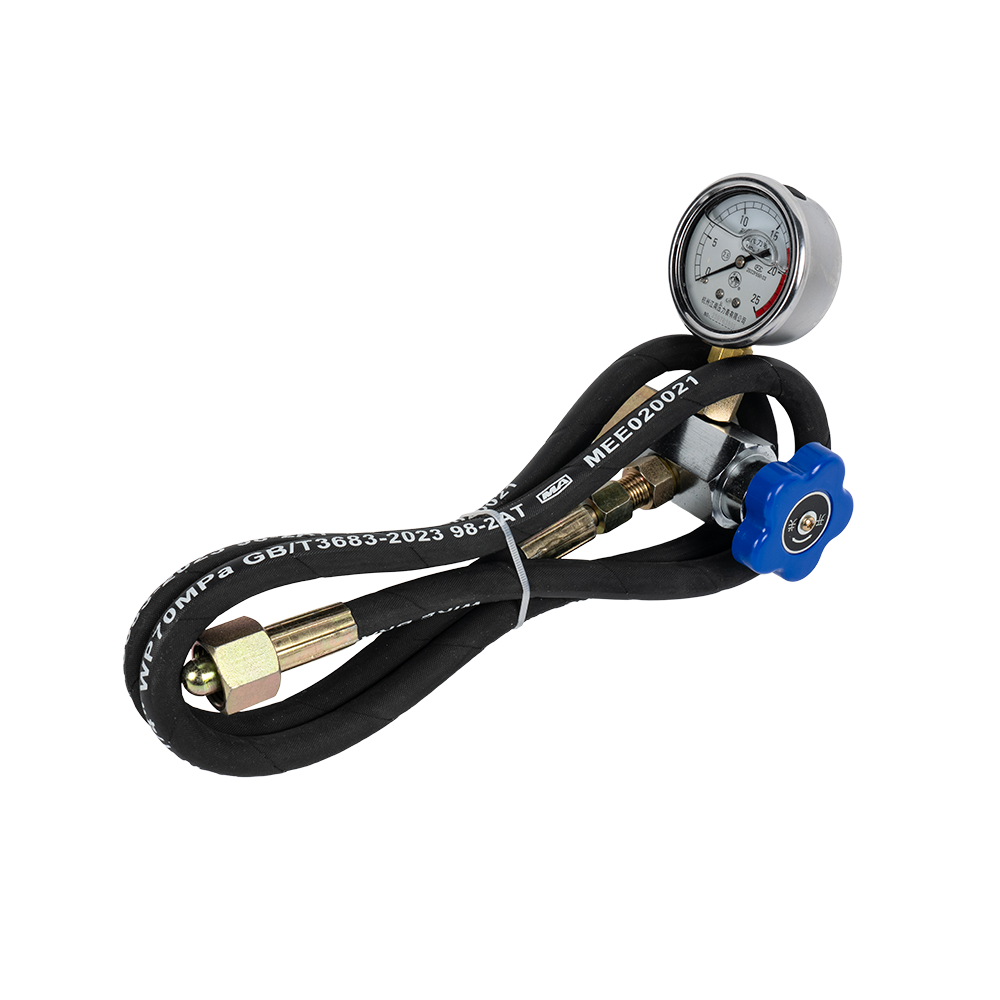 CQJ Accumulator Nitrogen Charging and Pressure Checking KitCompact high-pressure kit for charging, replenishing, and checking accumulator gas pressure with gauge, hose, and anti-backflow protection.View Product →
Precharge Pressure: The Arithmetic and the Tolerance
The general rule for a diaphragm accumulator is that the precharge (p0) sits between 80% and 90% of the minimum working pressure of the circuit (p_min). Stay below 90% so the diaphragm does not bottom out against the support plate on every discharge; stay above roughly 70% so the usable oil volume remains meaningful.
| Accumulator type | Precharge p0 vs p_min | Practical note |
|---|---|---|
| Diaphragm | 80–90% | Small volumes, sealed gas side, fast response in precision circuits |
| Bladder | 80–90% | Gas permeates through the bladder; recheck the charge at least annually |
| Piston | 70–80% | Higher gas loss, suited to large volumes and high flow rates |
Gas pressure tracks absolute temperature. A charge set at 20 °C in the workshop reads higher once the machine is hot, and that is physics, not a fault. The figures below show what a 100 bar cold precharge becomes as the gas warms.
| Gas temperature | Gauge reading | What it means in practice |
|---|---|---|
| 0 °C | About 93 bar | Cold start; the usable volume drops slightly |
| 20 °C | 100 bar | Reference value on the precharge certificate |
| 40 °C | About 107 bar | Check against the 90% of p_min ceiling |
| 60 °C | About 114 bar | Common on hot power packs; often already too high |
A working tolerance of plus or minus 5% is typical, and tighter values are used on servo and aerospace circuits. Always record the gas temperature alongside the reading, otherwise the number means nothing.
The Charging Sequence, Step by Step
- Shut down the hydraulic system, release all residual pressure and isolate the accumulator. Never charge a vessel that is still connected to a live circuit.
- Locate the charging valve, remove the protective cap and inspect the thread. Confirm the target precharge and its reference temperature from the nameplate or datasheet.
- Connect the charging kit to the nitrogen cylinder and blow the hose clear with a short burst of gas before making the final connection.
- Fit the kit to the charging valve, open the accumulator gas valve slowly and watch the gauge.
- Open the cylinder valve slowly and raise pressure in steps — around 20 bar at a time on a high-pressure unit — allowing the gas to stabilise between steps.
- Stop at the target, close the cylinder valve first, then the accumulator gas valve, and write down the reading with the gas temperature.
- Leak-test the valve and the connection with leak-detection fluid or soap solution.
- Re-check the precharge after 24 hours and again after the first week of operation. A drop of more than 5% points to a leak at the valve or a permeating diaphragm.
Common Mistakes, Tolerances and Procurement Risk
- Charging with compressed air because the nitrogen cylinder ran out. This is the most dangerous shortcut on the list.
- Reading the gauge immediately after filling. Gas heats as it is compressed, so the cold precharge is usually 3–8% lower than the hot reading.
- Setting the precharge against maximum working pressure instead of minimum pressure. The diaphragm then bottoms out on the support plate on every discharge stroke.
- Ignoring temperature. A unit charged to 100 bar in a 20 °C workshop and installed on a 60 °C power pack will sit near 114 bar, above a ceiling that is often already tight.
- Leaving the charging hose connected. Any slow leak goes unnoticed and the precharge drifts over months.
One habit prevents most of these problems: mount a safety ball valve on the accumulator oil port so the vessel can be isolated and depressurised before any charging work begins.
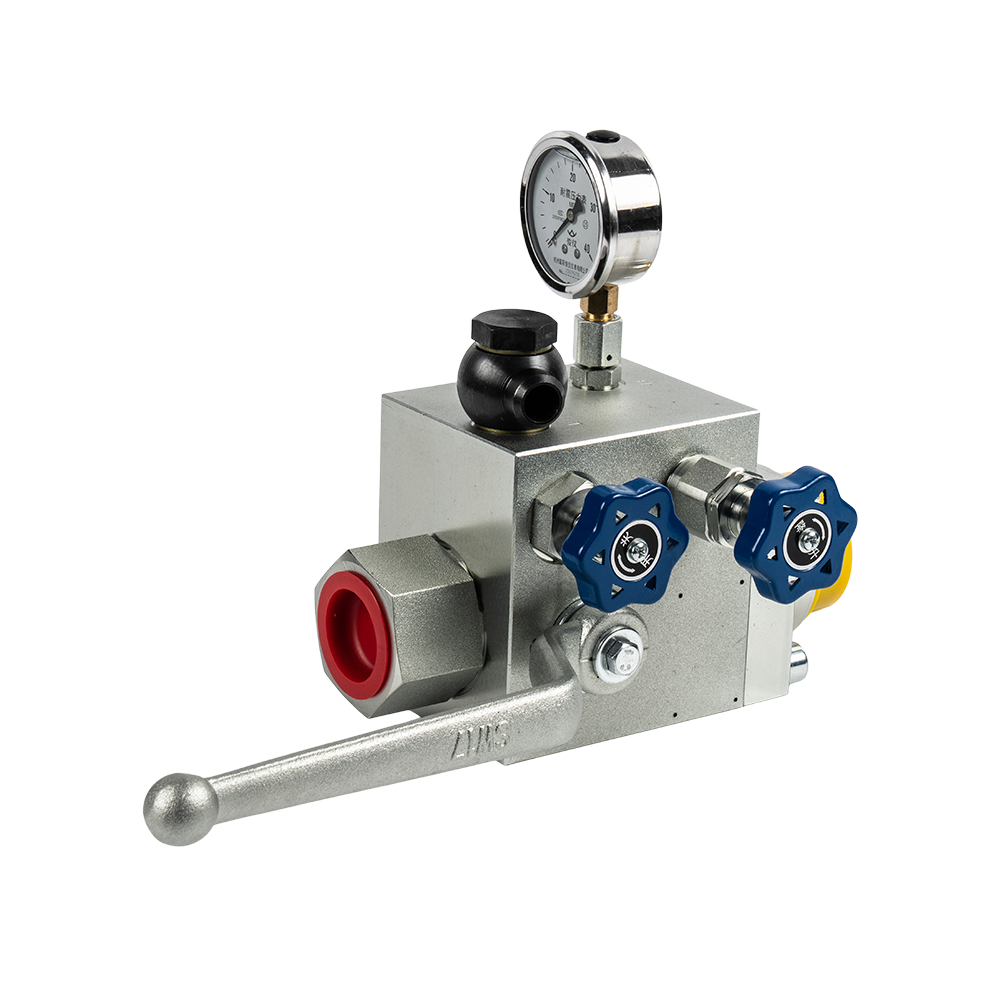 AQF Safety Ball Valves for Hydraulic Accumulator ProtectionProtects bladder accumulators by isolating flow, relieving excess pressure, and allowing safe depressurization before maintenance or charging work.View Product →
What to Check Before You Buy a Nitrogen-Charged Diaphragm Accumulator
Faulty units are rare; underspecified quotations are not. Ask for four things in writing before you approve an order:
- Precharge pressure, the gas temperature at which it was set, and the tolerance applied.
- Vessel volume, pressure rating, fluid port size and thread standard.
- Certification: CE marking and PED conformity for Europe, an A2-class pressure vessel manufacturing licence for the Chinese market.
- Diaphragm compound and its rated temperature range — nitrile, EPDM or fluorocarbon for aggressive or high-temperature fluids.
Our plant in Xikou, Ningbo, builds more than 100,000 diaphragm accumulators a year alongside bladder and piston units, under an A2 pressure vessel licence issued by the Zhejiang market regulator and CE certification, with a precharge record supplied for every vessel. Direct factory sales keep pricing competitive without the charging checks being skipped. If your circuit drives precision actuators at small volumes, our article on diaphragm accumulators for small precision hydraulic systems makes a useful companion, and the industrial equipment page shows where these units are typically installed.
Frequently Asked Questions
Can I charge a diaphragm accumulator with compressed air?
No. Air carries oxygen, moisture and compressor oil into the gas chamber, which creates an ignition risk with hot hydraulic oil and accelerates corrosion. Use dry nitrogen only.
What nitrogen purity should I use?
Class 4.0 or better, meaning 99.99% nitrogen by volume with a low dew point. Industrial-grade nitrogen cylinders from a reputable gas supplier normally meet this specification.
How often should the precharge be checked?
At commissioning, then every three to six months depending on duty cycle and oil temperature. Diaphragm accumulators lose gas slowly, but a leaking charging valve can lose it quickly.
Can the precharge be checked while the machine is running?
No. The accumulator must be isolated and fully depressurised, otherwise the oil pressure on the fluid side masks the true gas reading on the gauge.
What happens if the precharge is too low or too high?
Too low, and the diaphragm deflects beyond its design travel while the usable fluid volume shrinks. Too high, and the gas pressure approaches the vessel limit at maximum system pressure, leaving the diaphragm no room to compress and causing hard, noisy operation.
Get the precharge right and a diaphragm accumulator runs quietly for years, holding pressure during valve shifts and smoothing the pulses that wear out pumps and seals. Get it wrong and the same unit becomes a consumable.
If you are unsure which precharge suits your circuit, send us the minimum and maximum working pressures, the oil temperature range and the volume you need. We will calculate the charge, set it in the workshop and record the reading with its reference temperature before the unit ships.
PREV: Threaded Diaphragm Hydraulic Accumulators: Sizing, Threads and InstallationNEXT: High Pressure Hydraulic Diaphragm Accumulator: Selection, Sizing and Supply Guide
Related Products
-
-

An accumulator bracket is a mechanical device used to fix and support a hydraulic accumulator.
See Details -

An accumulator clamp is a metal fastener specifically designed for securing and supporting hydraulic or pneumatic accumulators. Its primary function is to prevent the accumulator from swaying, deformi...
See Details -
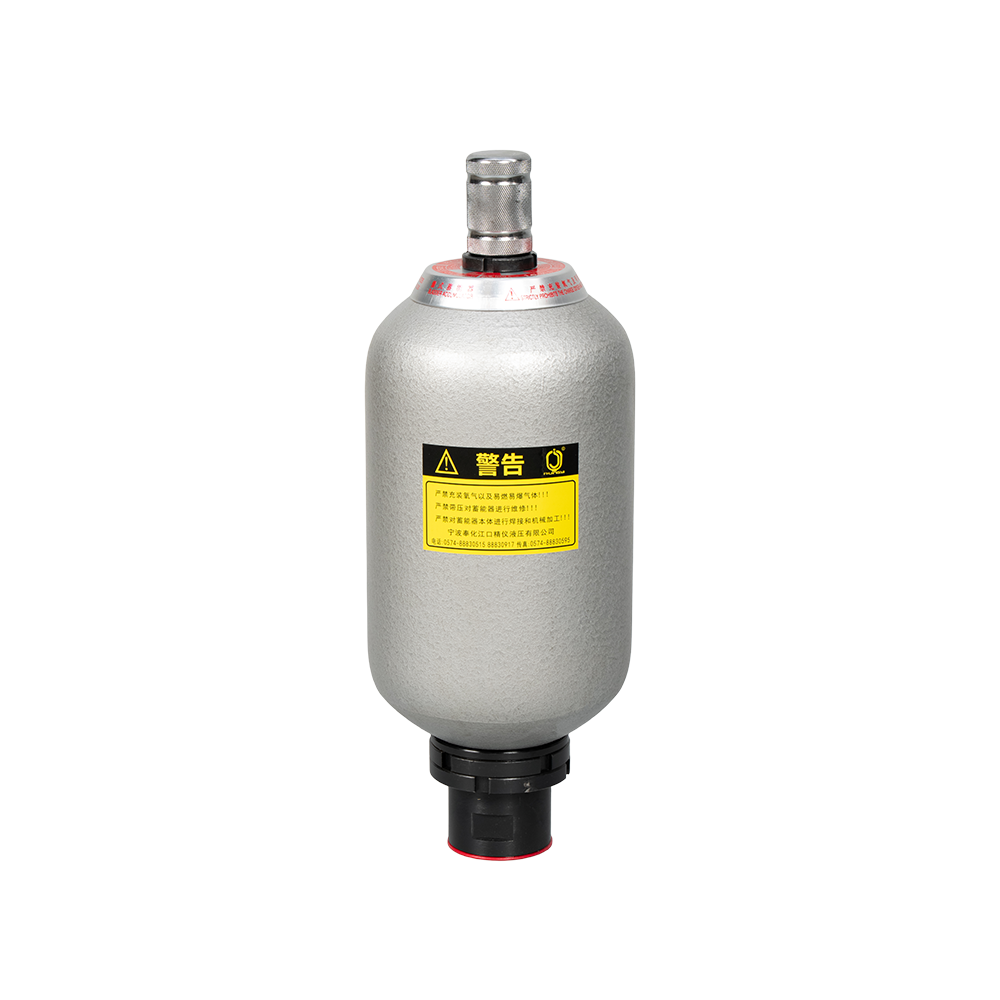
The NXQ Series Bladder Accumulator is a bladder-type accumulator conforming to national standards (JB/T 7036-93) or HG2331. Its core component is the "bladder" or "capsule," hence the name. This serie...
See Details -
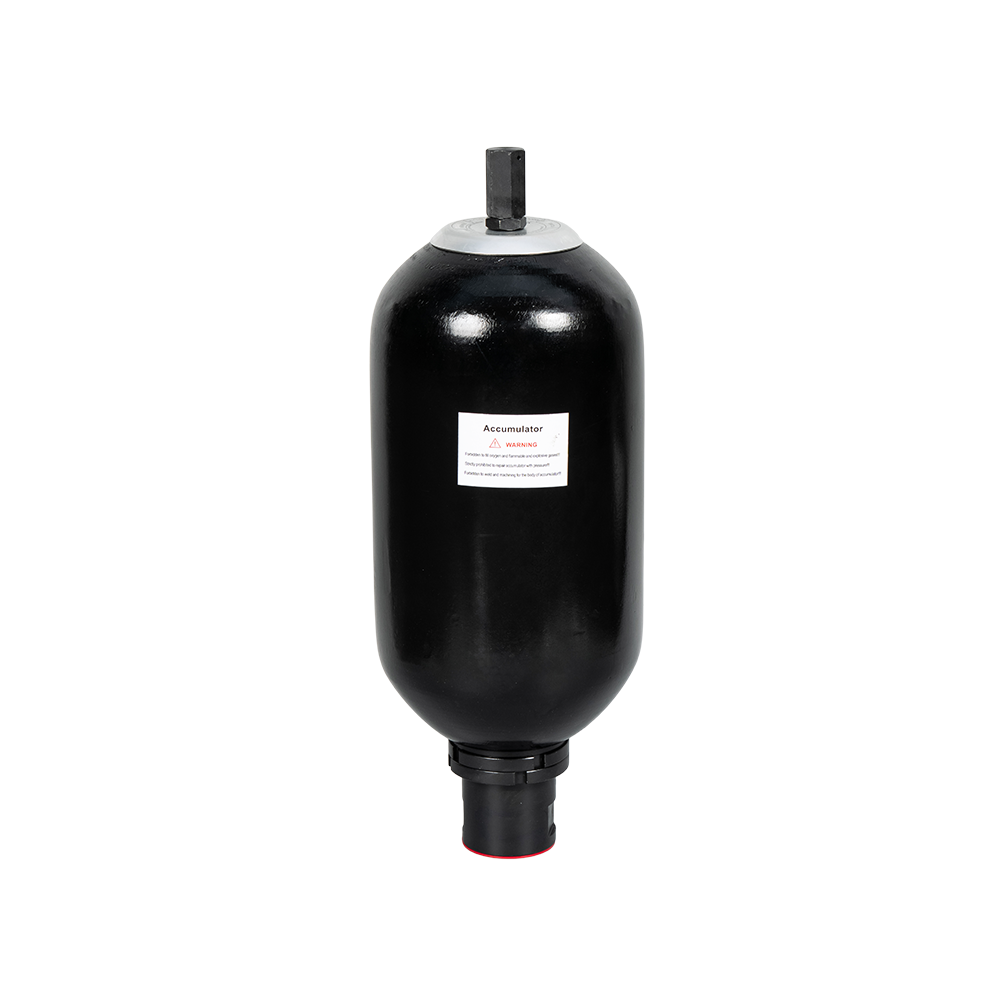
PED-type bladder accumulators refer to bladder accumulators that comply with the EU PED Directive (2014/68/EU). These accumulators typically consist of a steel outer shell and an internal elastic blad...
See Details -
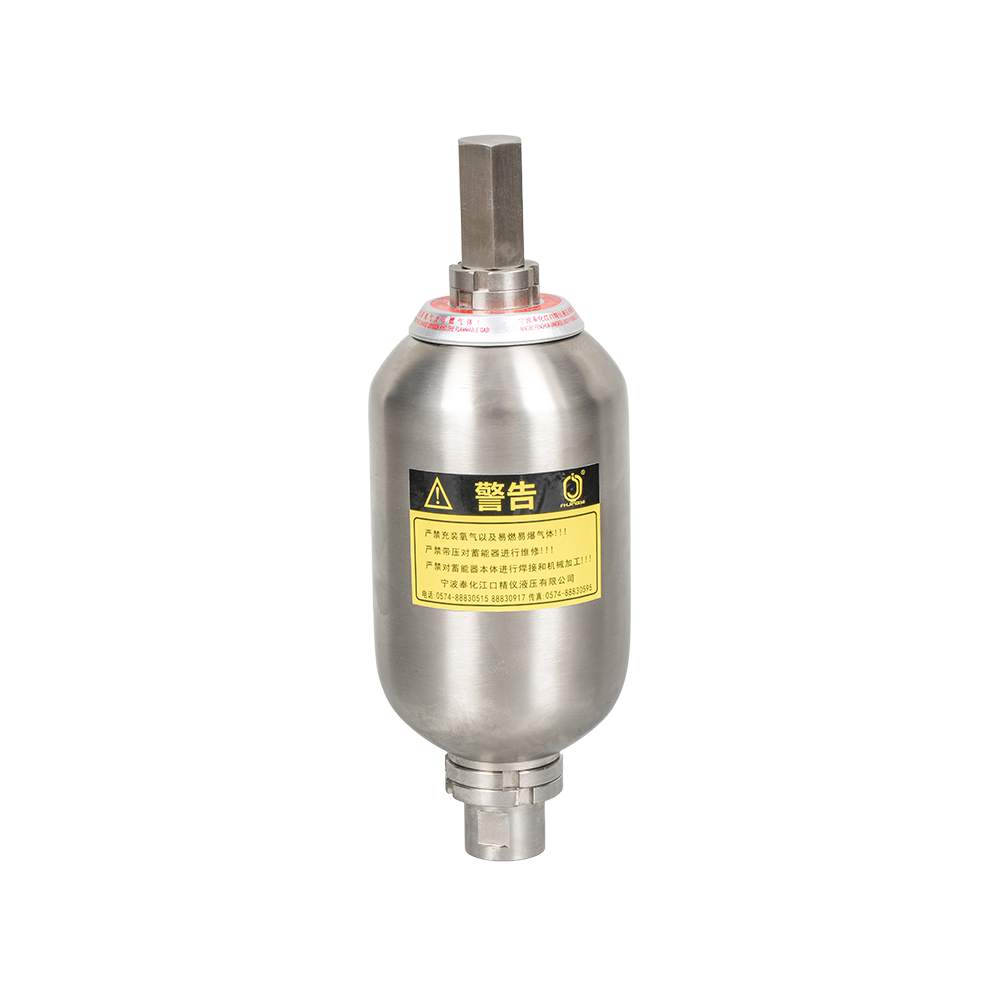
A stainless steel bladder accumulator is an energy storage device used in hydraulic systems. It utilizes the compressibility of a gas (usually nitrogen) to store and release energy, primarily for stab...
See Details
News
-
Picture a 3 MW turbine on a cold February night. The hydraulic power unit trips, the pump stops, and the pitch system has seconds to feather three blades. The only energy left is the nitrogen precharge sitting...
READ MORE -
A harvester header that sags a few centimetres every time pump load spikes, or a reel that surges as the engine drops to idle, points to the same root cause: pressure fluctuation that nothing in the circuit is...
READ MORE -
A 315 bar clamping circuit on a die-casting machine has to hold force for about two seconds after the pump stops. A one litre diaphragm accumulator covers that duty with a precharge that stays within a few per...
READ MORE -
What Is an Accumulator Charging Kit and What Does It Do? An accumulator charging kit is a specialized set of tools used to safely charge, check, and adjust the nitrogen gas pre-charge pressure inside hydraulic...
READ MORE -
A 90 hp utility tractor working a front loader and a loaded grain trailer asks its hydraulic circuit to steer, lift and release the trailer brakes at the same time. When the small diaphragm accumulator support...
READ MORE -
A wellhead control panel on an offshore platform often carries less than two litres of usable hydraulic fluid behind each actuator. When the pump stops, that small volume still has to stroke a valve, hold it o...
READ MORE
contact us

-

-

Mobile: +86-574-88830515
-

Telephone: +86-15968431761
-

No. 12 Xujiabu, Xikou Town, Fenghua District, Ningbo City, Zhejiang Province, P.R.China