
 Español
 中文简体
A diaphragm accumulator is a mechanical device that stores and releases energy using Boyle's Law (the compressibility of gases). Its core structure is a diaphragm made of a flexible material (usually ...
See Details
Home / News / Industry News / Diaphragm Accumulator for Mining Machinery: Selection, Sizing and Maintenance
Diaphragm Accumulator for Mining Machinery: Selection, Sizing and Maintenance
Admin 2026-09-25Content
- 1 Why Diaphragm Accumulators Suit Mining Machinery
- 2 The Four Jobs a Diaphragm Accumulator Does on a Mining Machine
- 3 Sizing a Diaphragm Accumulator for a Mining Duty Cycle
- 4 Failure Modes and the Maintenance That Prevents Them
- 5 Charging Kits, Mounting Hardware and the Full Package
- 6 Procurement Checks Before the Order Goes Out
- 7 Frequently Asked Questions
A hydraulic rock drill striking 2,500 times a minute pushes a pressure pulse into its circuit every 24 milliseconds. The hose flexes, the seals wear, and the pump sees the reflected wave. Diaphragm accumulators are common on mining machinery for one structural reason: the diaphragm has no sliding seal and almost no mass, so the gas side reacts within milliseconds of the first pressure rise.
The conclusion first. For pulsation damping, shock absorption and small-volume energy storage on drilling rigs, crushers and load-haul-dumpers, a diaphragm accumulator is usually a better fit than a bladder or piston unit. It stops being the best answer once gas volume climbs past roughly 4 litres, or when the machine must store several litres of usable oil for a large cylinder. Here is where that boundary sits, how to size the unit, and what to check before a purchase order goes out.
Why Diaphragm Accumulators Suit Mining Machinery
Mining duty cycles punish hydraulics in three ways: impact-driven pressure spikes, continuous high-frequency ripple from pumps and breakers, and dust, vibration and wide temperature swings. A diaphragm accumulator handles all three without the parts that normally fail first.
- No sliding seal. The diaphragm is clamped at its circumference and simply flexes, so there is no piston ring running in a bore and no rubbing wear path.
- Fast response. The moving mass is a thin elastomer membrane, giving reaction times in the millisecond range, which matters when the event to absorb lasts 20 to 50 milliseconds.
- Compact envelope and one wear part. Diaphragm units are short and light for their pressure rating, and the diaphragm is the only consumable.
- Pressure capability that matches the circuit. Typical ratings of 250 to 350 bar cover most mobile and fixed mining hydraulics.
The trade-off is volume. A diaphragm can only deflect so far, so gas volumes stay limited and usable oil volume is typically a third to a half of nominal gas volume. The same selection logic applies to other heavy industrial equipment, but mining is where high pressure and high cycling combine.
| Selection factor | Diaphragm | Bladder | Piston |
|---|---|---|---|
| Typical gas volume | 0.075 to 4 L | 0.5 to 50 L | 0.5 to 200 L |
| Response speed | Fastest, membrane mass only | Fast | Slower, seal and piston inertia |
| Typical maximum pressure | 250 to 350 bar | 250 to 350 bar | 350 bar and above |
| Mounting position | Largely position tolerant | Gas valve up preferred | Vertical preferred |
| Contamination sensitivity | Moderate | Moderate | High, tight clearances |
| Main wear part | Diaphragm | Bladder | Piston seals |
| Best mining duty | Pulsation damping, shock absorption, small-volume storage | Medium-volume storage, emergency braking | Large-volume storage, high-cycle energy recovery |
The Four Jobs a Diaphragm Accumulator Does on a Mining Machine
Be precise about which job the unit performs, because the pre-charge rule depends on it.
- Pulsation damping. Downstream of a piston pump or a breaker, the accumulator flattens ripple that would otherwise fatigue hoses, cooler tubes and valve bodies.
- Shock absorption. When a bucket hits rock or a boom stops abruptly, oil is momentarily trapped. The accumulator gives that oil somewhere to go and clips the peak before it reaches the pump.
- Energy storage. On load-haul-dumpers, stored nitrogen can feed a pilot circuit, release a spring-applied brake, or assist a cylinder while the pump catches up.
- Thermal volume compensation. In a closed circuit, oil volume changes with temperature; the accumulator absorbs that change and keeps pressure inside its allowed band.
Figure 1 shows the same circuit with and without a diaphragm accumulator under a cyclic impact load.
Figure 1. Illustrative pressure trace under a cyclic impact load; the blue curve shows the clipped ripple once a diaphragm accumulator with a correctly set pre-charge is installed.
Sizing a Diaphragm Accumulator for a Mining Duty Cycle
Six numbers drive the selection, and getting any of them wrong means the unit either fails early or simply does not do the job.
- Minimum and maximum working pressure. Everything else derives from these two values.
- Pre-charge pressure. Start near 0.6 to 0.7 times mean working pressure for pulsation damping, 0.6 to 0.8 times minimum working pressure for shock absorption, and closer to 0.9 times minimum working pressure for energy storage. Confirm against manufacturer data before charging.
- Pressure ratio. Maximum working pressure divided by pre-charge pressure sets how far the diaphragm flexes; staying below roughly 4:1 protects diaphragm life.
- Oil volume and flow. Gas volume must be large enough that the diaphragm is not driven against the shell on every cycle.
- Temperature and fluid. NBR covers most mineral oil circuits to about 80 °C, HNBR and FKM extend the temperature range, and EPDM suits water-based fluids that would swell NBR.
- Mounting and service access. The gas valve must stay reachable for pre-charge checks once the machine is assembled.
Where procurement goes wrong
- Gas volume undersized for the ripple, so nothing is clipped and the hose still fails.
- Pre-charge set by feel: an over-charged unit stores almost no oil, an under-charged unit over-flexes and tears the diaphragm.
- Elastomer chosen on temperature alone, ignoring fluid chemistry and permeation behaviour.
- Uncertified pressure vessels, where a lower invoice becomes an insurance and compliance problem.
Failure Modes and the Maintenance That Prevents Them
Diaphragms rarely fail on their own. The rupture is usually the last event in a chain that began with a pre-charge error, contaminated fluid or an over-extended pressure ratio. Sorting out which came first starts with knowing what an accumulator does in a hydraulic circuit.
- 38% Diaphragm rupture or fatigue
- 24% Loss of nitrogen pre-charge
- 16% Fluid contamination damage
- 12% Internal corrosion
- 10% Gas valve or charging port damage
Figure 2. Illustrative distribution of diaphragm accumulator failures recorded during routine mining fleet servicing; the split varies with duty cycle and fluid condition.
A preventive routine that works
- Check pre-charge every 500 operating hours or quarterly, whichever comes first.
- If pre-charge drops more than about 10 percent between checks, leak-test the gas valve instead of simply topping up nitrogen.
- Replace the diaphragm at the first sign of pressure instability, not at the next scheduled shutdown.
- Hold fluid cleanliness at ISO 4406 18/16/13 or better. Diaphragm units tolerate contamination better than piston units, but they still do not like it.
Charging Kits, Mounting Hardware and the Full Package
A diaphragm accumulator is only as good as the accessories around it, and on a mining machine three items decide whether the installation stays serviceable.
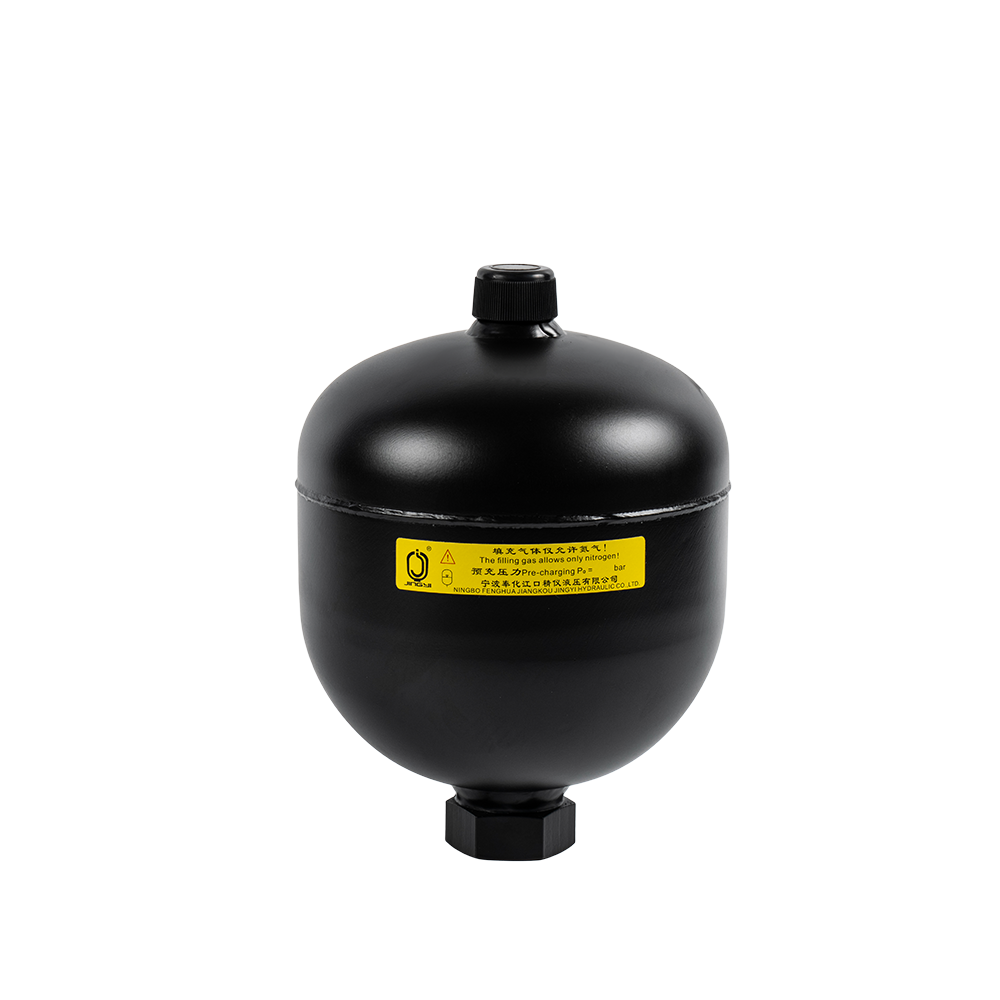
The accumulator itself is a sealed pressure vessel with a clamped diaphragm and a nitrogen gas valve. Units in the 0.075 to 4 litre range cover most breaker, boom and pilot-circuit duties across drilling, crushing and materials handling.
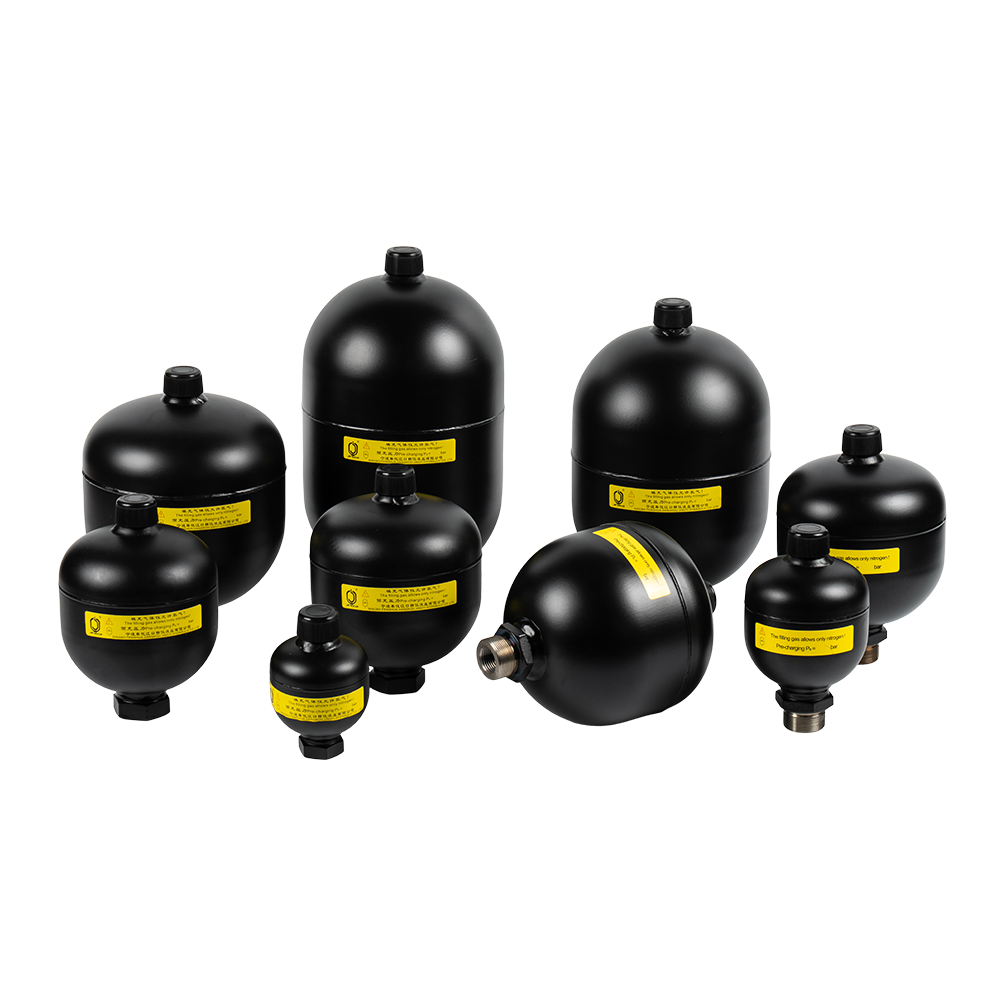 Diaphragm AccumulatorA diaphragm accumulator is a mechanical device that stores and releases energy using Boyle's Law (the compressibility of gases). Its core structure is a diaphragm made...View Product →
Pre-charge is not a one-time job. A charging kit with the right thread form lets maintenance crews top up nitrogen on the machine instead of pulling the vessel off the circuit, which is the difference between a half-hour check and a half-day stoppage.
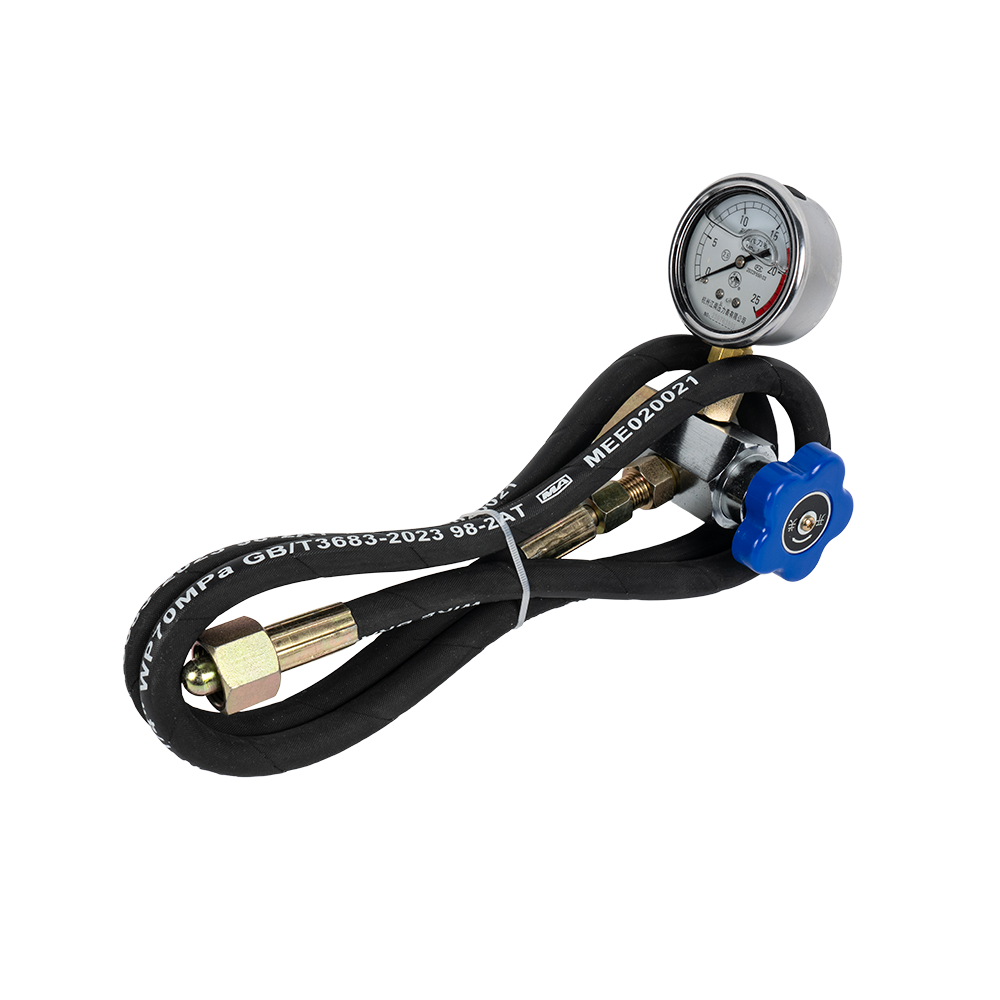 CQJ Charging KitThe CQJ charging kit is a specialized tool for charging, replenishing, correcting, and checking the charging pressure of accumulators in hydraulic systems.View Product →
Mounting hardware matters more than it looks. A bracket and clamp that hold the vessel rigidly keep vibration away from the gas valve and the oil port connection, where a large share of field leaks start.
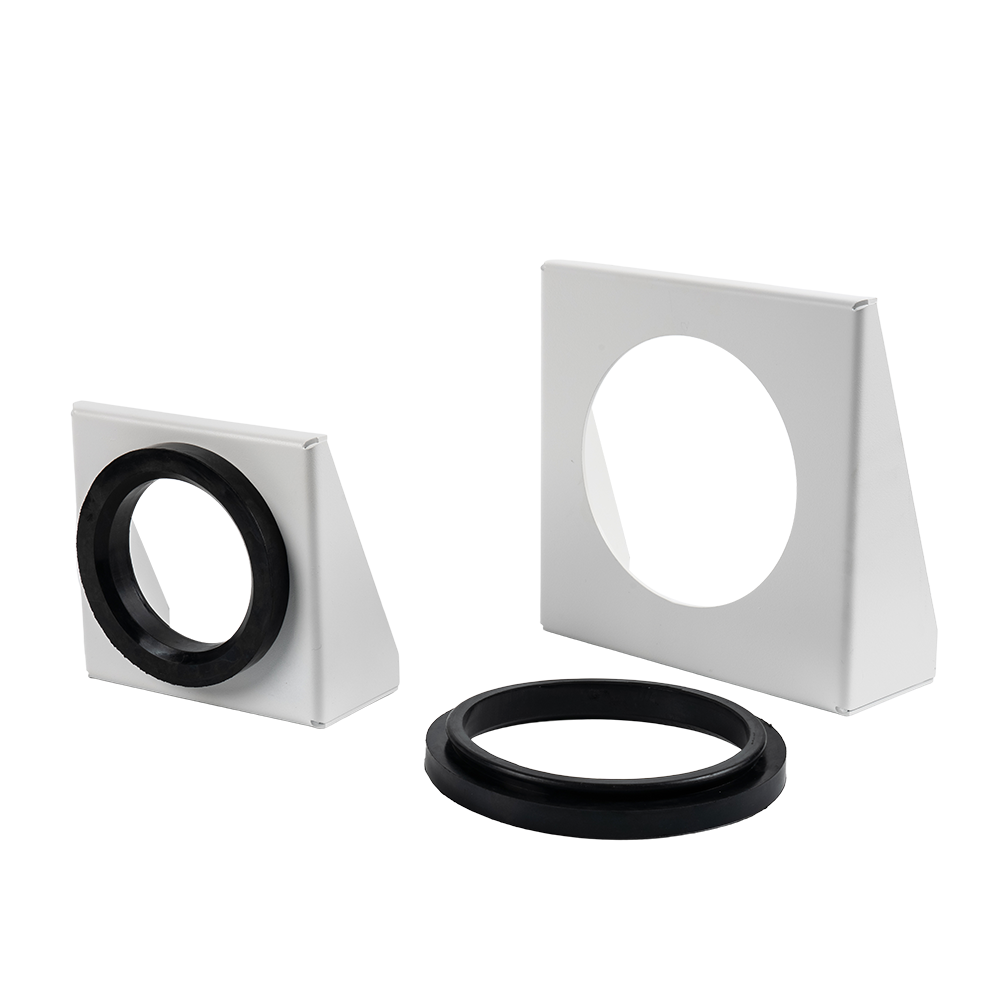 Accumulator BracketAn accumulator bracket is a mechanical device used to fix and support a hydraulic accumulator.View Product →
Procurement Checks Before the Order Goes Out
Accumulators are pressure vessels, so the paperwork is part of the product. Five checks cover most of the risk.
- Manufacturing licence. Look for a pressure vessel manufacturing licence covering the relevant grade, since high-pressure accumulator shells fall under that scope in most jurisdictions.
- Market certification. CE marking or an equivalent declaration is a baseline requirement when the machine is exported.
- Production capacity. Confirm serial production for the size being ordered, not one-off assembly. Output measured in tens of thousands of units a year indicates a repeatable process.
- Test records. Ask for hydrostatic test data and a nitrogen pre-charge certificate per batch, not a generic datasheet.
- Material and elastomer traceability. Wetted-part metallurgy and diaphragm compound should be documented, particularly for cold climate or corrosive duty.
Buying direct from the manufacturer usually shortens the technical loop as well as the price. Questions about pre-charge, elastomer selection or thread standards reach the people who build the unit instead of passing through a trading layer, and that matters when a machine is down.
Frequently Asked Questions
What size diaphragm accumulator does a mining machine need?
Size follows the job. For pulsation damping on a breaker circuit, match gas volume to roughly one quarter of the pump flow per cycle, then confirm against the ripple the circuit can tolerate. For shock absorption, size on the volume of oil trapped during the impact. If the required gas volume exceeds about 4 litres, compare against a bladder or piston unit before committing.
Can a diaphragm accumulator be mounted horizontally?
Yes. Diaphragm units are far less position sensitive than piston types because there is no sliding weight and no oil column pressing on a seal. Horizontal or inclined mounting is normally acceptable; the practical constraint is keeping the gas valve accessible.
What pre-charge suits a hydraulic breaker?
Most breaker circuits sit in the 0.6 to 0.7 times mean working pressure range for pulsation damping, adjusted to the breaker maker's recommendation. Set it with a calibrated charging kit, recheck after the first week, then move to the routine interval.
How do I know the diaphragm has failed?
Three symptoms appear first: nitrogen escaping through the oil port and showing as bubbles in the reservoir, a rapid loss of pre-charge between checks, and pressure ripple returning to its pre-installation level. Any one of them justifies taking the unit off the machine.
For mining machinery, the diaphragm accumulator earns its place through speed and simplicity: no sliding seal, millisecond response, a single wear part, and a pressure rating that matches mobile hydraulic circuits. Choose it on volume and duty, set the pre-charge properly, mount it rigidly, and check that pre-charge on a schedule. Do those four things and the hoses, the seals and the pump will last considerably longer.
PREV: Diaphragm Accumulator for Offshore Oil Equipment: Selection & Supply GuideNEXT: Diaphragm Accumulator for Injection Molding Machine: Selection & Maintenance Guide
Related Products
-
-

An accumulator bracket is a mechanical device used to fix and support a hydraulic accumulator.
See Details -

An accumulator clamp is a metal fastener specifically designed for securing and supporting hydraulic or pneumatic accumulators. Its primary function is to prevent the accumulator from swaying, deformi...
See Details -
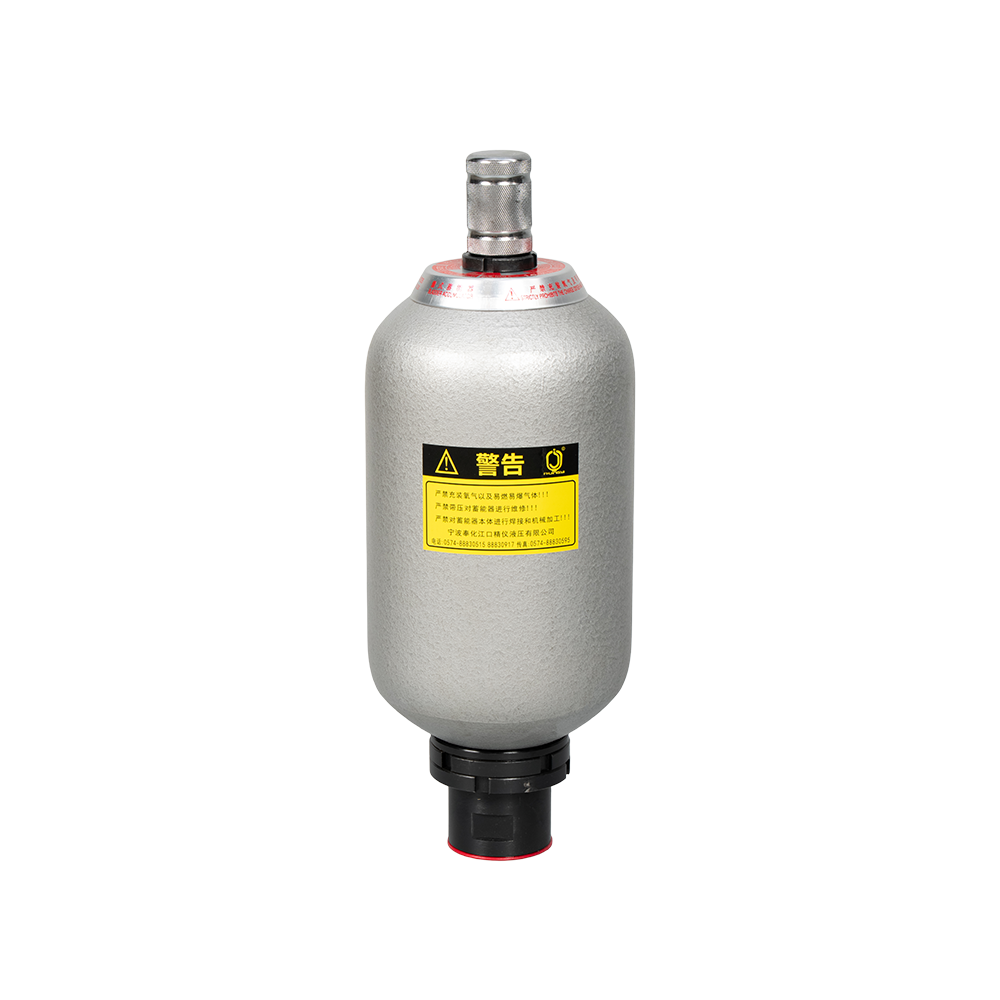
The NXQ Series Bladder Accumulator is a bladder-type accumulator conforming to national standards (JB/T 7036-93) or HG2331. Its core component is the "bladder" or "capsule," hence the name. This serie...
See Details -
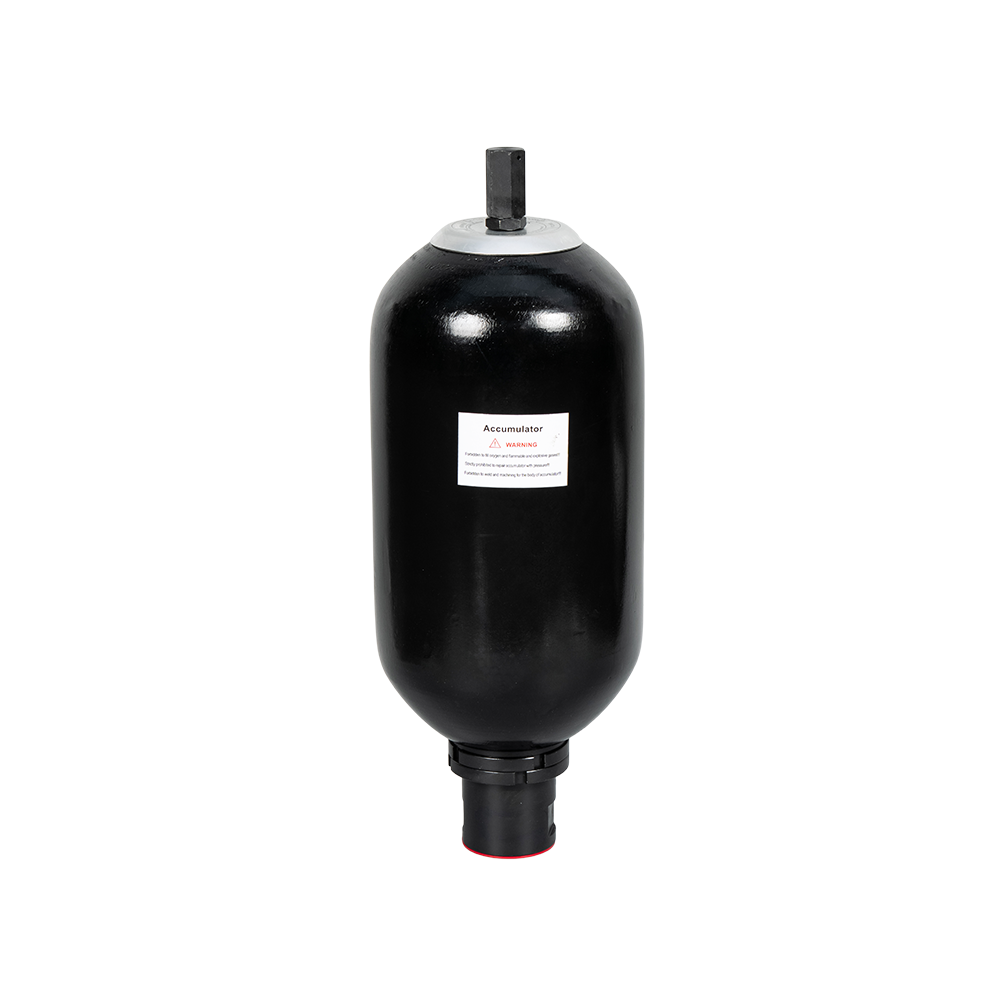
PED-type bladder accumulators refer to bladder accumulators that comply with the EU PED Directive (2014/68/EU). These accumulators typically consist of a steel outer shell and an internal elastic blad...
See Details -
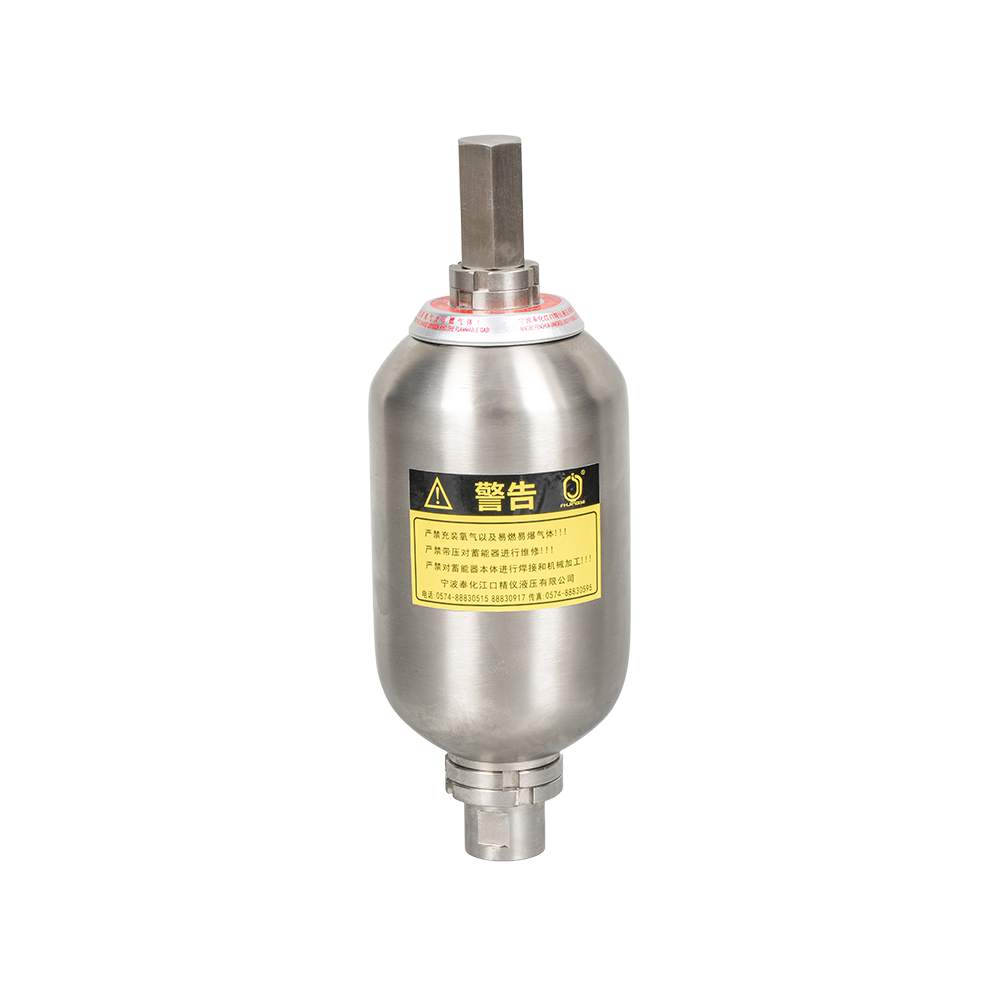
A stainless steel bladder accumulator is an energy storage device used in hydraulic systems. It utilizes the compressibility of a gas (usually nitrogen) to store and release energy, primarily for stab...
See Details
News
-
During a typical injection molding cycle, the hydraulic system demands a sudden surge of oil to drive the injection screw forward at high speed. If the pump alone supplies this flow, it must be oversized, wast...
READ MORE -
Picture a 3 MW turbine on a cold February night. The hydraulic power unit trips, the pump stops, and the pitch system has seconds to feather three blades. The only energy left is the nitrogen precharge sitting...
READ MORE -
When a 180-ton mobile crane lowers a fully loaded boom, the inertia can push hydraulic pressure above 400 bar in the luffing cylinder in less than a second. Without a device to absorb that peak, seals fail ear...
READ MORE -
A harvester header that sags a few centimetres every time pump load spikes, or a reel that surges as the engine drops to idle, points to the same root cause: pressure fluctuation that nothing in the circuit is...
READ MORE -
A 315 bar clamping circuit on a die-casting machine has to hold force for about two seconds after the pump stops. A one litre diaphragm accumulator covers that duty with a precharge that stays within a few per...
READ MORE -
A 90 hp utility tractor working a front loader and a loaded grain trailer asks its hydraulic circuit to steer, lift and release the trailer brakes at the same time. When the small diaphragm accumulator support...
READ MORE
contact us

-

-

Mobile: +86-574-88830515
-

Telephone: +86-15968431761
-

No. 12 Xujiabu, Xikou Town, Fenghua District, Ningbo City, Zhejiang Province, P.R.China