
 Español
 中文简体
中文简体A diaphragm accumulator is a mechanical device that stores and releases energy using Boyle's Law (the compressibility of gases). Its core structure is a diaphragm made of a flexible material (usually ...
See Details
Home / News / Industry News / Diaphragm Accumulator for Construction Cranes | Sizing, Benefits & Maintenance
Diaphragm Accumulator for Construction Cranes | Sizing, Benefits & Maintenance
Admin 2026-09-15Content
- 1 What Is a Diaphragm Accumulator and Why Does a Crane Need One?
- 2 Key Functions of Diaphragm Accumulators in Crane Hydraulics
- 3 How to Size and Pre-Charge a Diaphragm Accumulator for a Crane
- 4 Installation, Charging, and Maintenance on a Construction Site
- 5 Why Manufacturer Certification and Production Capacity Matter
- 6 Frequently Asked Questions
- 6.1 What pre-charge pressure should a diaphragm accumulator use in a crane?
- 6.2 How often should I check the nitrogen pre-charge?
- 6.3 Can a diaphragm accumulator replace a piston accumulator on a crane?
- 6.4 What is the typical service life of a diaphragm?
- 6.5 How do I choose between a bladder and a diaphragm accumulator?
When a 180-ton mobile crane lowers a fully loaded boom, the inertia can push hydraulic pressure above 400 bar in the luffing cylinder in less than a second. Without a device to absorb that peak, seals fail early, hoses burst, and the load can bounce. A diaphragm accumulator for construction crane systems is designed to prevent exactly these events: it stores hydraulic energy, absorbs pressure spikes, and provides emergency flow if the prime mover fails. In this article, we explain how a diaphragm accumulator works in a crane circuit, how to size and pre-charge it correctly, and what maintenance it needs on-site.
What Is a Diaphragm Accumulator and Why Does a Crane Need One?
A diaphragm accumulator is a gas-charged pressure vessel that uses a synthetic rubber diaphragm to separate nitrogen gas from hydraulic fluid. The gas is compressed as fluid is pumped in; when system pressure drops, the expansion of the gas pushes fluid back out. In construction cranes, this simple principle provides energy storage, shock absorption, and safety-related load lowering.
Compared with bladder or piston accumulators, the diaphragm type offers faster response, a compact form factor, and no sliding seals. That makes it a strong candidate on a crane where mounting space is tight and the circuit must react quickly during lifting, slewing, and braking. Many OEMs now fit diaphragm accumulators to small knuckle booms, truck-mounted cranes, and auxiliary circuits such as outrigger controls.
For a typical crane aux circuit, a diaphragm accumulator with a volume of 0.25 to 1.0 liter is enough; the pressure rating depends on the maximum working pressure of the system. Because the diaphragm separates gas and oil completely, the risk of aeration is much lower than in a piston type. That reduces cavitation damage and keeps the crane control system stable.
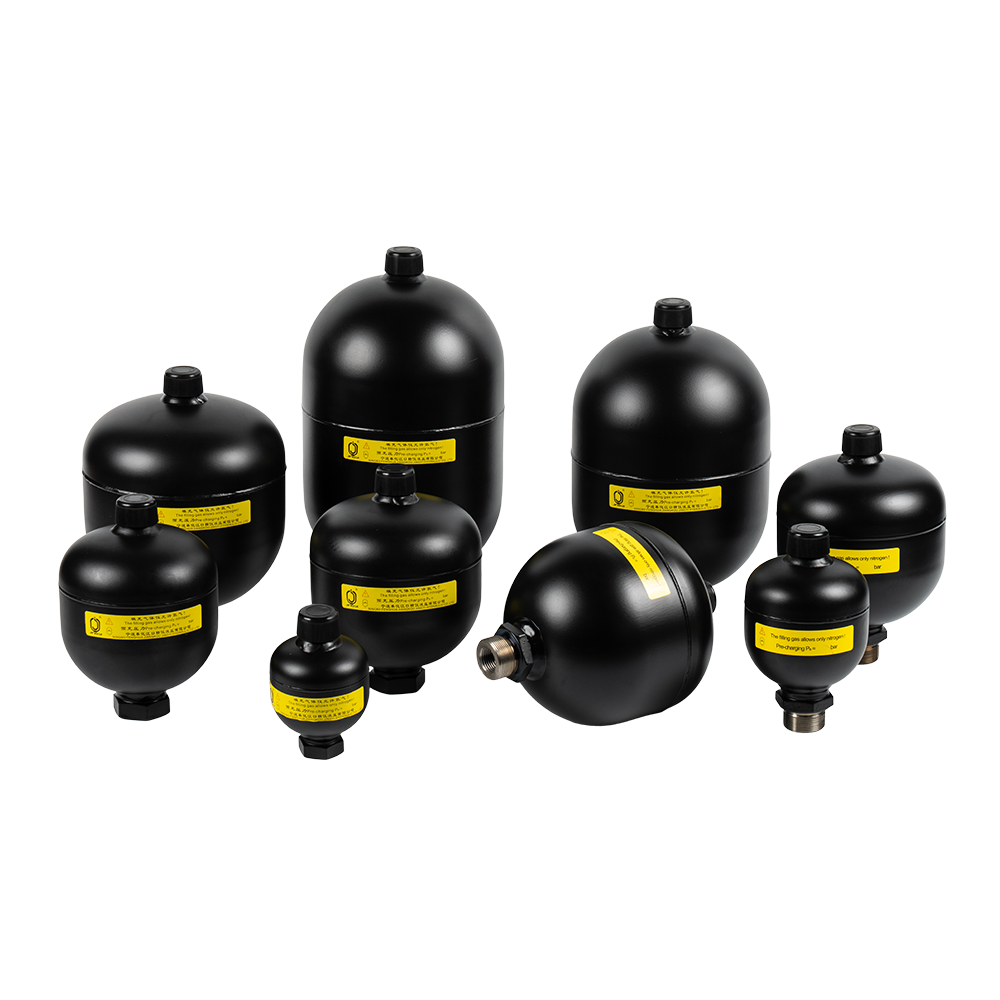 Diaphragm Accumulator for Crane Auxiliary CircuitsThis 0.25 to 1.0 liter diaphragm accumulator stores and releases energy through gas compression, with a rubber diaphragm fully separating gas and oil to reduce aeration and cavitation in crane control systems.View Product →
Key Functions of Diaphragm Accumulators in Crane Hydraulics
In a construction crane, a diaphragm accumulator is used in four main ways:
| Function | Where it is used | Hydraulic benefit |
|---|---|---|
| Leakage compensation | Outrigger cylinders, slew brake circuits | Maintains clamping pressure and prevents drift |
| Surge damping | Boom luffing and hoist braking circuits | Absorbs pressure spikes up to several hundred bar |
| Emergency lowering | Main hoist or telescopic section | Provides oil flow when the pump fails |
| Energy recovery | Load descent or swing brake | Stores kinetic energy for the next acceleration |
Leakage compensation is the most frequent use. During lifting, the pump charges the accumulator; when the spool valve is closed, the accumulator holds pressure against internal leakage in the cylinder, preventing the boom from drifting. Surge damping is equally important: when the operator applies the hoist brake, kinetic energy turns into a pressure wave. A diaphragm accumulator with a sufficient gas volume absorbs that wave and limits the peak pressure.
In emergency scenarios, the same accumulator can act as a short-term power source. If the main pump fails or the engine stalls, the stored oil is directed back to the lowering side of the cylinder, allowing a controlled descent. This function is part of the safety philosophy of modern crane designs and is a common reason for adding an accumulator to the boom circuit. Similar applications are found in other industrial equipment where sudden load shifts occur.
How to Size and Pre-Charge a Diaphragm Accumulator for a Crane
Correct sizing begins with three numbers: the minimum working pressure (P1), the maximum working pressure (P2), and the required additional volume of oil (ΔV) during discharge. For a diaphragm accumulator, the gas pre-charge pressure (P0) is typically set between 0.6 and 0.9 times P1, depending on whether the accumulator is used for energy storage or pulse damping.
For pulse damping, the pre-charge should be about 80% of the average working pressure. For energy storage and emergency lowering, the pre-charge is usually set near the minimum pressure of the circuit, but still high enough to keep the diaphragm from bottoming out. If the pre-charge is too high, the accumulator cannot store enough fluid; if it is too low, the diaphragm may hit the gas valve and fail prematurely.
Figure 1. Peak pressure during hoist brake with a 1.0 L accumulator (simulated data)
The chart above illustrates a simulated hoist-braking event. Without an accumulator, the peak pressure in the rod side is about 450 bar. A bladder accumulator reduces that to roughly 380 bar, while a diaphragm accumulator of the same volume pre-charged to 60 bar brings it down to about 320 bar. The effect depends on accumulator volume, pre-charge, and system stiffness, but the trend is consistent: a properly sized diaphragm accumulator makes a crane circuit safer and more predictable.
In practice, use the gas law P0V0 = P1V1 = P2V2 to estimate the required gas volume. If you have a flow demand of 0.5 L in 0.1 s and the pressure varies between 120 and 200 bar, the accumulator gas volume should be roughly 1.2 times the oil volume to be delivered. We recommend contacting the manufacturer with the actual temperature range and oil grade, because viscosity and bulk modulus also affect the dynamic response.
Installation, Charging, and Maintenance on a Construction Site
Site conditions are harsh for any hydraulic component. Sand, rain, and vibration can affect an accumulator if it is not installed correctly. Mount the diaphragm accumulator with the gas valve facing up, and use a bracket that supports the body, not just the connection threads. The line between accumulator and valve block should be as short as possible to avoid water hammer and fatigue.
Regular nitrogen pre-charge checks are the most important maintenance action. A typical diaphragm accumulator can lose 5% of its pre-charge per year through the diaphragm, and faster if the gas valve is contaminated. A monthly check with a proper charging kit will catch a slow leak before the accumulator loses its energy-storage function. Use dry nitrogen only; oxygen or compressed air can degrade the elastomer and create a fire hazard.
Common Failure Modes and How They Show Up
In our service experience, the most common failures are diaphragm rupture, nitrogen loss, and internal contamination. The donut chart below shows a typical distribution from a small sample of crane accumulators returned for repair.
- Diaphragm rupture (45%)
- N2 pre-charge loss (30%)
- Internal corrosion (15%)
- All other causes (10%)
Figure 2. Typical failure distribution for diaphragm accumulators in crane service
Diaphragm rupture is usually caused by excessive gas pressure, very low fluid pressure, or a damaged internal surface. Nitrogen loss is often detected as sluggish boom movement or low stored energy. To keep the accumulator in good condition, keep the gas valve clean and use a protected cap when not in use. When the pre-charge needs adjustment, use a calibrated charging kit. Our CQJ charging kit is simple to use and includes a pressure gauge and hose for 5/8UNF connections.
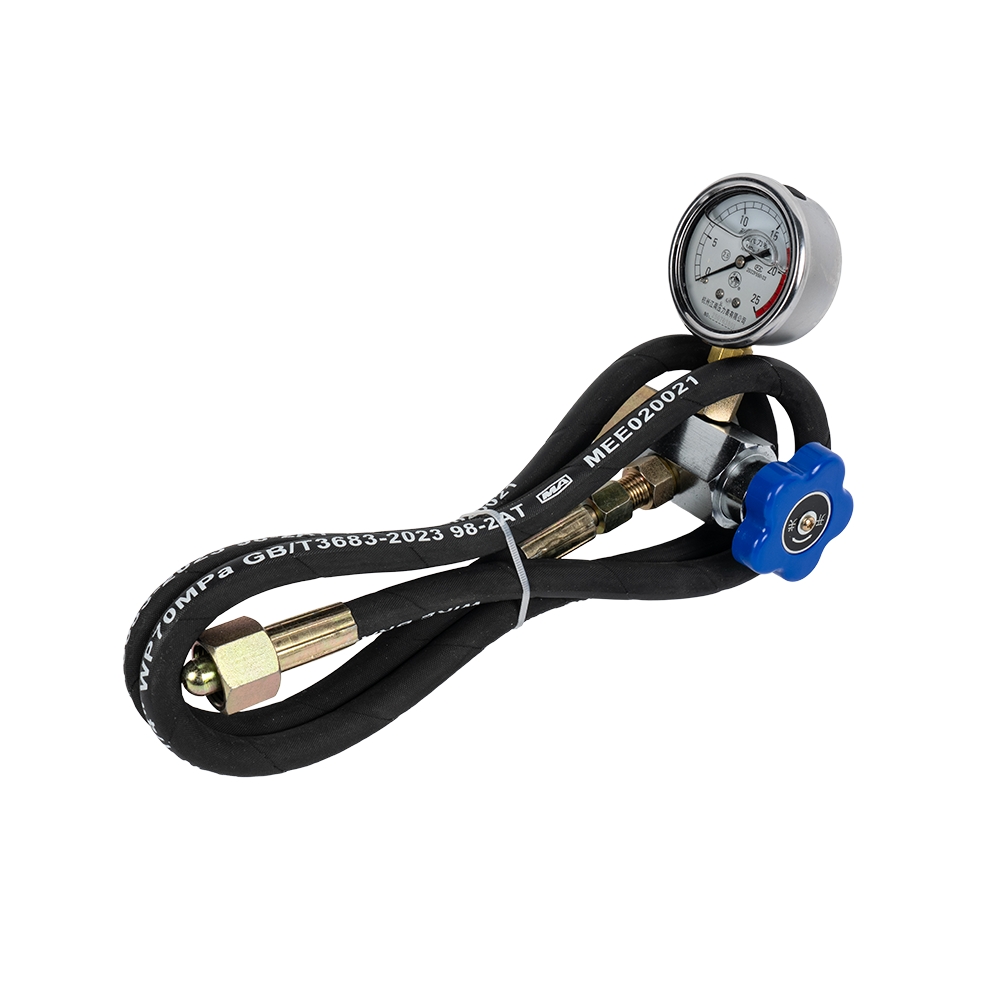 CQJ Charging Kit for Accumulator Pre-Charge AdjustmentThe CQJ charging kit provides a compact tool with a pressure gauge and hose for 5/8UNF connections, enabling safe charging, pressure checking, and correction of accumulator nitrogen pre-charge.View Product →
Why Manufacturer Certification and Production Capacity Matter
An accumulator is a pressure vessel, so the manufacturer's qualifications affect safety. In China, pressure vessels are regulated under the Special Equipment Safety Law. Our holding the Grade A2 pressure vessel manufacturing license means every diaphragm accumulator for construction crane use is designed, welded, and tested under a certified quality system. The CE mark provides the same confidence for machines exported to Europe.
Production capacity is also a practical concern for crane OEMs. We produce more than 100,000 diaphragm accumulators per year and maintain a 5,000-square-meter workshop. That scale supports stable delivery and consistent quality. When you compare suppliers, ask to see their pressure vessel license, material certificates, and test records. Then visit the assembly line if you are planning a long-running crane model.
To close, talk to our engineering team about your specific crane circuit. We can provide a sizing calculation, recommend a suitable diaphragm material, and supply the correct charging kit and bracket for field service. Contact us with your system pressure, flow, and working cycle.
Frequently Asked Questions
What pre-charge pressure should a diaphragm accumulator use in a crane?
Set the nitrogen pre-charge to 60–90% of the minimum working pressure for energy storage, or 80% of the average pressure for pulse damping. Always verify the value with the circuit's pressure values and temperature range.
How often should I check the nitrogen pre-charge?
Check every 3–6 months on cranes that run daily. If the boom drifts or the accumulator seems to have no effect, check it immediately.
Can a diaphragm accumulator replace a piston accumulator on a crane?
Yes, for most auxiliary circuits under 4 liters and pressures below 200 bar. For very high flow or large oil volume, a piston accumulator may be more economical; for fast response and leakage-free separation, the diaphragm type is superior.
What is the typical service life of a diaphragm?
With correct pre-charge and clean oil, a diaphragm can last 3–5 years in daily crane service. Premature failure is usually linked to overpowering, high temperature, or incompatible oil additives.
How do I choose between a bladder and a diaphragm accumulator?
The diaphragm type is preferred for small volumes and rapid cycling. The bladder type is better for large volumes above 4 liters. In a crane, both can share the same gas-charged principle; the choice depends on space and flow demand.
PREV: Diaphragm Accumulator for Injection Molding Machine: Selection & Maintenance GuideNEXT: Bladder to Diaphragm Accumulator Retrofitting: When to Switch, Costs & Steps
Related Products
-
-
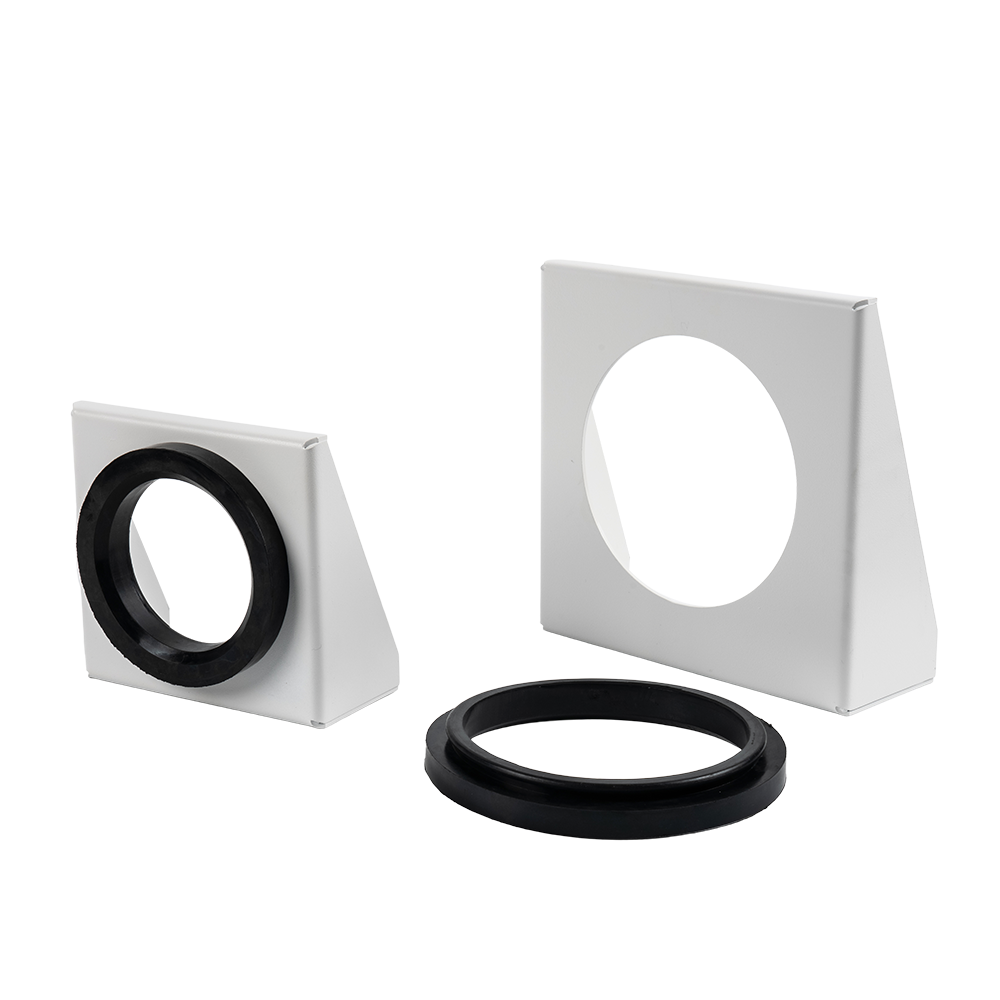
An accumulator bracket is a mechanical device used to fix and support a hydraulic accumulator.
See Details -
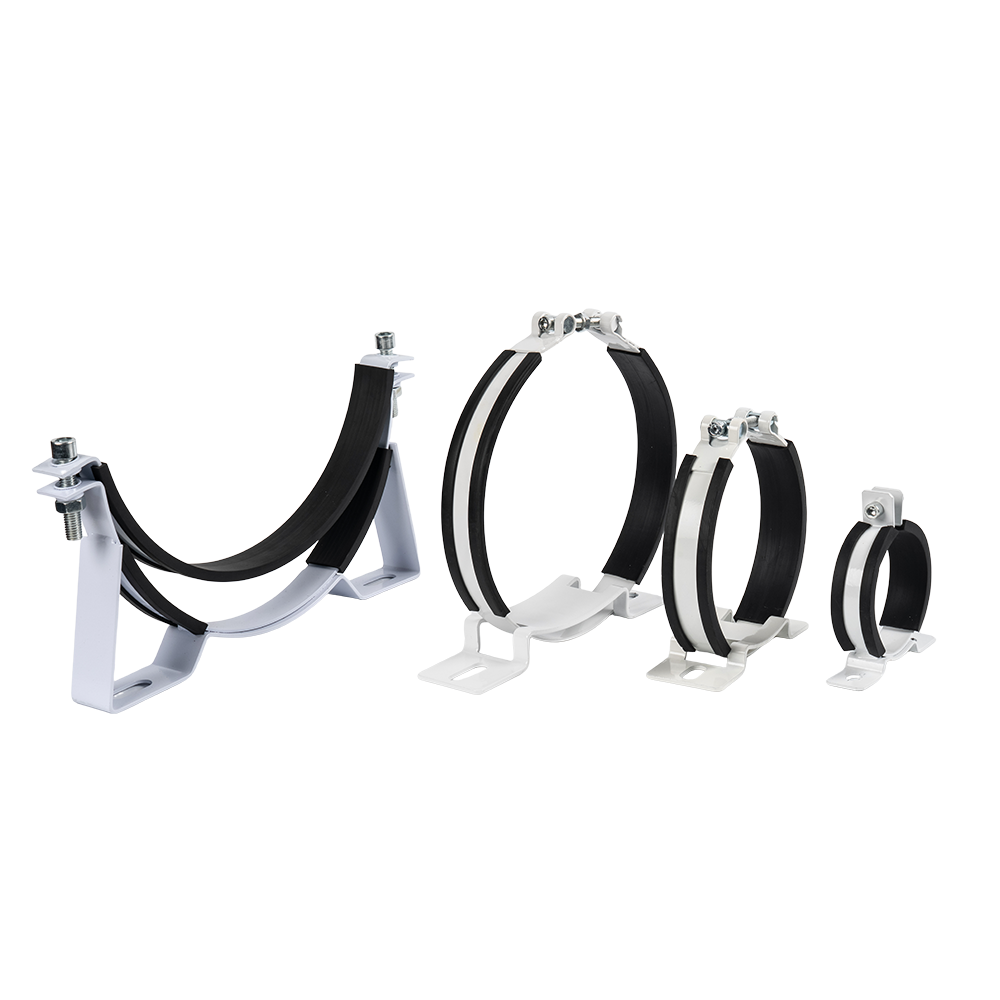
An accumulator clamp is a metal fastener specifically designed for securing and supporting hydraulic or pneumatic accumulators. Its primary function is to prevent the accumulator from swaying, deformi...
See Details -
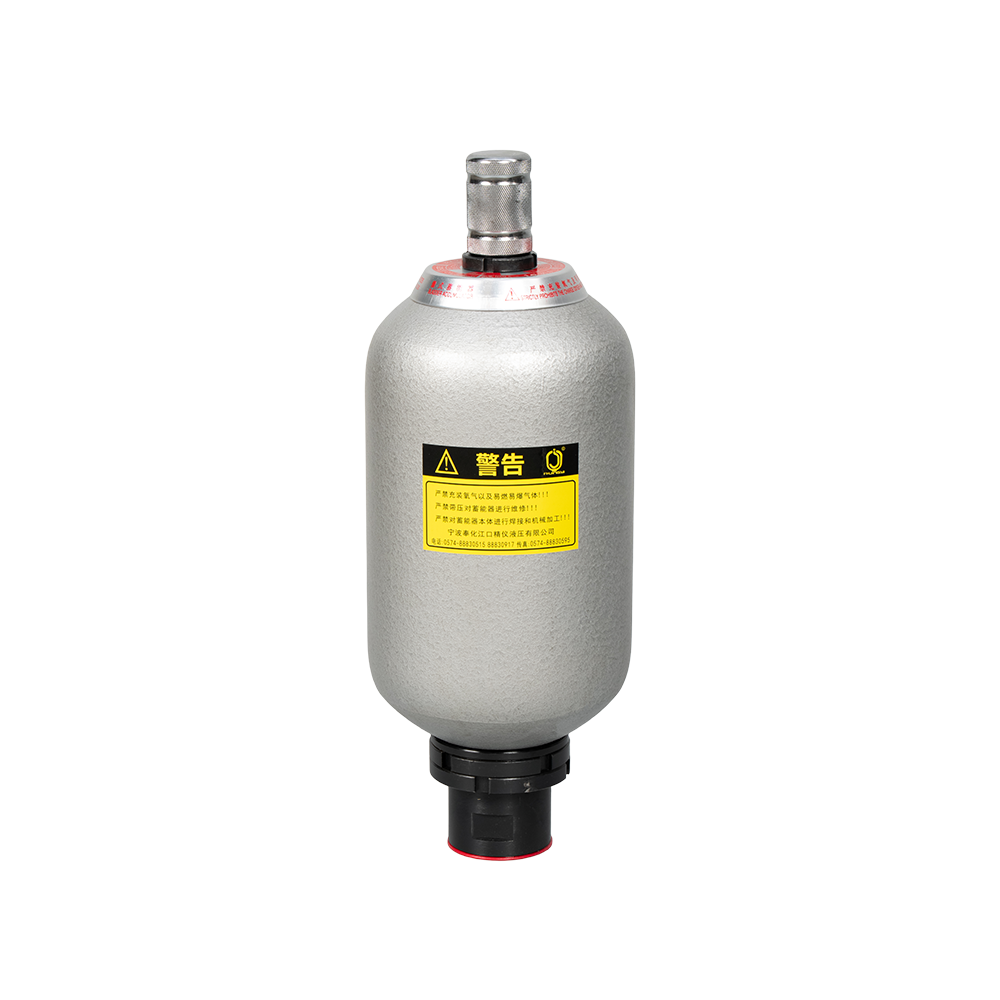
The NXQ Series Bladder Accumulator is a bladder-type accumulator conforming to national standards (JB/T 7036-93) or HG2331. Its core component is the "bladder" or "capsule," hence the name. This serie...
See Details -
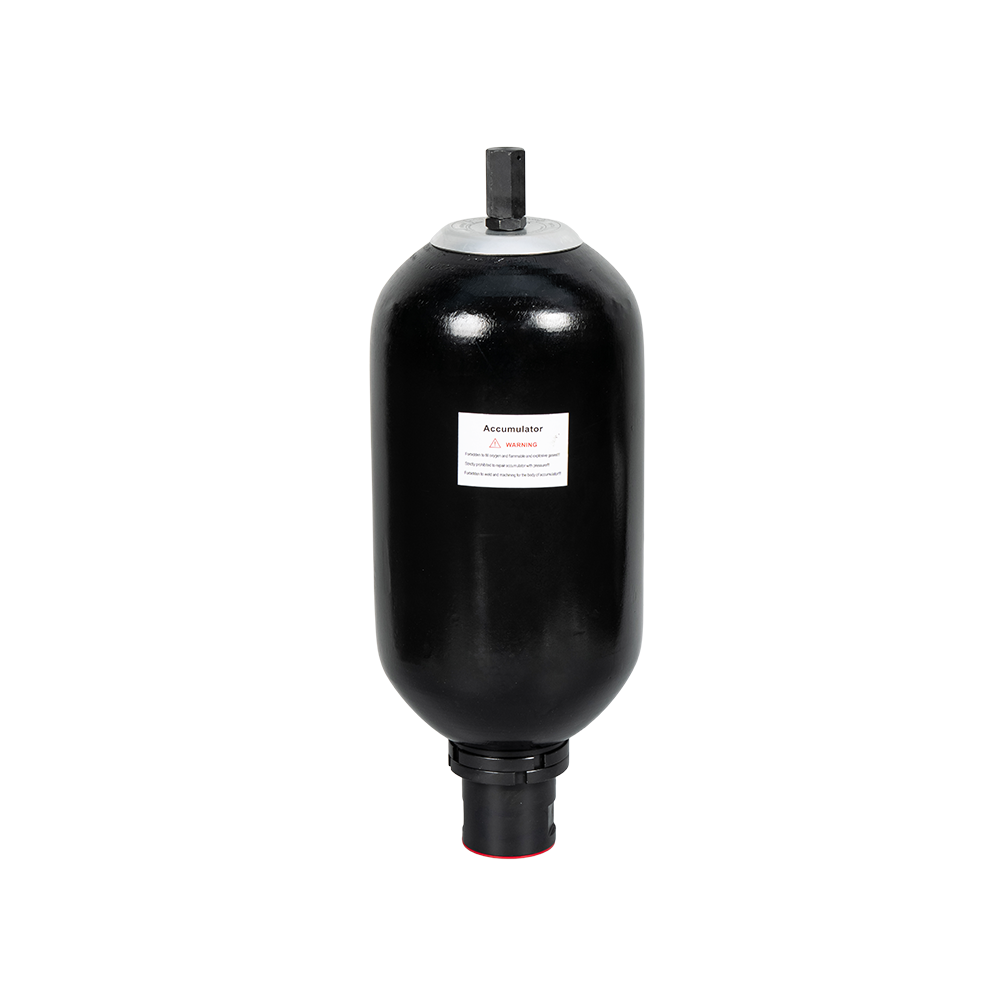
PED-type bladder accumulators refer to bladder accumulators that comply with the EU PED Directive (2014/68/EU). These accumulators typically consist of a steel outer shell and an internal elastic blad...
See Details -
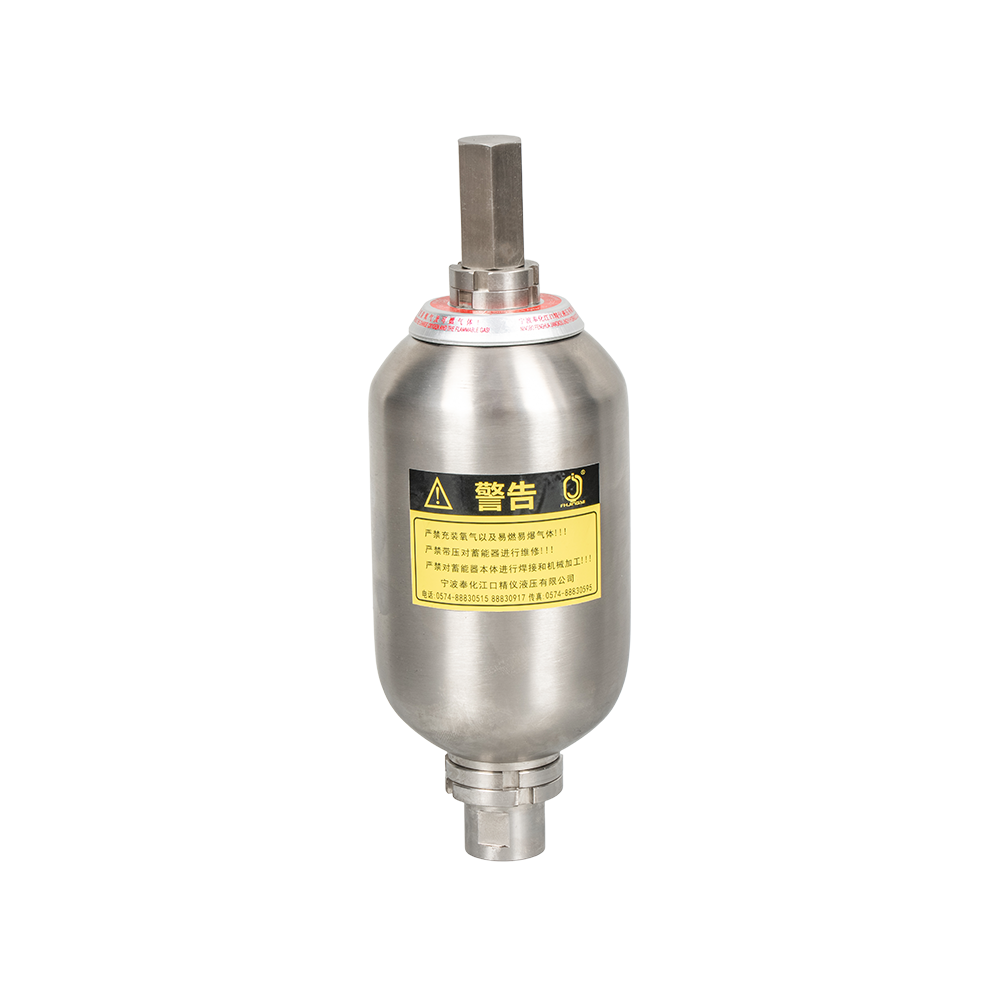
A stainless steel bladder accumulator is an energy storage device used in hydraulic systems. It utilizes the compressibility of a gas (usually nitrogen) to store and release energy, primarily for stab...
See Details
News
-
During a typical injection molding cycle, the hydraulic system demands a sudden surge of oil to drive the injection screw forward at high speed. If the pump alone supplies this flow, it must be oversized, wast...
READ MORE -
A harvester header that sags a few centimetres every time pump load spikes, or a reel that surges as the engine drops to idle, points to the same root cause: pressure fluctuation that nothing in the circuit is...
READ MORE -
Diaphragm accumulators adopt a diaphragm separation structure. They are compact in size, leak-proof, and highly responsive, making them suitable for pressure stabilization and small flow compensation in micro h...
READ MORE -
The maintenance log on a small clamping circuit shows the same pattern twice a year: a bladder accumulator loses its nitrogen pre-charge, the pump cycles every few seconds, and the standard bladder kit no long...
READ MORE -
Your hydraulic system is pitting. Salt water, chemical washdown, or process fluid is attacking the accumulator shell. Standard carbon steel or even 304 stainless steel cannot withstand the chloride levels in m...
READ MORE -
What Is an Accumulator Charging Kit and What Does It Do? An accumulator charging kit is a specialized set of tools used to safely charge, check, and adjust the nitrogen gas pre-charge pressure inside hydraulic...
READ MORE
contact us

-

-

Mobile: +86-574-88830515
-

Telephone: +86-15968431761
-

No. 12 Xujiabu, Xikou Town, Fenghua District, Ningbo City, Zhejiang Province, P.R.China