
 Español
 中文简体
中文简体A diaphragm accumulator is a mechanical device that stores and releases energy using Boyle's Law (the compressibility of gases). Its core structure is a diaphragm made of a flexible material (usually ...
See Details
Home / News / Industry News / Bladder to Diaphragm Accumulator Retrofitting: When to Switch, Costs & Steps
Bladder to Diaphragm Accumulator Retrofitting: When to Switch, Costs & Steps
Admin 2026-09-11Content
- 1 What bladder-to-diaphragm retrofitting actually involves
- 2 Why plants switch from bladder to diaphragm units
- 3 Bladder vs. diaphragm at a glance
- 4 Realistic retrofit scenarios: approve, wait, or stay
- 5 A sound retrofit plan in five checks
- 6 Cost and maintenance reality
- 7 FAQ on bladder-to-diaphragm retrofitting
The maintenance log on a small clamping circuit shows the same pattern twice a year: a bladder accumulator loses its nitrogen pre-charge, the pump cycles every few seconds, and the standard bladder kit no longer restores the original performance. More plant engineers are now evaluating bladder to diaphragm accumulator retrofitting as a permanent solution instead of ordering another kit.
The conclusion up front: for low-volume circuits with fast pressure pulsation, a diaphragm accumulator will outperform the bladder unit it replaces, with lower gas loss, faster response, and a smaller envelope. For large energy-storage duties above roughly 4 to 5 litres, the bladder type remains the more practical choice.
This article explains what the retrofit physically involves, where it pays off, how to plan it, and where the line should be drawn.
What bladder-to-diaphragm retrofitting actually involves
The term retrofit can be misleading. You cannot remove a bladder from an existing shell and bolt in a diaphragm; the two designs differ in the position of the gas valve, the shape of the pressure container, and the way the separating element is clamped. A bladder hangs from the top opening, while a diaphragm is a flat or pre-formed disc clamped around its full circumference, which requires a two-part shell.
- Conversion kit route: the accumulator manufacturer verifies that the legacy shell can accept a diaphragm insert at the same pressure class, and supplies a tested kit with new clamping hardware.
- Replacement route: the old vessel is removed and replaced with a diaphragm accumulator of the same nominal volume and working pressure, including adapter fittings, brackets, and renewed documentation.
For most plants, the replacement route is faster and safer. The result is a certified new pressure vessel instead of an old shell whose fatigue life has already been partly consumed, even when the outside looks sound.
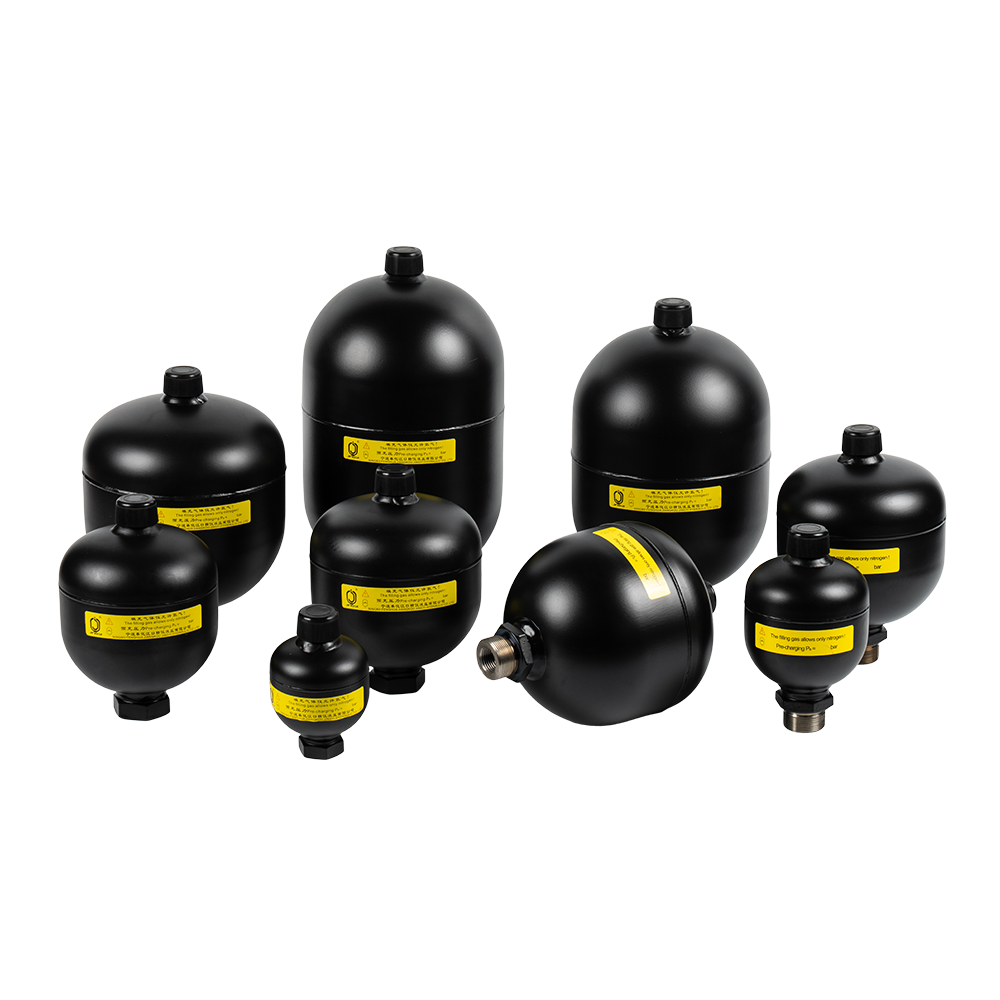 Diaphragm Accumulator for Compact Hydraulic Energy StorageThis diaphragm accumulator suits systems below two litres of effective volume, especially for pulse damping. Its flexible diaphragm separates gas and liquid chambers, storing energy through gas compression, ideal for compact hydraulic circuits.View Product →
Why plants switch from bladder to diaphragm units
The switch is rarely triggered by one single failure. In our service experience, four operational drivers appear repeatedly:
- Faster response for pulsation damping. The diaphragm has lower moving mass and a larger effective area than a thick-walled bladder, so it reacts to pressure ripple within a few milliseconds. This matters on fixed-displacement piston pumps feeding precision circuits.
- Compact envelope. For the same effective volume, a diaphragm unit is shorter and lighter than a bladder unit of the same port size, which helps in machine modules where the original layout never left spare space.
- Lower gas loss in small sizes. Small bladder units tend to lose pre-charge through the gas valve seat and the bladder mouth seal. An equivalent diaphragm unit in the same installation typically holds pre-charge longer between maintenance intervals.
- Simpler spare-part logistics. One diaphragm type can cover several circuits, which reduces the number of bladder sizes kept in stock.
The chart below shows how the drivers distribute across recent service orders.
- Pulse damping 36%
- Compact layout 28%
- Lower gas loss 22%
- Spare-part cost 14%
The mechanical behaviour of a retrofitted unit in a small precision circuit is close to a tuned pulsation dampener; the operating principle is explained in more detail in our review of diaphragm accumulators for small precision hydraulic systems.
Bladder vs. diaphragm at a glance
Use this comparison as a first-pass screening tool. The parameters that matter most in a retrofit are volume range, response speed, and the effort needed to replace a failed separating element.
| Parameter | Bladder accumulator | Diaphragm accumulator |
|---|---|---|
| Typical volume range | 0.5–50 L in standard sizes | 0.02–2 L typical, larger on request |
| High-frequency pulse damping | Moderate; bladder inertia delays response | Fast; low-mass diaphragm follows ripple closely |
| Gas pre-charge retention in small sizes | Moderate; mouth and valve seals age | Good; clamped diaphragm and sealed valve |
| Replacing a failed element | Bladder kit through top opening | Diaphragm kit, unit handled on the bench |
| Typical spare part | Replacement bladder | Replacement diaphragm |
| Purchase price at low volumes | Higher for the same port size | Lower or similar |
The screening rule we apply on real projects is simple: if the required effective volume stays below 2 litres and the dominant task is pulse damping, the diaphragm design wins on every measurable criterion. Above 4 or 5 litres, bladder or piston designs become more compact per litre and more economical.
Realistic retrofit scenarios: approve, wait, or stay
Approve the retrofit when
- Pulsation dampening is the main job and the circuit is small.
- Machine height is limited; the shorter diaphragm envelope fits without redesigning the baseplate.
- Pre-charge loss causes false starts or erratic clamp cycles on a regular schedule.
- You want fewer spare-part numbers across the plant.
Keep the bladder when
- The task is large-volume energy storage for safety or standby functions.
- Flow peaks are high; the bladder unit delivers the required volume quickly without additional bottles.
- A proven bladder unit has run reliably for years, and the only issue is a leaking gas valve core that can be replaced in minutes.
- Re-certification of a changed pressure vessel would trigger more internal administrative cost than the energy saving justifies.
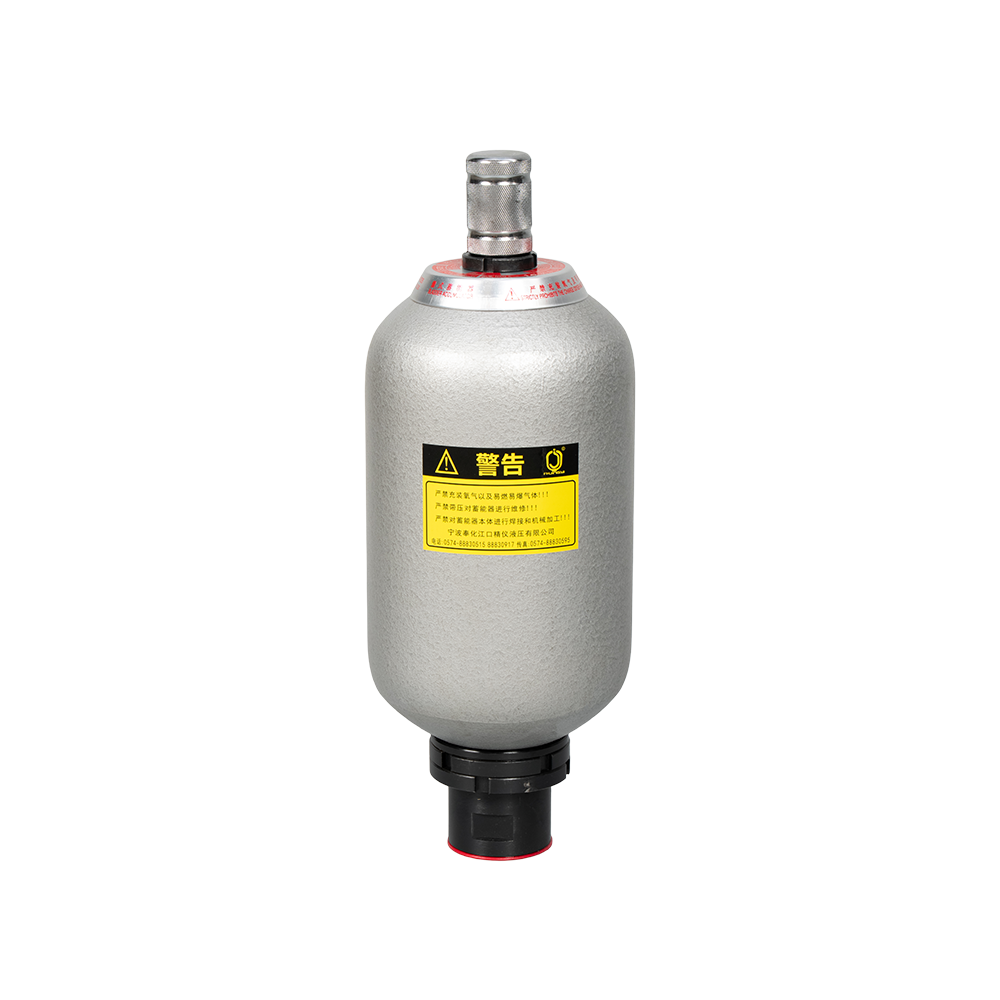 Hydraulic Bladder Accumulator Manufacturer with Multiple SeriesExplore bladder accumulators in NXQ, PED, and stainless steel variants, along with charging kits and accessories. Above five litres, bladder designs offer more compact and economical energy storage per litre.View Product →
A sound retrofit plan in five checks
- Confirm the real duty. Record pressure ripple amplitude, cycle frequency, and minimum working pressure before selecting anything.
- Match pressure class and effective volume. Select a diaphragm unit with the same nominal working pressure and a volume that provides the same usable gas volume after pre-charge.
- Recalculate pre-charge. For pulsation damping, set pre-charge at 60–70% of the average system pressure. For energy storage, set 90% of the minimum working pressure.
- Check ports, orientation, and fittings. The port size, flange standard, and mounting bracket geometry must be confirmed before ordering.
- Update the pressure-equipment documentation. A replacement vessel changes the identity of the pressure equipment. Ask the supplier to provide the appropriate certificate, CE marking, and pressure-vessel manufacturing licence where required.
Send the current nameplate data and circuit parameters to our engineering team through the contact page, and we will confirm interchangeability before you commit to a purchase order.
Cost and maintenance reality
Cost comparisons fail when they look only at the purchase price. A retrofit budget should include the new unit, adapter fittings, labour, documentation updates, and disposal of the old vessel. The operating side of the equation is where the diaphragm difference shows up.
Relative annual maintenance workload. Lower is better.
Below 2 litres effective volume, a diaphragm unit is often cheaper to buy than a bladder unit of the same port size, so the upfront cost of retrofitting increases less than many teams expect. Above 5 litres, the calculation moves in the opposite direction, and a piston accumulator becomes the lowest-cost-per-litre option; a diaphragm should not be stretched beyond its efficient range.
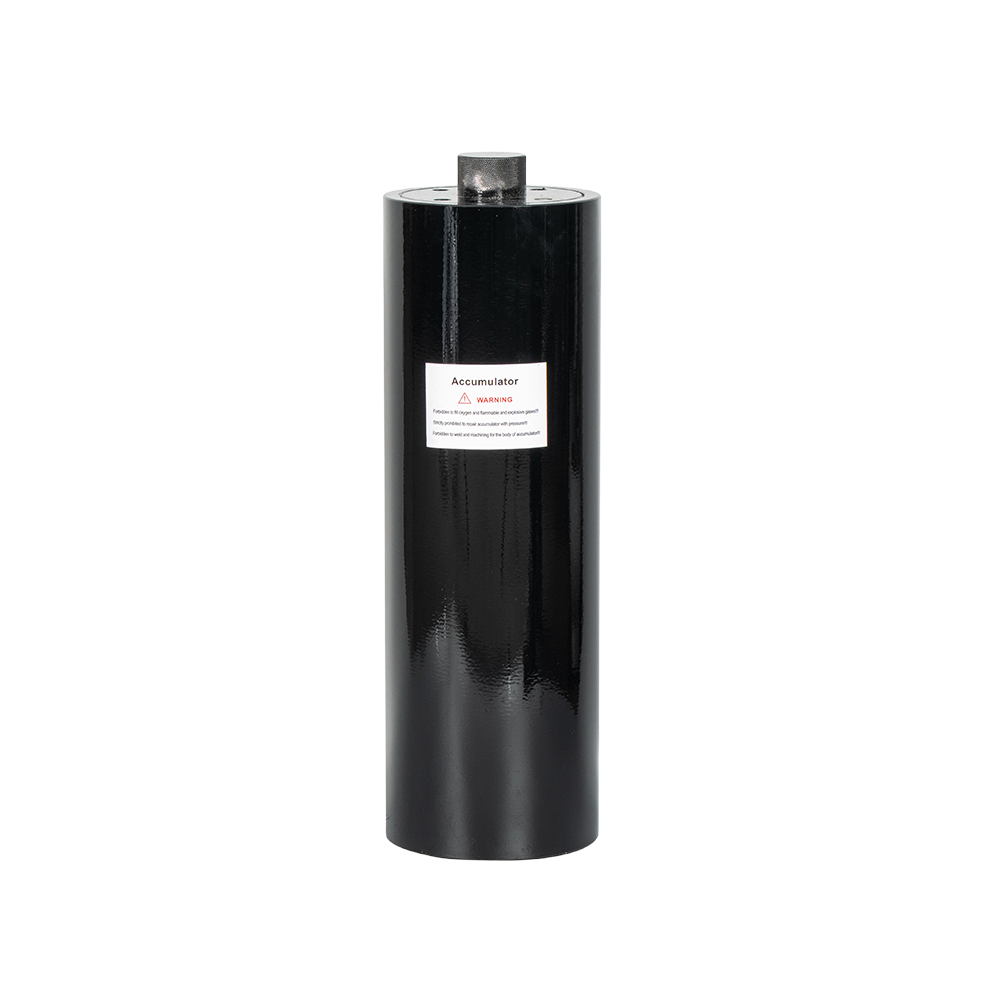 Piston Accumulator for High-Volume Hydraulic ApplicationsA piston accumulator isolates hydraulic fluid from nitrogen gas via a sliding piston, enabling efficient energy storage and release. Recommended when effective volume exceeds five litres for low cost per litre.View Product →
FAQ on bladder-to-diaphragm retrofitting
Can I convert my existing bladder accumulator into a diaphragm unit?
Only if the manufacturer offers a tested conversion kit for that specific shell. Otherwise the diaphragm cannot be clamped correctly, and the unit must be replaced as a whole.
Will the pressure rating change after retrofitting?
The rating of the new vessel applies. If the replacement has the same working pressure class, the circuit's pressure limits remain unchanged. The gas-side pre-charge, however, must be reset to the values for the new design and adjusted to the duty.
How should the nitrogen pre-charge be set after the retrofit?
Use the same rule you would apply to any diaphragm unit: 60–70% of average system pressure for pulsation damping, or 90% of the minimum working pressure for energy storage. Recheck at each scheduled service interval.
Does a diaphragm accumulator still need pressure-vessel certification?
Yes. Even small diaphragm accumulators are pressure vessels under most national and EU rules. Confirm that the supplier holds a valid manufacturing licence for the product class and can issue the required EC declaration or local certification with each delivery.
The bladder-to-diaphragm retrofit is a calculation, not a preference. Start with one pilot machine, record pre-charge decay and pump cycling for a full production month, and the annual maintenance difference will be visible in the log. In small precision circuits the diaphragm usually earns the change-over; in large-volume duties the honest conclusion is often to keep the bladder or move up to a piston unit.
The right time to act is when the next bladder failure forces a decision. Prepare the comparison now, and the next breakdown becomes an opportunity rather than an emergency.
PREV: Diaphragm Accumulator for Construction Cranes | Sizing, Benefits & MaintenanceNEXT: Diaphragm Accumulator for Agricultural Harvester: Sizing and Buying Guide
Related Products
-
-
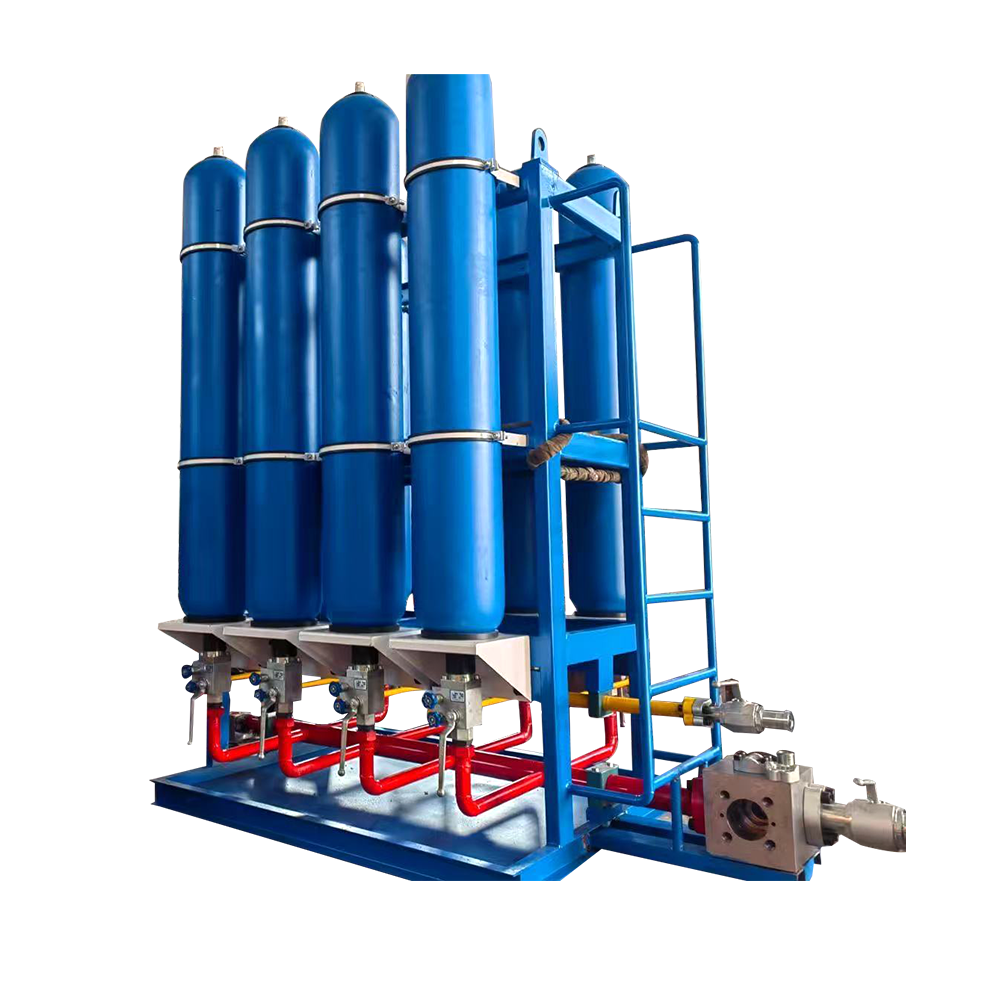
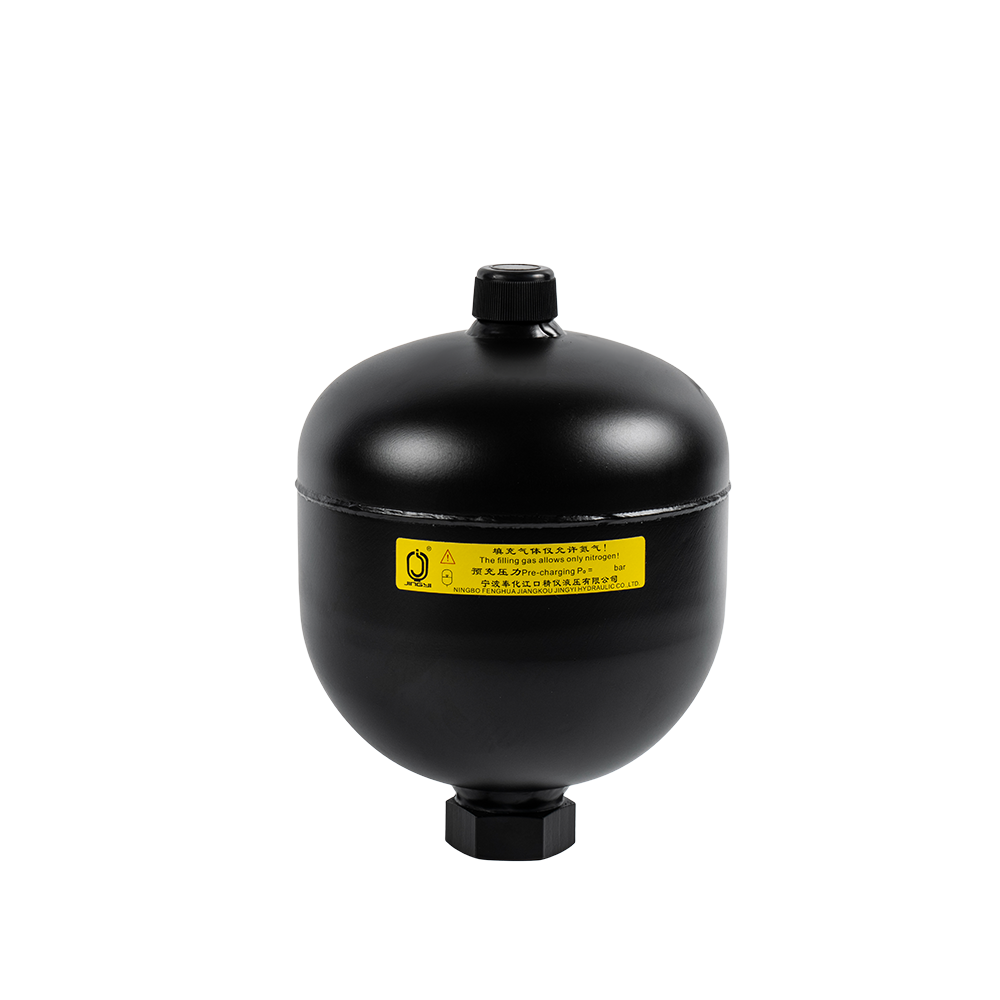
JINGYI Hydraulic Corporation offers a series of full-bladder accumulator stations, which include a fixed bolster, bag-type accumulator, a control valve group, ball valve, pipeline, oil return pipe, et...
See Details -

The NXQ Series Bladder Accumulator is a bladder-type accumulator conforming to national standards (JB/T 7036-93) or HG2331. Its core component is the "bladder" or "capsule," hence the name. This serie...
See Details -
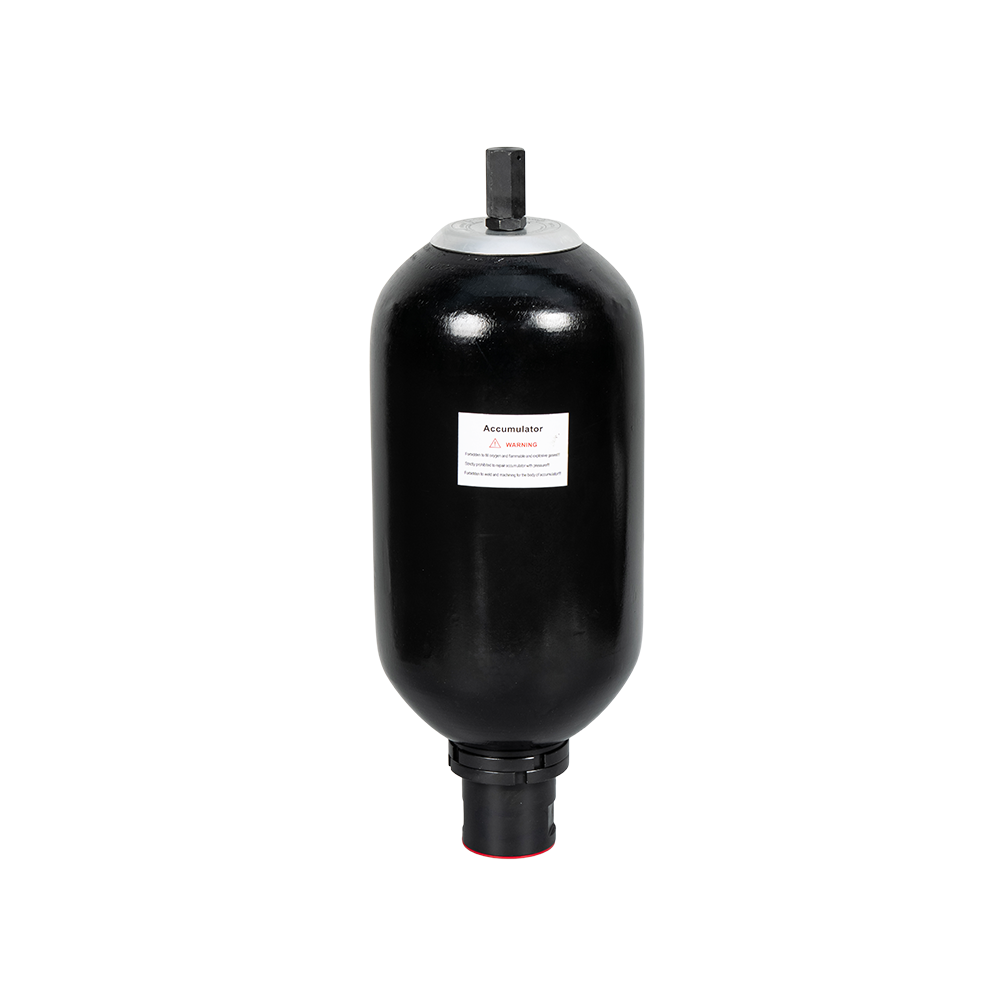
PED-type bladder accumulators refer to bladder accumulators that comply with the EU PED Directive (2014/68/EU). These accumulators typically consist of a steel outer shell and an internal elastic blad...
See Details -
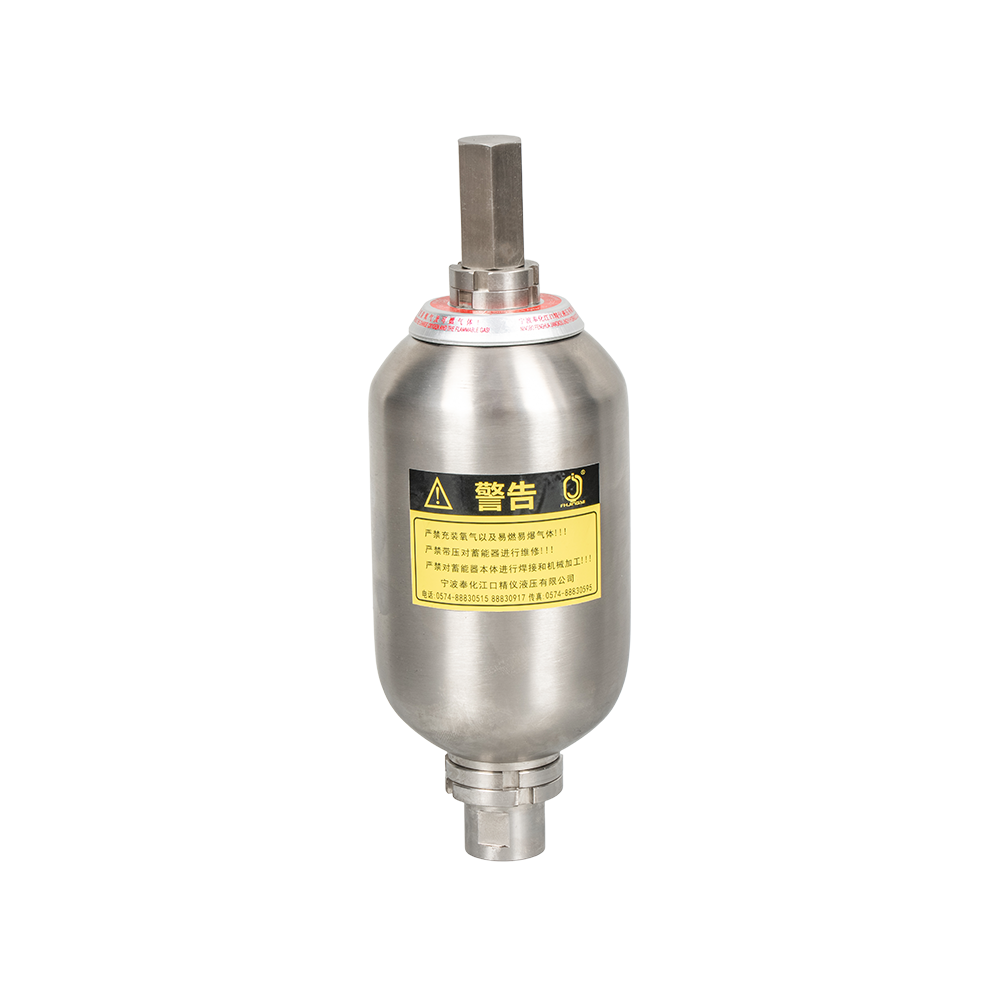
A stainless steel bladder accumulator is an energy storage device used in hydraulic systems. It utilizes the compressibility of a gas (usually nitrogen) to store and release energy, primarily for stab...
See Details -
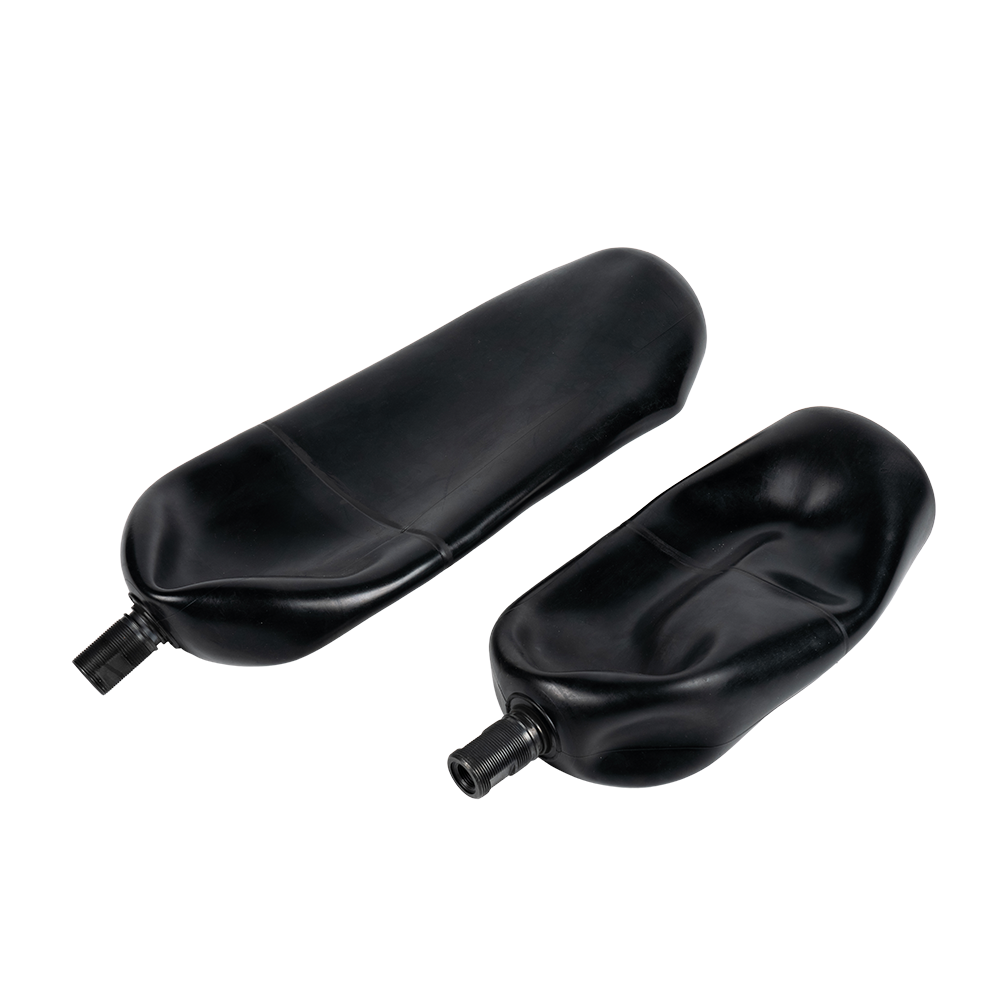
The NXQ Series Accumulator Bladder is a critical energy storage element in hydraulic systems, primarily responsible for absorbing energy fluctuations and releasing energy to smooth system operation.
See Details
News
-
Bladder accumulators use rubber bladders to separate gas and fluid. They feature fast response and good sealing performance, effectively absorbing pressure pulsations and compensating flow. Suitable for medium ...
READ MORE -
Diaphragm accumulators adopt a diaphragm separation structure. They are compact in size, leak-proof, and highly responsive, making them suitable for pressure stabilization and small flow compensation in micro h...
READ MORE -
When a 180-ton mobile crane lowers a fully loaded boom, the inertia can push hydraulic pressure above 400 bar in the luffing cylinder in less than a second. Without a device to absorb that peak, seals fail ear...
READ MORE -
A harvester header that sags a few centimetres every time pump load spikes, or a reel that surges as the engine drops to idle, points to the same root cause: pressure fluctuation that nothing in the circuit is...
READ MORE -
During a typical injection molding cycle, the hydraulic system demands a sudden surge of oil to drive the injection screw forward at high speed. If the pump alone supplies this flow, it must be oversized, wast...
READ MORE -
What Is an Accumulator Charging Kit and What Does It Do? An accumulator charging kit is a specialized set of tools used to safely charge, check, and adjust the nitrogen gas pre-charge pressure inside hydraulic...
READ MORE
contact us

-

-

Mobile: +86-574-88830515
-

Telephone: +86-15968431761
-

No. 12 Xujiabu, Xikou Town, Fenghua District, Ningbo City, Zhejiang Province, P.R.China