
 Español
 中文简体
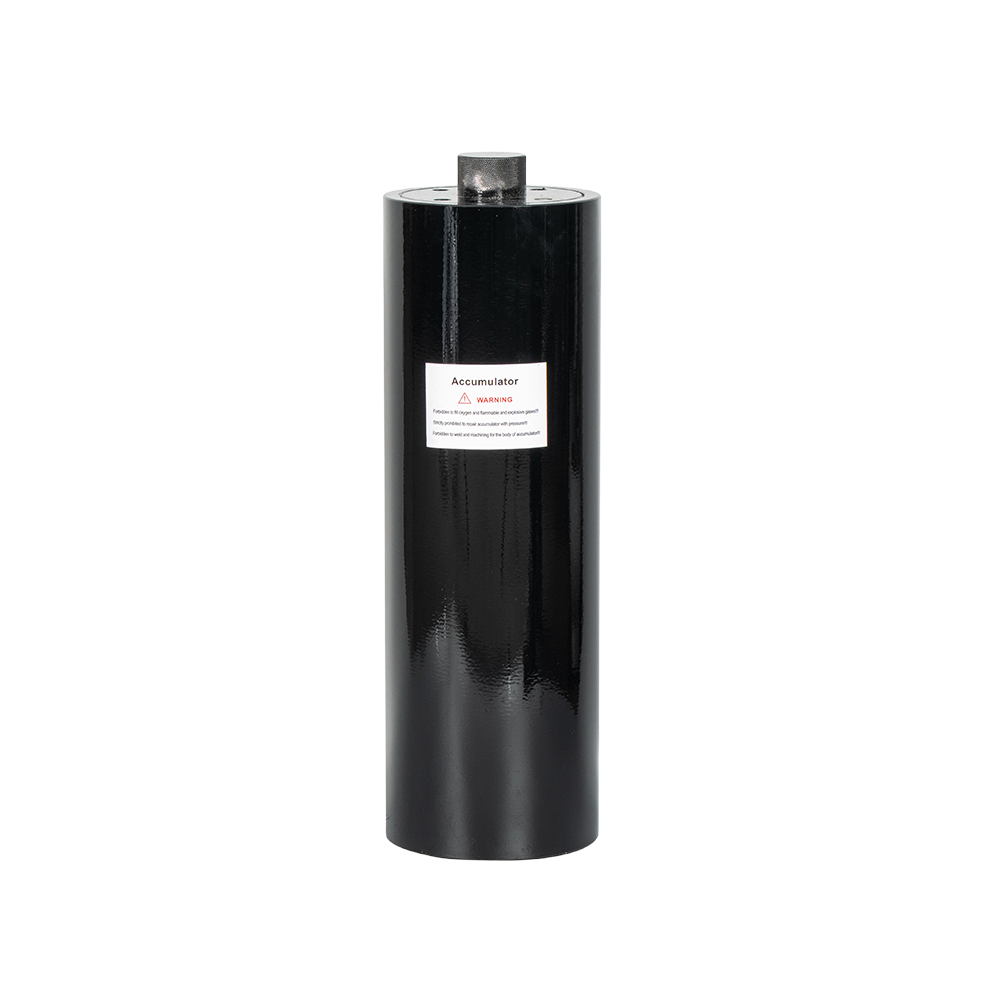
中文简体A Piston Accumulator is a mechanical device that uses the compressibility of a gas (usually nitrogen) to store hydraulic energy. It is widely used in hydraulic systems as an energy regulator. It isola...
See Details
What is a diaphragm accumulator?
Admin 2026-07-17A diaphragm accumulator is a sealed pressure vessel that stores hydraulic energy by using a flexible diaphragm to separate compressed nitrogen gas from hydraulic fluid. When system pressure rises, fluid pushes the diaphragm upward and compresses the gas; when pressure drops, the gas expands and pushes the fluid back into the circuit. This simple two-chamber design makes diaphragm accumulators one of the most compact and cost-effective forms of hydraulic energy storage available today.
How a Diaphragm Accumulator Actually Works
The internal structure of a diaphragm accumulator consists of a steel shell divided into two sealed chambers by a rubber diaphragm. Unlike a bladder accumulator, the diaphragm is bonded or clamped around its full circumference, giving the unit a lower dead volume and a faster response time for small-flow applications.
1
Charging Stage
System pressure rises and hydraulic fluid enters the liquid chamber through the AK or AB port. The incoming fluid pushes the diaphragm toward the gas side, compressing the pre-charged nitrogen and converting flow energy into stored potential energy.
2
Discharge Stage
When system pressure falls below the gas pre-charge pressure, the compressed nitrogen expands and forces the diaphragm back down, pushing the stored fluid out into the circuit to cover instantaneous flow demand or cushion a pressure drop.
Why Hydraulic Systems Need Energy Storage Accumulators
A diaphragm accumulator is rarely the only reason a machine runs, but its absence is usually the reason it runs poorly. In circuits with small reservoirs, intermittent demand, or sensitive pressure control, an accumulator group takes on five practical jobs:
- Saving drive power — supplies peak flow so the pump can be sized for average demand rather than the highest spike.
- Energy storage — holds pressurized fluid ready for release the moment the circuit calls for it.
- Damping pressure shocks — absorbs hydraulic shock from valve switching or sudden load changes.
- Reducing pump pressure pulsation — smooths the ripple produced by piston and gear pumps.
- Maintaining constant pressure — compensates for leakage or thermal expansion between pump cycles.
Machine builders that add a hydraulic energy storage unit to the circuit typically see longer component life, quieter operation, and lower maintenance cost, since the pump and seals are no longer subjected to constant pulsation and shock loading.
Accumulator Product Range
Beyond the diaphragm accumulator, a complete hydraulic energy storage lineup covers bladder and piston designs, PED-certified units, and corrosion-resistant stainless steel construction, letting each circuit be matched to the right accumulator group.
Diaphragm vs. Bladder vs. Piston Accumulator
Choosing between accumulator types comes down to volume, flow rate, and how often the gas side needs to be recharged. The table below compares the three most common designs used across industrial hydraulic accumulator applications.
| Type | Typical Volume | Response Speed | Best Suited For |
| Diaphragm Accumulator | 0.075 L – 3.5 L | Very fast | Small pulsation damping, mobile hydraulics, compact manifolds |
| Bladder Accumulator | 1 L – 50 L | Fast | General industrial circuits, shock absorption, medium flow |
| Piston Accumulator | 10 L and above | Moderate | Large flow demand, high compression ratios, long strokes |
Reading the Diaphragm Accumulator Model Code
Welded diaphragm accumulators use a steel-stamped shell and are identified through a structured model code. Understanding each segment helps when specifying a replacement accumulator bladder or ordering a matching accumulator repair kit.
| Code Position | Meaning |
| Construction Letter | A = rechargeable (M28x1.5 gas valve) / B = completely sealed |
| Nominal Volume | Internal capacity of the accumulator, in liters |
| Allowable Working Pressure | Maximum rated pressure, in bar |
| Shell Material | 1 = Carbon steel |
| Diaphragm Material | 1 = NBR / 2 = HNBR / 3 = IIR / 7 = ECO |
| Connection Type | Standard AK or AB liquid-side port, or non-standard on request |
Representative Size and Specification Range
Small diaphragm accumulators are built at compression ratios of 4:1 or 8:1 depending on nominal volume, with the liquid-side connection scaling from G1/2 up to G3/4 as the vessel grows. A sample of the available range is shown below.
| Nominal Volume (L) | Compression Ratio | Working Pressure (bar) | Weight (kg) | Connection |
| 0.075 | 8:1 | 210 / 250 | 0.7 | G1/2 |
| 0.25 | 8:1 | 100 / 210 / 250 | 0.8 – 1.45 | G1/2 |
| 0.5 | 8:1 | 210 / 250 | 2.3 | G1/2 |
| 1.0 | 8:1 | 210 / 250 | 3.8 – 5.0 | G1/2 |
| 2.0 | 8:1 | 210 / 250 | 7.6 – 9.2 | G1/2 |
| 3.5 | 4:1 | 210 / 250 | 13.8 | G3/4 |
Every size can be paired with a different diaphragm material to match the fluid being handled — NBR for general mineral oil, HNBR for higher temperature resistance, IIR for phosphate ester fluids, or ECO for a balance of oil and ozone resistance.
Selecting the Right Diaphragm Accumulator for Your Circuit
Sizing an accumulator correctly avoids two common mistakes: an undersized unit that cannot cover peak demand, and an oversized unit that adds cost without added benefit. Three questions narrow the selection quickly.
- What is the peak flow gap? Compare the pump's steady output to the circuit's momentary peak demand — the difference sets the minimum usable volume.
- What is the working pressure range? The gas pre-charge should sit at roughly 90 percent of the minimum system pressure for stable performance.
- What fluid and temperature will the diaphragm see? Fluid compatibility determines whether NBR, HNBR, IIR, or ECO is the correct diaphragm material code.
Charging, Accessories, and Maintenance
A diaphragm accumulator is only as reliable as its supporting accessories. A nitrogen charging device or accumulator charging kit is used to set the initial gas pre-charge pressure and to top it up during scheduled maintenance, since gas pressure naturally drops a small percentage per year through diaphragm permeation.
- Nitrogen Charging Kit — connects to the gas valve to fill, check, and release nitrogen safely without removing the accumulator from the circuit.
- Accumulator Bladder / Diaphragm Replacement — a wear item that should be inspected during routine service and swapped once elasticity drops.
- Accumulator Safety Valve — protects the vessel and circuit from over-pressurization beyond the rated working pressure.
- Accumulator Mounting Bracket — secures the vessel against vibration, which extends diaphragm and shell fatigue life.
Manufacturing Standards Behind Every Unit
Because a diaphragm accumulator is a pressure vessel, it must be manufactured to recognized safety standards rather than general fabrication practice. Reputable production includes a Special Equipment Manufacturing License for pressure vessels, EU CE certification, and material traceability from raw steel coil through to the finished, hydrostatically tested shell. A CE certified accumulator supplier will also provide compression ratio, allowable working pressure, and diaphragm material documentation for every batch, which simplifies approval when the unit is integrated into export machinery.
Related Products
-
-
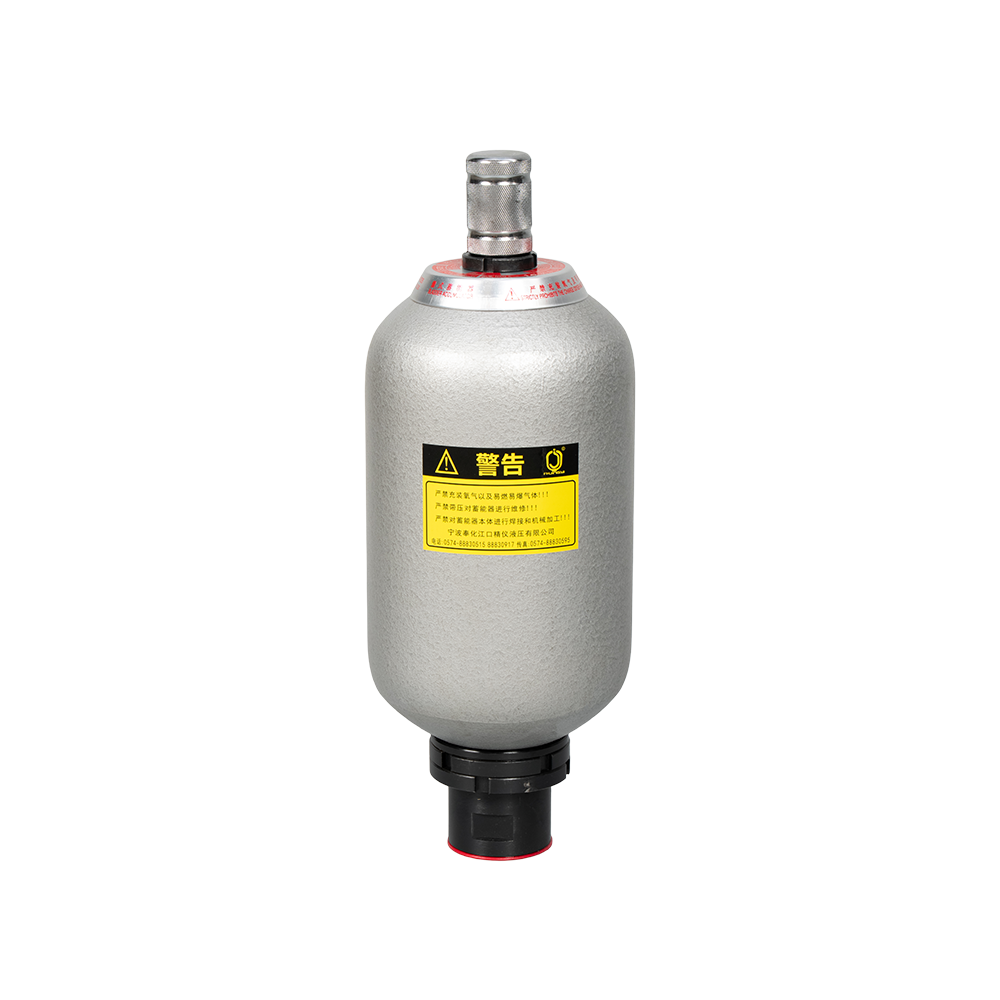
The NXQ Series Bladder Accumulator is a bladder-type accumulator conforming to national standards (JB/T 7036-93) or HG2331. Its core component is the "bladder" or "capsule," hence the name. This serie...
See Details -
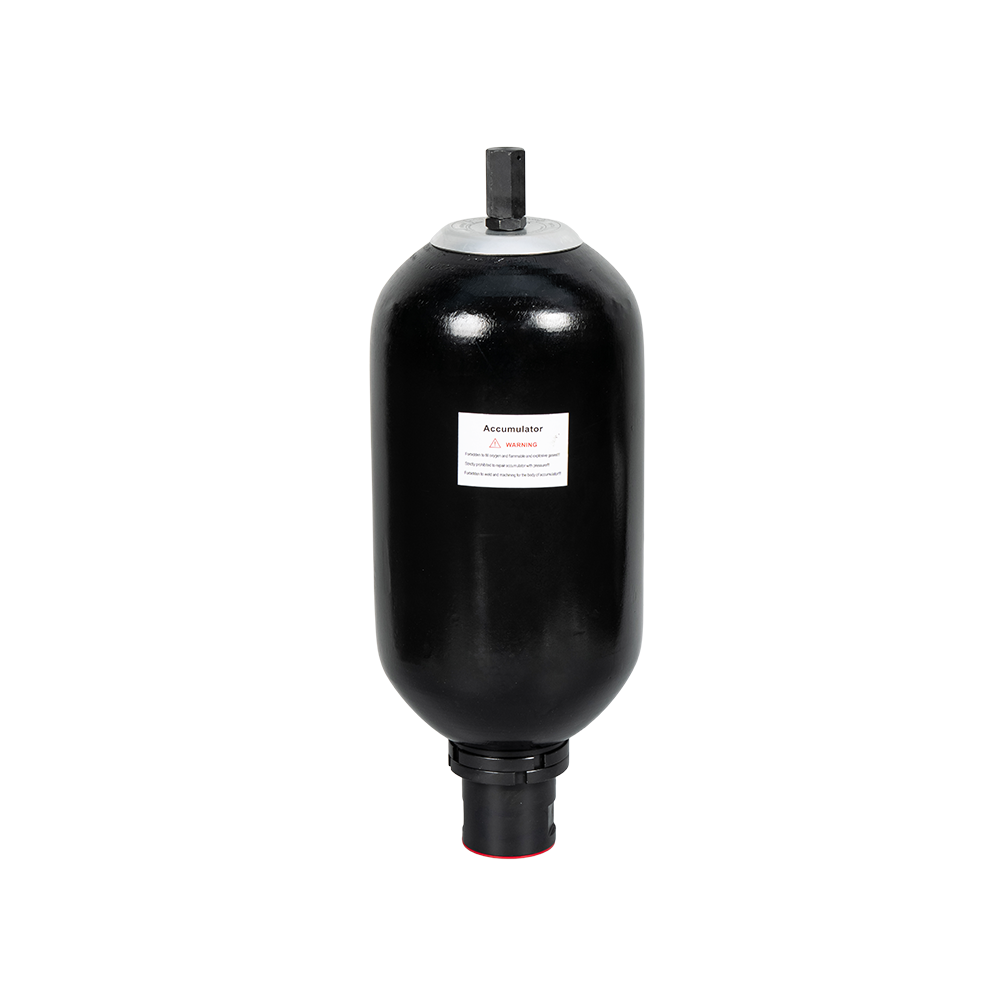
PED-type bladder accumulators refer to bladder accumulators that comply with the EU PED Directive (2014/68/EU). These accumulators typically consist of a steel outer shell and an internal elastic blad...
See Details -
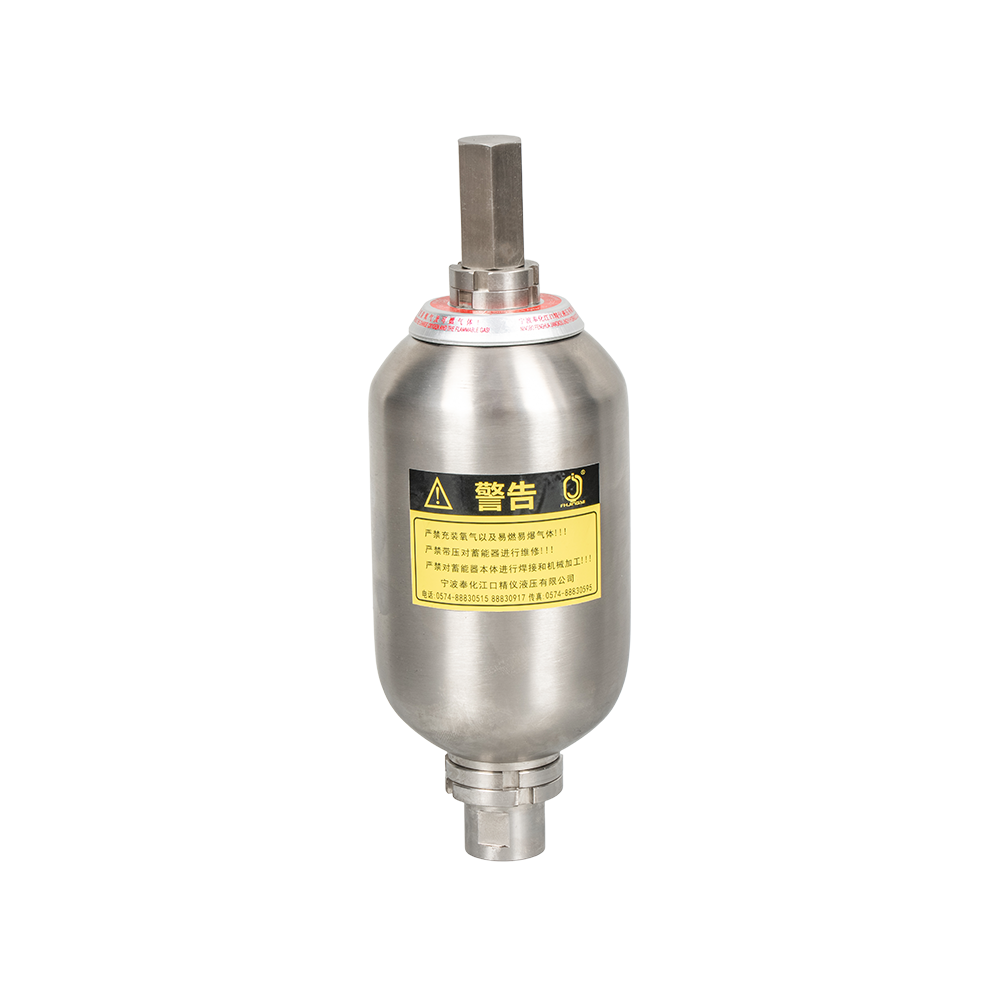
A stainless steel bladder accumulator is an energy storage device used in hydraulic systems. It utilizes the compressibility of a gas (usually nitrogen) to store and release energy, primarily for stab...
See Details -
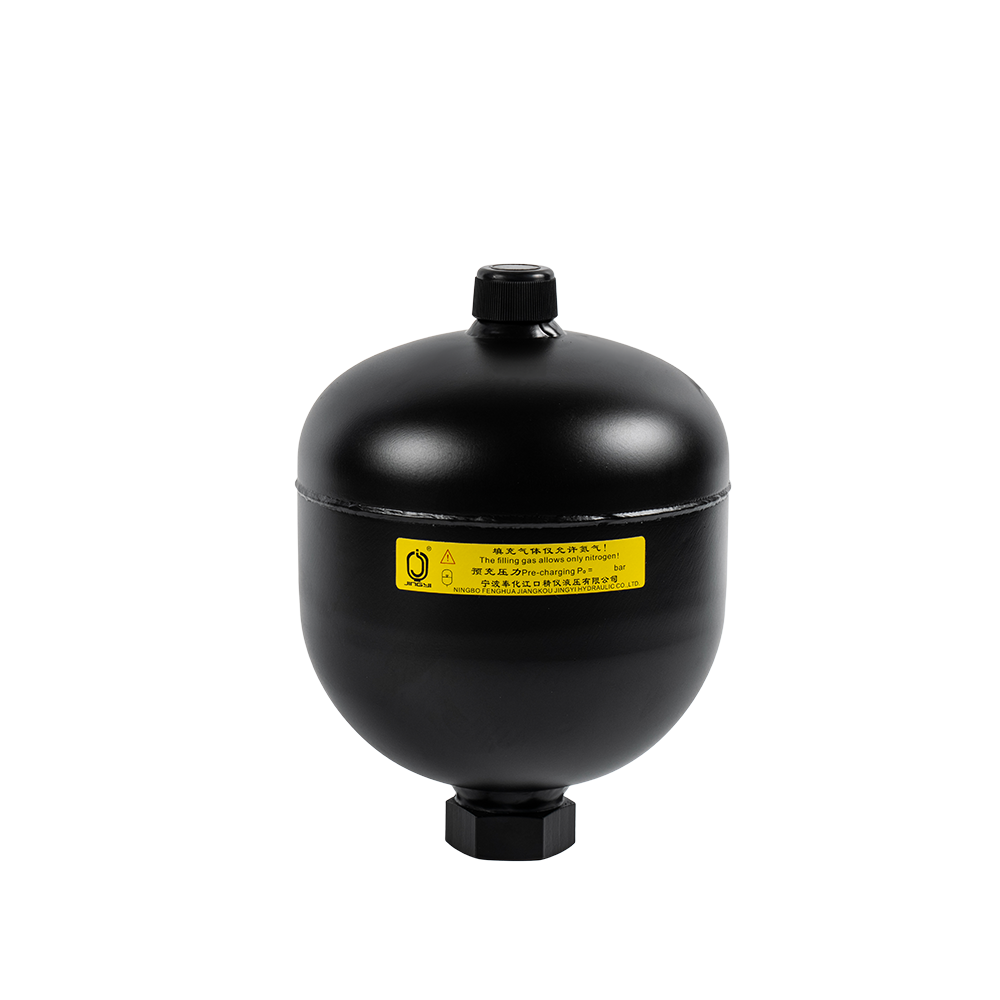
A diaphragm accumulator is a mechanical device that stores and releases energy using Boyle's Law (the compressibility of gases). Its core structure is a diaphragm made of a flexible material (usually ...
See Details -
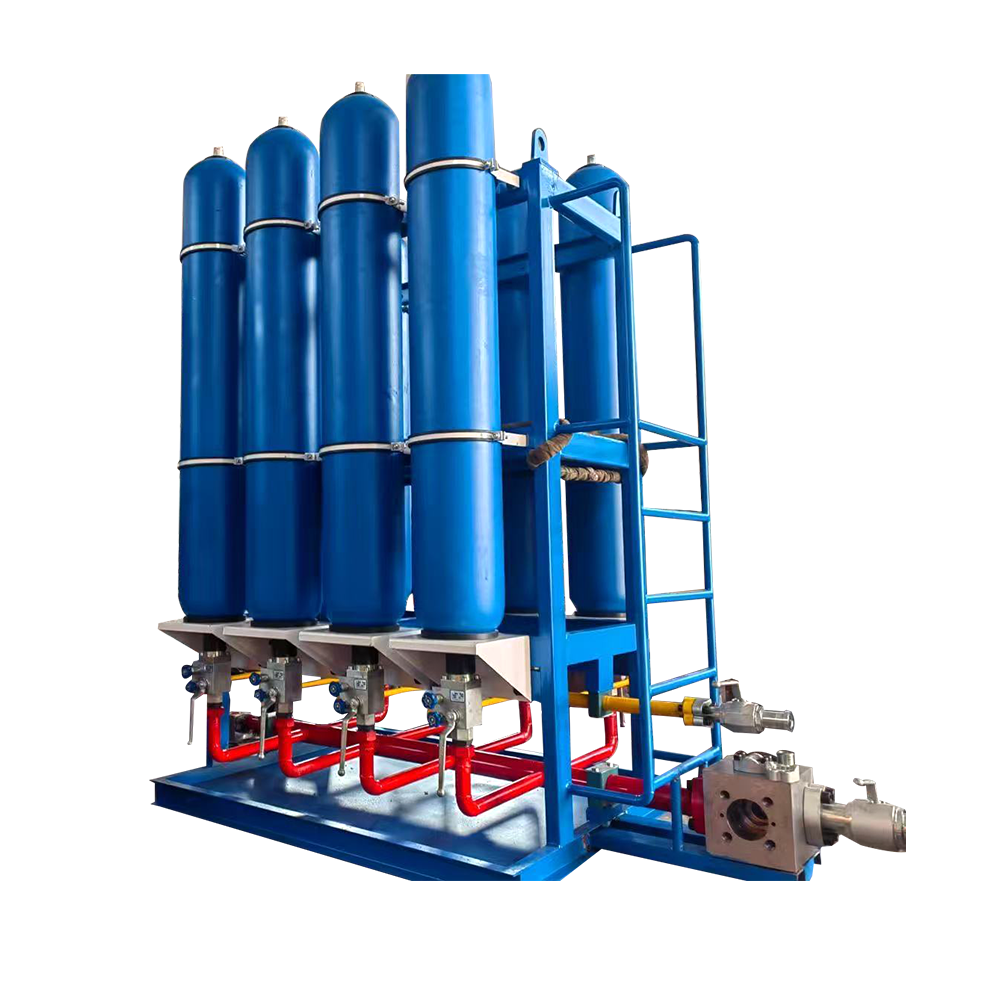
JINGYI Hydraulic Corporation offers a series of full-bladder accumulator stations, which include a fixed bolster, bag-type accumulator, a control valve group, ball valve, pipeline, oil return pipe, et...
See Details
News
-
A bladder accumulator station is a pre-engineered hydraulic energy storage skid that groups several bladder accumulators onto one mounting frame together with a control valve group, ball valves, safety stop v...
READ MORE -
A hydraulic accumulator is a pressure vessel that stores hydraulic energy by compressing nitrogen gas against incompressible hydraulic fluid, then releases that stored energy back into the circuit whenever th...
READ MORE -
A hydraulic bladder accumulator is a pressure vessel that stores hydraulic energy by using a flexible rubber bladder to separate pressurized nitrogen gas from hydraulic fluid. As an industrial hydraulic accumu...
READ MORE -
A piston accumulator is a hydraulic energy storage vessel that uses a free-moving piston to separate compressed nitrogen gas from hydraulic fluid inside a steel cylinder. When system pressure rises, oil pushe...
READ MORE -
An accumulator is a pressure storage device used in hydraulic systems to store energy in the form of pressurized fluid and release it on demand. It works by separating a pre-charged nitrogen gas from hydraulic...
READ MORE -
Quick Answer An Accumulator Nitrogen Charging Kit is a portable set of tools — hose, control valve, gauge, and adapter — used to fill a hydraulic accumulator with dry nitrogen gas and to verify that the pre-cha...
READ MORE
contact us

-

-

Mobile: +86-574-88830515
-

Telephone: +86-15968431761
-

No. 12 Xujiabu, Xikou Town, Fenghua District, Ningbo City, Zhejiang Province, P.R.China