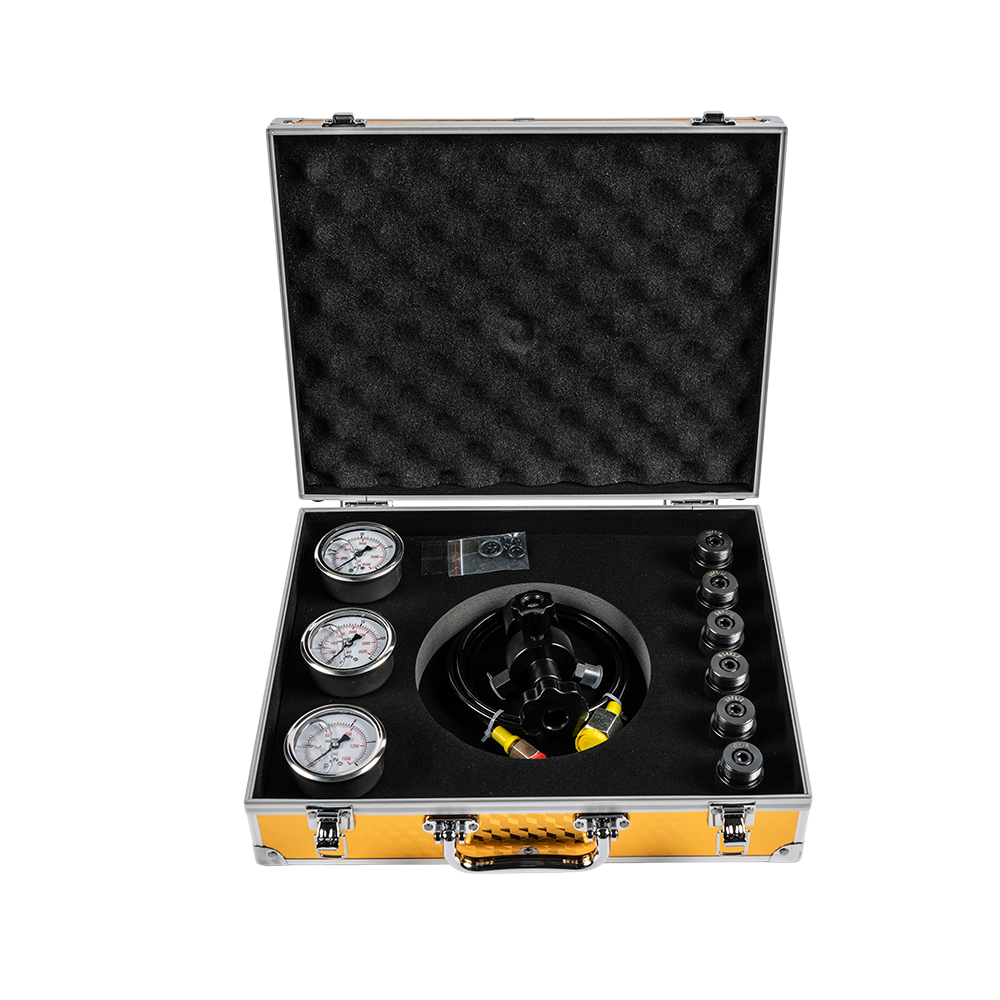
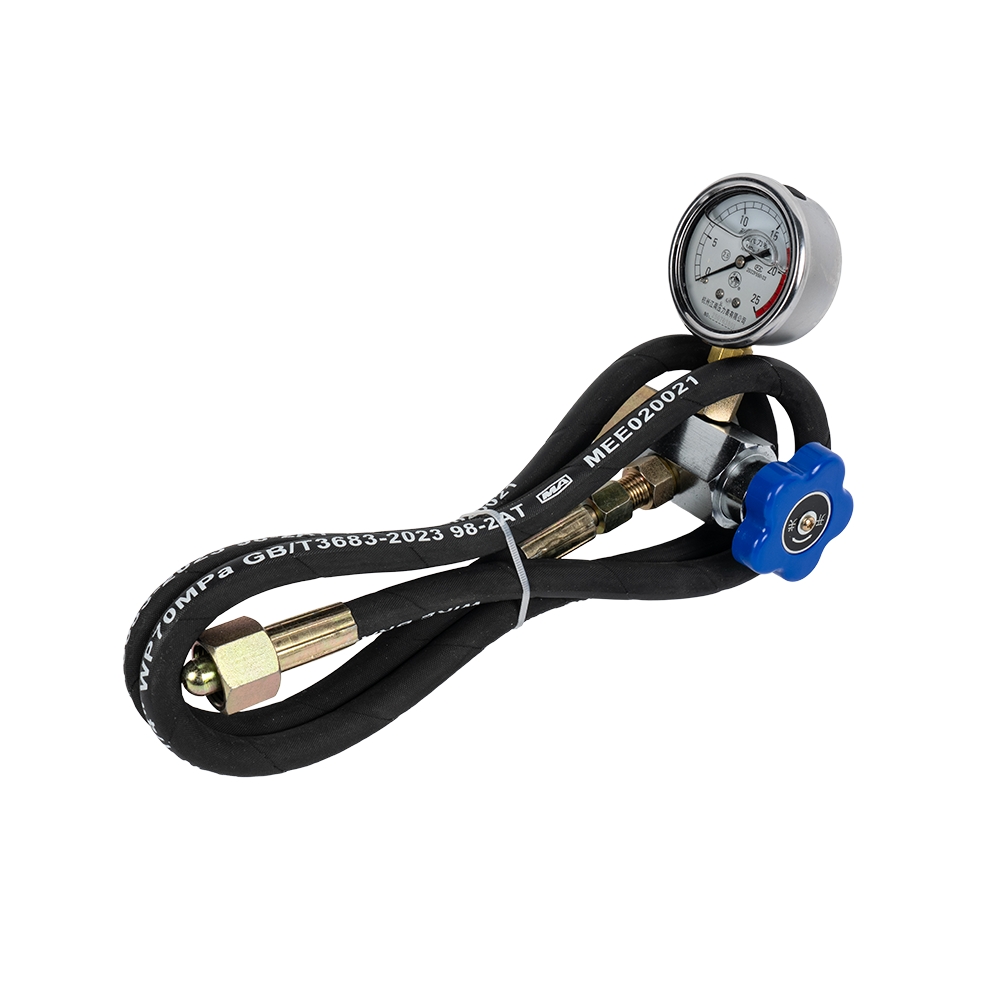
The CQJ charging kit is a specialized tool for charging, replenishing, correcting, and checking the charging pressure of accumulators in hydraulic systems.
See Details

An FPU Charging Kit is a multi-functional tool kit specifically designed for the maintenance of hydraulic accumulators. Its core function is to charge, replenish, or adjust the pre-charge pressure of the accumulator, typically using nitrogen or air.

Core Functions and Applications
The primary purpose of an FPU Charging Kit is to charge accumulators. Accumulators are critical components in hydraulic systems, and the use of the charging kit directly affects the safety and performance of the equipment:
1. Charging/Replenishing: Injecting nitrogen into a new accumulator or replenishing gas to an accumulator whose pressure has dropped after a period of use.
2. Pressure Regulation: Checking the current pre-charge pressure and adjusting it according to the requirements of the hydraulic system (e.g., lowering or raising the pressure).
3. Compatibility: Typically equipped with various adapters to accommodate different types of accumulators, including bladder, piston, diaphragm, and bellows accumulators.
Typical Components
An FPU kit typically includes the following core components, with some high-end models also featuring a portable housing design:
1. Toolbox: Used to store tools for easy portability; some models have a metal casing, providing shock and dust protection.
2. Pressure Gauge: Used to read the pre-charge pressure within the accumulator, usually marked with different ranges such as 0-10 bar or 0-1000 bar.
3. Valve Body: The core component connecting the accumulator, typically containing a one-way valve, backflow prevention device, and pressure relief valve.
4. High-Pressure Hose: The high-pressure hose connecting the nitrogen cylinder to the valve body, typically 1.5 to 2 meters long, made of high-pressure resistant stainless steel or alloy.
5. Adaptor Set: One of the most critical accessories, including various thread specifications such as M28x1.5, M14x1.5, UNF 5/16", UNF 7/8", and G1/4", ensuring compatibility with accumulator valves of different standards.
Usage Instructions (Brief Description)
1. Connect the Gas Source: Connect one end of the high-pressure hose to the nitrogen cylinder (or air compressor) and the other end to the FPU valve body.
2. Select the Adaptor: Select the appropriate adapter according to the thread specification of the accumulator valve and install it onto the valve body.
3. Adjust the Pressure: Open the nitrogen cylinder valve and observe the pressure gauge pointer on the valve body. Adjust the pressure to the appropriate value according to system requirements.
A bladder accumulator station is a pre-engineered hydraulic energy storage skid that groups several bladder accumulators onto one mounting frame together with a control valve group, ball valves, safety stop v...
READ MOREA piston accumulator is a hydraulic energy storage vessel that uses a free-moving piston to separate compressed nitrogen gas from hydraulic fluid inside a steel cylinder. When system pressure rises, oil pushe...
READ MOREA diaphragm accumulator is a sealed pressure vessel that stores hydraulic energy by using a flexible diaphragm to separate compressed nitrogen gas from hydraulic fluid. When system pressure rises, fluid pushe...
READ MOREA hydraulic bladder accumulator is a pressure vessel that stores hydraulic energy by using a flexible rubber bladder to separate pressurized nitrogen gas from hydraulic fluid. As an industrial hydraulic accumu...
READ MORE